Blab Tech
Saudi Arabia Launches First Autonomous Hydrogen-Powered Heavy-Duty Truck in Pilot Program
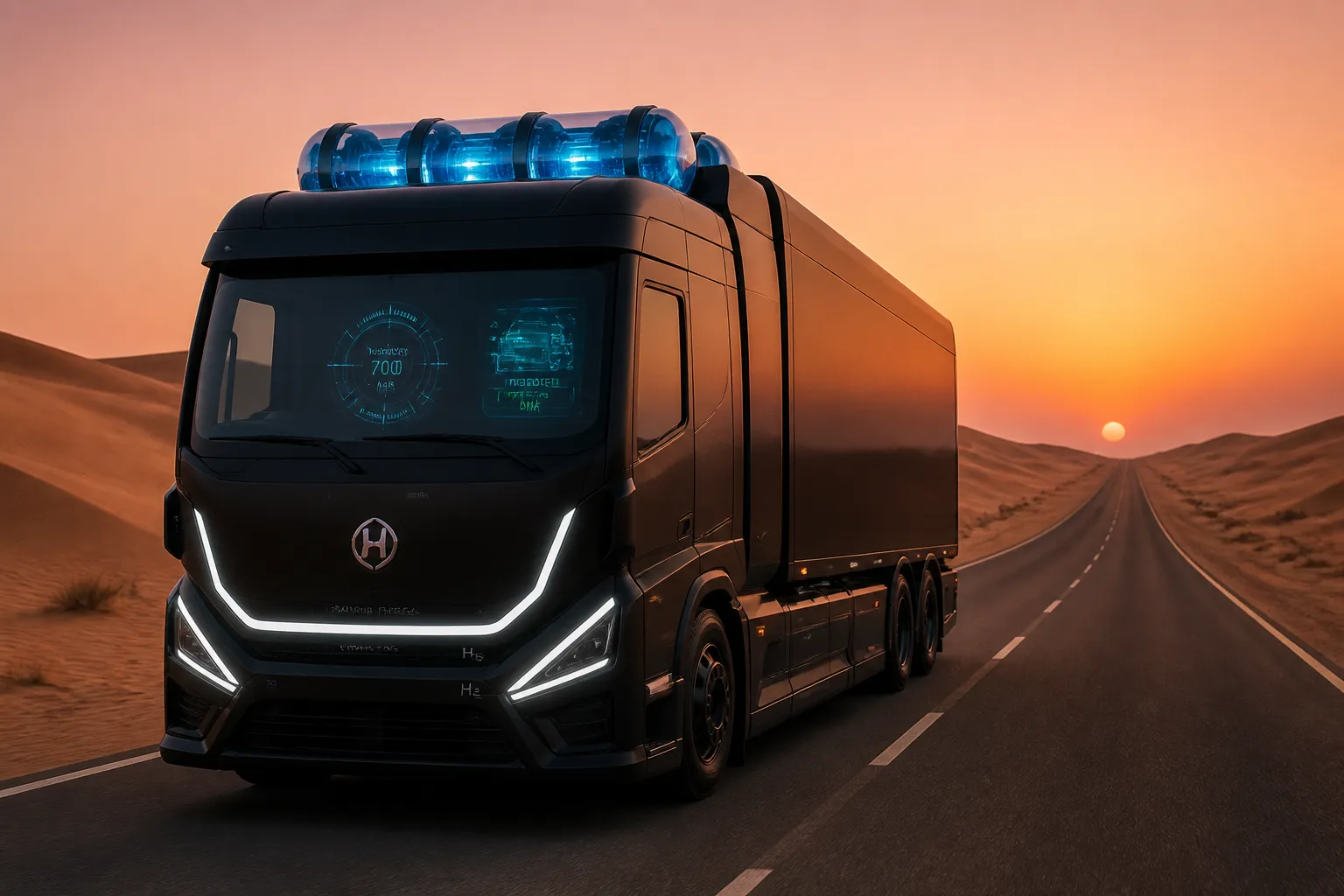
On June 5, 2026, the Saudi Transport General Authority (TGA) issued a temporary operating licence that marked the kingdom’s first step toward a zero‑emission freight future. The licence authorises a single heavy‑duty truck, powered by hydrogen and equipped with Level 4 autonomous driving, to run on public roads in the Eastern Province later this month.
The vehicle is the product of a three‑way partnership. Procter & Gamble Limited (P&G), the Ismail Abudawood Group and Saudi‑based Hyperview have joined forces to create a fleet‑ready platform that can carry household and personal‑care goods across Saudi Arabia. Hyperview supplied the chassis and the autonomous‑driving stack, while P&G and Ismail Abudawood will use the truck to move their products nationwide. The pilot sits squarely inside Saudi Arabia’s National Transport and Logistics Strategy and supports Vision 2030’s objective of cutting freight emissions.
Under the hood, the truck relies on a proton‑exchange‑membrane (PEM) fuel‑cell stack that turns hydrogen and atmospheric oxygen into electricity, heat and water vapor. Hydrogen is stored at 350 bar in a high‑pressure pack, allowing refuelling at dedicated stations in only a few minutes. An intermediate battery buffers power, recovers braking energy and supplies extra torque for acceleration or uphill climbs. Earlier trials of Hyperview’s HTO2.1 platform demonstrated a range of up to 450 km on a single tank and a payload capacity exceeding 40 tonnes.
P&G’s participation is driven by its net‑zero commitments. The company said it will use the pilot to evaluate the cost, reliability and operational impact of zero‑emission freight. The data collected will inform decisions on ownership costs, driver utilisation and overall efficiency, and could become a reference point for other multinational firms exploring low‑carbon logistics.
The TGA’s temporary licence permits the truck to operate on public roads under stringent monitoring. Through the Naql e‑platform, authorities will track vehicle health, hydrogen consumption and autonomous‑system performance. The resulting data will help shape future regulations on hydrogen storage, leak detection, cybersecurity and emergency procedures.
Ismail Abudawood, the local fleet operator, will integrate the truck into its warehousing and distribution network. The company said it will assess the truck’s reliability in the hot, dusty climate of the Eastern Province. Hyperview noted that the autonomous system relies on lidar, radar and high‑resolution cameras, coupled with high‑definition maps and GPS, to achieve Level 4 autonomy under defined conditions.
Saudi Arabia has already experimented with hydrogen trucks in other contexts. In 2024, Almajdouie Logistics and Air Products Qudra ran a pilot, and the country has also tested hydrogen trains. The current project is the first to combine hydrogen propulsion with autonomous driving on a heavy‑duty platform.
The pilot could accelerate the development of hydrogen infrastructure. If the truck proves cost‑competitive, the TGA may issue long‑term licences for hydrogen fleets, encouraging private investors to expand refuelling stations along major freight corridors and link industrial hubs such as Jubail with ports and city centres.
Saudi Arabia is also pursuing large‑scale green‑hydrogen projects, including the NEOM Green Hydrogen plant, which aims to produce up to 600 tonnes of hydrogen per day. The country’s ambition to become a leading hydrogen exporter is part of Vision 2030’s diversification strategy.
In the broader context, hydrogen fuel‑cell trucks offer advantages over battery‑electric models for long‑haul routes, such as shorter refuelling times and higher energy density. The pilot will provide real‑world data on performance, safety and operational economics in a region that is a key logistics corridor for the Middle East.
The TGA, the Ministry of Energy and the Ministry of Transport and Logistic Services have all expressed support for the project. The pilot is scheduled to run for 12 months, after which the authorities will review the results and decide on the next steps for scaling up hydrogen‑powered freight.
At present, the truck’s exact operating range, payload limits and energy consumption on the road are still being refined. The pilot will also monitor how the autonomous system handles Saudi traffic conditions and extreme temperatures.
The outcome of this trial will be closely watched by logistics operators, energy companies and policymakers. If successful, it could position Saudi Arabia as a leader in clean freight technology and accelerate the adoption of hydrogen and autonomous solutions across the region.
The vehicle is the product of a three‑way partnership. Procter & Gamble Limited (P&G), the Ismail Abudawood Group and Saudi‑based Hyperview have joined forces to create a fleet‑ready platform that can carry household and personal‑care goods across Saudi Arabia. Hyperview supplied the chassis and the autonomous‑driving stack, while P&G and Ismail Abudawood will use the truck to move their products nationwide. The pilot sits squarely inside Saudi Arabia’s National Transport and Logistics Strategy and supports Vision 2030’s objective of cutting freight emissions.
Under the hood, the truck relies on a proton‑exchange‑membrane (PEM) fuel‑cell stack that turns hydrogen and atmospheric oxygen into electricity, heat and water vapor. Hydrogen is stored at 350 bar in a high‑pressure pack, allowing refuelling at dedicated stations in only a few minutes. An intermediate battery buffers power, recovers braking energy and supplies extra torque for acceleration or uphill climbs. Earlier trials of Hyperview’s HTO2.1 platform demonstrated a range of up to 450 km on a single tank and a payload capacity exceeding 40 tonnes.
P&G’s participation is driven by its net‑zero commitments. The company said it will use the pilot to evaluate the cost, reliability and operational impact of zero‑emission freight. The data collected will inform decisions on ownership costs, driver utilisation and overall efficiency, and could become a reference point for other multinational firms exploring low‑carbon logistics.
The TGA’s temporary licence permits the truck to operate on public roads under stringent monitoring. Through the Naql e‑platform, authorities will track vehicle health, hydrogen consumption and autonomous‑system performance. The resulting data will help shape future regulations on hydrogen storage, leak detection, cybersecurity and emergency procedures.
Ismail Abudawood, the local fleet operator, will integrate the truck into its warehousing and distribution network. The company said it will assess the truck’s reliability in the hot, dusty climate of the Eastern Province. Hyperview noted that the autonomous system relies on lidar, radar and high‑resolution cameras, coupled with high‑definition maps and GPS, to achieve Level 4 autonomy under defined conditions.
Saudi Arabia has already experimented with hydrogen trucks in other contexts. In 2024, Almajdouie Logistics and Air Products Qudra ran a pilot, and the country has also tested hydrogen trains. The current project is the first to combine hydrogen propulsion with autonomous driving on a heavy‑duty platform.
The pilot could accelerate the development of hydrogen infrastructure. If the truck proves cost‑competitive, the TGA may issue long‑term licences for hydrogen fleets, encouraging private investors to expand refuelling stations along major freight corridors and link industrial hubs such as Jubail with ports and city centres.
Saudi Arabia is also pursuing large‑scale green‑hydrogen projects, including the NEOM Green Hydrogen plant, which aims to produce up to 600 tonnes of hydrogen per day. The country’s ambition to become a leading hydrogen exporter is part of Vision 2030’s diversification strategy.
In the broader context, hydrogen fuel‑cell trucks offer advantages over battery‑electric models for long‑haul routes, such as shorter refuelling times and higher energy density. The pilot will provide real‑world data on performance, safety and operational economics in a region that is a key logistics corridor for the Middle East.
The TGA, the Ministry of Energy and the Ministry of Transport and Logistic Services have all expressed support for the project. The pilot is scheduled to run for 12 months, after which the authorities will review the results and decide on the next steps for scaling up hydrogen‑powered freight.
At present, the truck’s exact operating range, payload limits and energy consumption on the road are still being refined. The pilot will also monitor how the autonomous system handles Saudi traffic conditions and extreme temperatures.
The outcome of this trial will be closely watched by logistics operators, energy companies and policymakers. If successful, it could position Saudi Arabia as a leader in clean freight technology and accelerate the adoption of hydrogen and autonomous solutions across the region.