Blab Tech
Fraunhofer IWU Expands Chemnitz Hydrogen Test Lab to 80-kW Fuel-Cell Bench and Modular Electrolyzer Platform
A new chapter in green‑hydrogen testing opens in Chemnitz, where Fraunhofer Institute for Machine Tools and Forming Technology (IWU) has broadened its laboratory’s reach. The upgrade adds an 80‑kW fuel‑cell test bench, a 250‑W bench for component‑level trials, and a 1‑kW electrolyzer bench for mini‑stack validation, creating a single site where industrial partners can probe production, storage, and fuel‑cell systems under realistic conditions.
The Chemnitz lab, which began operating a year ago, now supports projects that extend beyond proof‑of‑concept demonstrations. According to the IWU press release, developers can evaluate membranes, seals, catalysts, pumps, sensors, humidifiers, and heat exchangers for performance and durability. The facility measures voltage, current, impedance, and aging behavior for stacks ranging from 250 W to 80 kW, simulates mechanical stresses and environmental conditions, and performs cyclic voltammetry to detect changes at the catalyst surface. Test data are traceable to EU and U.S. standards, providing financing partners with the documentation needed for permitting and type approval.
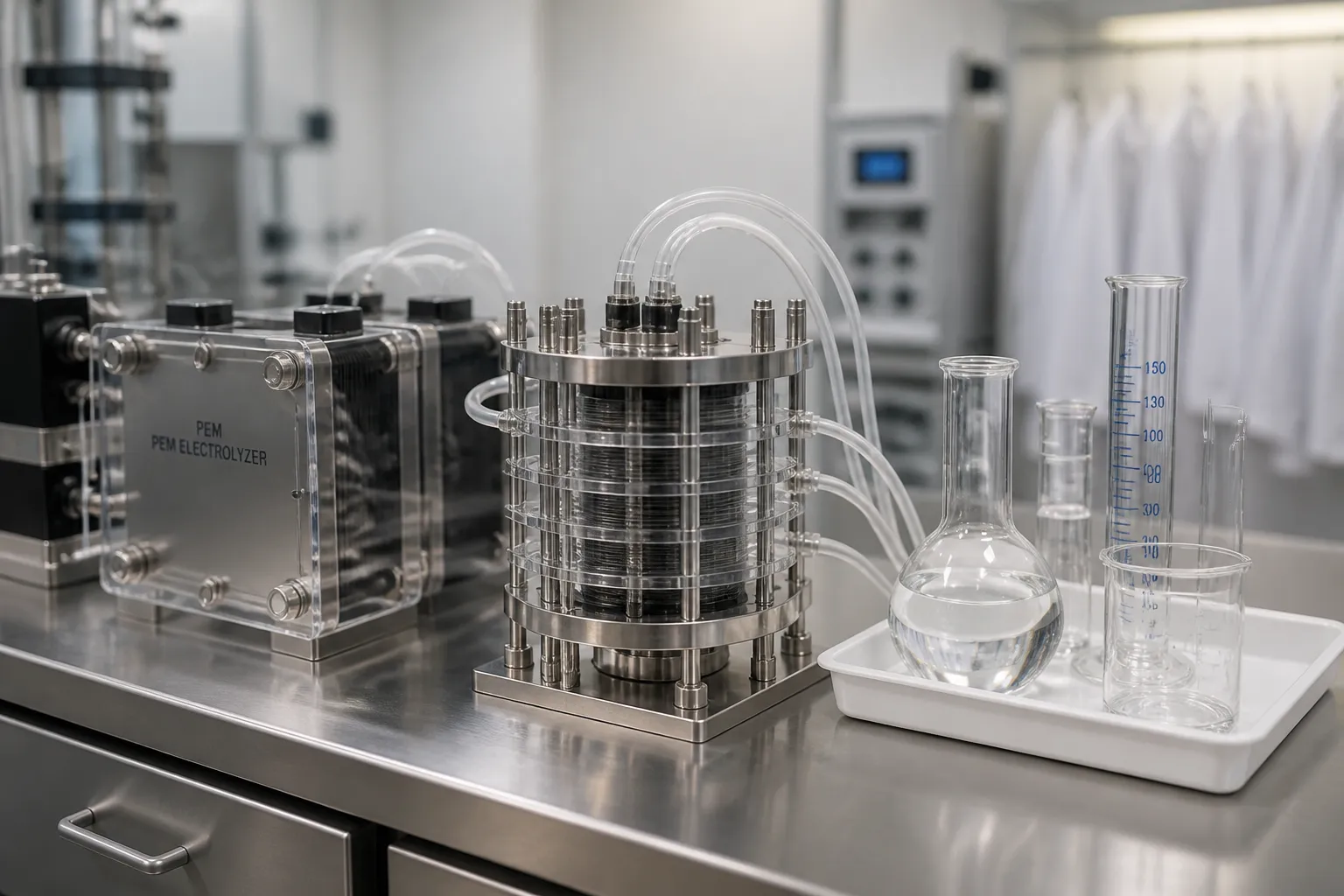
A key element of the new facility is the HyVentus platform, a modular electrolyzer stack built for high‑rate industrial manufacturing. The M300/10 variant, described on the HyVentus website, consists of ten cells, each with two shaped and joined metal bipolar plates. The stack uses inkjet‑printed membrane‑electrode assemblies and integrated sealing and gas‑diffusion layers. HyVentus allows partners to insert their own membranes, seals, or bipolar plates and test them in a fully equipped stack environment. If a partner prefers, the Fraunhofer Reference‑factory.H2 team can assemble components on site.
The expansion aligns with Germany’s broader strategy to strengthen hydrogen infrastructure. The Fraunhofer Hydrogen Lab Görlitz and other local facilities have focused on electrolyzer and fuel‑cell research. The Chemnitz node bridges the gap between laboratory testing and mass production, creating a resilient hydrogen ecosystem in Saxony. The new lab complements the Reference‑factory.H2 virtual environment, which combines physical and digital‑twin components to accelerate design and manufacturing.
The facility’s testing capabilities are especially relevant for sectors that demand continuous reliability, such as steelmaking, chemicals, and heavy transport. By integrating partner sensors for real‑time monitoring, the lab can observe degradation over many cycles and identify reversible losses. The comprehensive approach also benefits small and mid‑size manufacturers that lack their own testing infrastructure, reducing risk and cost.
In addition to the 80‑kW bench, the IWU plans to add a 250‑W fuel‑cell bench and a 1‑kW electrolyzer bench in the fall of 2025, according to the 2025 press release. Future plans include multi‑megawatt electrolyzer tests, which would reflect the scale of commercial systems. The Chemnitz lab’s ability to conduct both component‑level and system‑level validation positions it as a go‑to hub for hydrogen fuel‑cell and production technology.
The expansion also supports regulatory and certification efforts. The lab follows protocols that align with international and customer‑specific standards, producing documented reports that facilitate financing, permitting, and type approval. Whether the equipment is destined for refueling stations, industrial boilers, or fuel‑cell‑powered data centers, traceable validation data are essential for market entry.
Overall, the Chemnitz hydrogen test lab represents a significant step toward commercializing green hydrogen technologies. By offering advanced testing and the HyVentus platform, Fraunhofer IWU is helping partners move from laboratory prototypes to production‑ready systems more quickly and with greater confidence.
The facility’s development is part of a larger hydrogen cluster in Saxony that includes the Hydrogen Lab Görlitz and the Dresden research center. The cluster’s collaborative environment brings together research institutions, OEMs, and supply‑chain partners to co‑develop next‑generation electrolyzers and fuel cells.
As the hydrogen market grows, the Chemnitz lab’s expanded capabilities will likely play a key role in ensuring that new technologies meet performance, safety, and regulatory requirements before they reach the field.
The Chemnitz lab, which began operating a year ago, now supports projects that extend beyond proof‑of‑concept demonstrations. According to the IWU press release, developers can evaluate membranes, seals, catalysts, pumps, sensors, humidifiers, and heat exchangers for performance and durability. The facility measures voltage, current, impedance, and aging behavior for stacks ranging from 250 W to 80 kW, simulates mechanical stresses and environmental conditions, and performs cyclic voltammetry to detect changes at the catalyst surface. Test data are traceable to EU and U.S. standards, providing financing partners with the documentation needed for permitting and type approval.
A key element of the new facility is the HyVentus platform, a modular electrolyzer stack built for high‑rate industrial manufacturing. The M300/10 variant, described on the HyVentus website, consists of ten cells, each with two shaped and joined metal bipolar plates. The stack uses inkjet‑printed membrane‑electrode assemblies and integrated sealing and gas‑diffusion layers. HyVentus allows partners to insert their own membranes, seals, or bipolar plates and test them in a fully equipped stack environment. If a partner prefers, the Fraunhofer Reference‑factory.H2 team can assemble components on site.
The expansion aligns with Germany’s broader strategy to strengthen hydrogen infrastructure. The Fraunhofer Hydrogen Lab Görlitz and other local facilities have focused on electrolyzer and fuel‑cell research. The Chemnitz node bridges the gap between laboratory testing and mass production, creating a resilient hydrogen ecosystem in Saxony. The new lab complements the Reference‑factory.H2 virtual environment, which combines physical and digital‑twin components to accelerate design and manufacturing.
The facility’s testing capabilities are especially relevant for sectors that demand continuous reliability, such as steelmaking, chemicals, and heavy transport. By integrating partner sensors for real‑time monitoring, the lab can observe degradation over many cycles and identify reversible losses. The comprehensive approach also benefits small and mid‑size manufacturers that lack their own testing infrastructure, reducing risk and cost.
In addition to the 80‑kW bench, the IWU plans to add a 250‑W fuel‑cell bench and a 1‑kW electrolyzer bench in the fall of 2025, according to the 2025 press release. Future plans include multi‑megawatt electrolyzer tests, which would reflect the scale of commercial systems. The Chemnitz lab’s ability to conduct both component‑level and system‑level validation positions it as a go‑to hub for hydrogen fuel‑cell and production technology.
The expansion also supports regulatory and certification efforts. The lab follows protocols that align with international and customer‑specific standards, producing documented reports that facilitate financing, permitting, and type approval. Whether the equipment is destined for refueling stations, industrial boilers, or fuel‑cell‑powered data centers, traceable validation data are essential for market entry.
Overall, the Chemnitz hydrogen test lab represents a significant step toward commercializing green hydrogen technologies. By offering advanced testing and the HyVentus platform, Fraunhofer IWU is helping partners move from laboratory prototypes to production‑ready systems more quickly and with greater confidence.
The facility’s development is part of a larger hydrogen cluster in Saxony that includes the Hydrogen Lab Görlitz and the Dresden research center. The cluster’s collaborative environment brings together research institutions, OEMs, and supply‑chain partners to co‑develop next‑generation electrolyzers and fuel cells.
As the hydrogen market grows, the Chemnitz lab’s expanded capabilities will likely play a key role in ensuring that new technologies meet performance, safety, and regulatory requirements before they reach the field.