Blab Tech
Asian Tech Stocks Surge as US-Iran Deal Rescues Energy-Linked Valuations
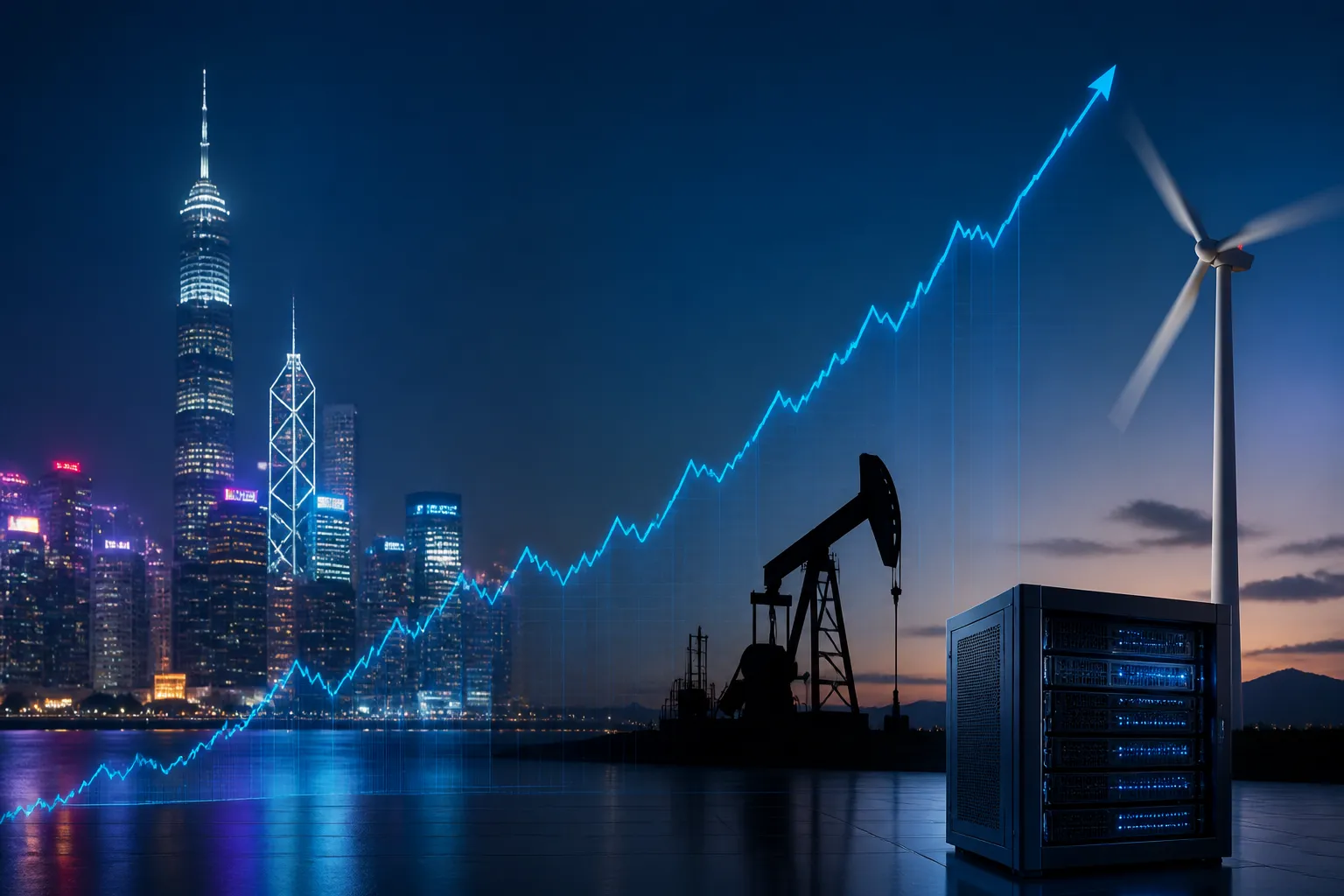
Asian stock markets surged on Monday, driven by the U.S.–Iran cease‑fire deal that could reopen the Strait of Hormuz. The Nikkei 225 finished above 69,000 for the first time, and South Korea’s KOSPI gained 5.2 percent to 8,545.98. Gains were most pronounced among firms linked to AI infrastructure and semiconductor manufacturing.
SoftBank Group Corp. leapt 10 percent, its biggest one‑day jump since the year began. The Japanese conglomerate, now concentrating on AI bets, saw its market value swell as investors priced in stakes in Arm Holdings, the proposed $100 billion AI data‑centre partnership with OpenAI, and a $7.5 billion stake in Nvidia’s GB200 NVL72 server platform. SK Hynix Inc. climbed 6.42 percent, adding about $64 billion to its market cap, while Samsung Electronics Co. surged 4.5 percent. Both SK Hynix and Samsung manufacture high‑bandwidth memory (HBM) chips that Nvidia incorporates into its AI accelerators.
In Japan, Tokyo Electron Corp., a producer of chip‑fabrication tools, surged 7 percent, while Advantest Corp., the world’s largest semiconductor testing equipment maker, jumped 7.67 percent. Both gains mirrored the companies’ ties to the AI data‑centre boom that has fueled chip demand for the last two years.
Taiwan’s semiconductor giants posted more modest upticks. Taiwan Semiconductor Manufacturing Co. (TSMC) advanced 2.81 percent, and Foxconn Technology Group, which builds servers for Nvidia and Apple, climbed 2.69 percent. Taiwan’s comparatively limited exposure to Middle‑East oil volatility explains the subdued rally.
The catalyst arrived over the weekend. Pakistani Prime Minister Shehbaz Sharif declared that military operations on all fronts would cease immediately and permanently, while former U.S. President Donald Trump posted on Truth Social that the “deal with the Islamic Republic of Iran is now complete.” A formal signing ceremony is slated for June 19 in Switzerland.
Although the agreement is framed as a permanent settlement, it currently operates as a 60‑day interim arrangement aimed at reopening the Strait of Hormuz, which handles about 20 percent of global oil flow. The strait’s closure during the conflict pushed Brent crude above $90 a barrel and spiked shipping‑insurance premiums, disrupting Asian supply chains.
Investors are pricing in the deal’s resilience beyond the 60‑day horizon. The swift, broad rally indicates confidence that the accord will endure; a collapse could trigger a sharp retracement for the stocks that surged on Monday.
SoftBank’s leap exemplifies the growing entanglement of AI‑focused firms with macro‑economic risk. A 10 percent jump driven by a geopolitical development—rather than earnings or product news—highlights how vulnerable AI‑centric companies are to global events.
In Japan, South Korea, and Taiwan, the trend is uniform: firms anchoring the AI supply chain—memory chipmakers, equipment makers, and AI infrastructure investors—outshone the broader indices. The risk premium that once weighed on companies with intricate Asian supply chains and high energy exposure appears lifted, at least for the next two months.
The Nikkei’s closing level of 69,317.45, a 4.99 percent rise, signals a belief that the geopolitical backdrop for Asian technology has shifted. For AI chipmakers, the rally adds to gains that were already record‑setting. Samsung and SK Hynix each surpassed a $1 trillion market cap in May, buoyed by data‑centre demand for HBM. The elimination of the final major overhang could prove pivotal for their valuations.
The outlook hinges on the 60‑day pact. A breakdown would subject Samsung and SK Hynix’s trillion‑dollar valuations to a first real stress test. Investors will keep a close eye on the agreement’s evolution and any follow‑on talks on nuclear limits, sanctions relief, and the unfreezing of Iranian assets.
Today’s rally signals a wide‑scale reappraisal of energy‑linked risk in Asian tech shares, with AI infrastructure firms at the forefront.
SoftBank Group Corp. leapt 10 percent, its biggest one‑day jump since the year began. The Japanese conglomerate, now concentrating on AI bets, saw its market value swell as investors priced in stakes in Arm Holdings, the proposed $100 billion AI data‑centre partnership with OpenAI, and a $7.5 billion stake in Nvidia’s GB200 NVL72 server platform. SK Hynix Inc. climbed 6.42 percent, adding about $64 billion to its market cap, while Samsung Electronics Co. surged 4.5 percent. Both SK Hynix and Samsung manufacture high‑bandwidth memory (HBM) chips that Nvidia incorporates into its AI accelerators.
In Japan, Tokyo Electron Corp., a producer of chip‑fabrication tools, surged 7 percent, while Advantest Corp., the world’s largest semiconductor testing equipment maker, jumped 7.67 percent. Both gains mirrored the companies’ ties to the AI data‑centre boom that has fueled chip demand for the last two years.
Taiwan’s semiconductor giants posted more modest upticks. Taiwan Semiconductor Manufacturing Co. (TSMC) advanced 2.81 percent, and Foxconn Technology Group, which builds servers for Nvidia and Apple, climbed 2.69 percent. Taiwan’s comparatively limited exposure to Middle‑East oil volatility explains the subdued rally.
The catalyst arrived over the weekend. Pakistani Prime Minister Shehbaz Sharif declared that military operations on all fronts would cease immediately and permanently, while former U.S. President Donald Trump posted on Truth Social that the “deal with the Islamic Republic of Iran is now complete.” A formal signing ceremony is slated for June 19 in Switzerland.
Although the agreement is framed as a permanent settlement, it currently operates as a 60‑day interim arrangement aimed at reopening the Strait of Hormuz, which handles about 20 percent of global oil flow. The strait’s closure during the conflict pushed Brent crude above $90 a barrel and spiked shipping‑insurance premiums, disrupting Asian supply chains.
Investors are pricing in the deal’s resilience beyond the 60‑day horizon. The swift, broad rally indicates confidence that the accord will endure; a collapse could trigger a sharp retracement for the stocks that surged on Monday.
SoftBank’s leap exemplifies the growing entanglement of AI‑focused firms with macro‑economic risk. A 10 percent jump driven by a geopolitical development—rather than earnings or product news—highlights how vulnerable AI‑centric companies are to global events.
In Japan, South Korea, and Taiwan, the trend is uniform: firms anchoring the AI supply chain—memory chipmakers, equipment makers, and AI infrastructure investors—outshone the broader indices. The risk premium that once weighed on companies with intricate Asian supply chains and high energy exposure appears lifted, at least for the next two months.
The Nikkei’s closing level of 69,317.45, a 4.99 percent rise, signals a belief that the geopolitical backdrop for Asian technology has shifted. For AI chipmakers, the rally adds to gains that were already record‑setting. Samsung and SK Hynix each surpassed a $1 trillion market cap in May, buoyed by data‑centre demand for HBM. The elimination of the final major overhang could prove pivotal for their valuations.
The outlook hinges on the 60‑day pact. A breakdown would subject Samsung and SK Hynix’s trillion‑dollar valuations to a first real stress test. Investors will keep a close eye on the agreement’s evolution and any follow‑on talks on nuclear limits, sanctions relief, and the unfreezing of Iranian assets.
Today’s rally signals a wide‑scale reappraisal of energy‑linked risk in Asian tech shares, with AI infrastructure firms at the forefront.