Blab Tech
Arkadia Space, Reflex Aerospace, and SpaceX to Launch Green Hydrogen Peroxide-Powered Satellite in 2027
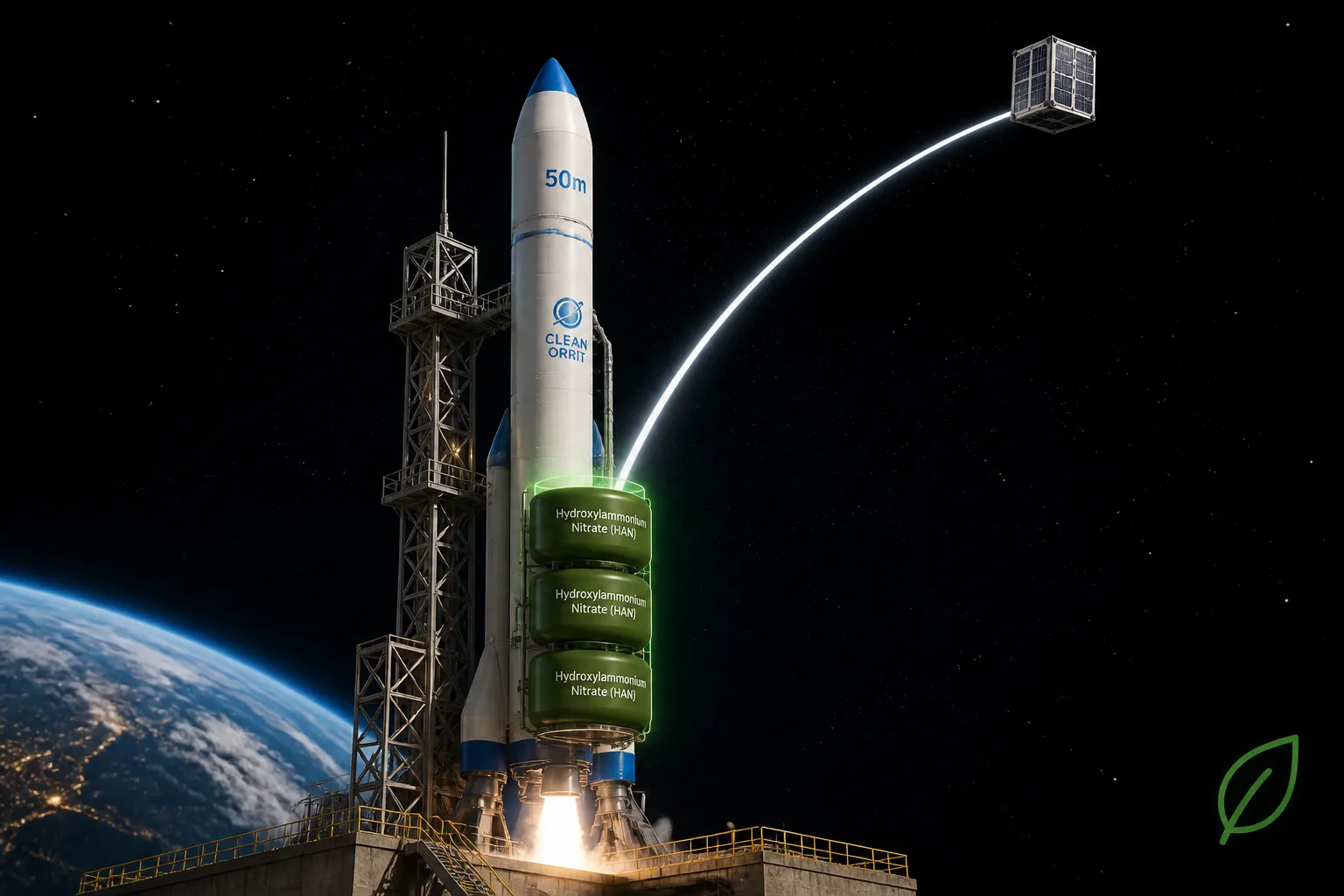
When SpaceX’s Transporter‑20 lifts off in 2027, it will carry more than just a 200‑kg satellite—it will launch the first commercial small‑satellite powered by green hydrogen peroxide. The German‑made bus, built by Reflex Aerospace, will orbit Earth on a rideshare slot, while its propulsion comes from Spanish startup Arkadia Space.
Arkadia’s system replaces the toxic hydrazine that has long been the workhorse of small‑satellite propulsion with high‑test peroxide (HTP). The company supplies the entire propulsion package, including TRITON 5N thrusters that draw HTP from pressurised tanks. Inside each engine a catalyst bed decomposes the peroxide into hot steam and oxygen, delivering roughly five newtons of thrust per motor. The resulting gas plume propels the craft through station‑keeping, orbit‑raising, and a controlled de‑orbit burn at the end of its mission.
The technology is not merely theoretical. In 2025 Arkadia’s DARK system flew aboard a D‑Orbit vehicle, marking the first European in‑orbit demonstration of hydrogen‑peroxide propulsion. Flight data matched ground‑based predictions, confirming the platform’s readiness for space.
Arkadia is headquartered in Castellón, Spain, where it runs an orbital engine test centre. The city also hosts a 25‑megawatt green‑hydrogen electrolyzer built by BP and Iberdrola that can produce about 2,800 tonnes of hydrogen per year. This local hydrogen infrastructure and expertise in handling pressurised chemicals provide an ideal environment for developing and producing hydrogen‑peroxide propellant.
The partnership is backed by €14.5 million from the European Innovation Council Accelerator, which will help scale production and expand testing facilities. Reflex Aerospace’s CEO, Walter Ballheimer, said the company is confident that Arkadia’s system has demonstrated flight readiness and can be adapted to meet the satellite’s specific mission requirements.
Hydrogen peroxide is less hazardous than hydrazine, eliminating the need for specialised ground‑handling facilities and reducing carcinogenic exposure. However, it remains a reactive chemical that demands careful material selection to prevent corrosion or unintended decomposition. Accordingly, the satellite will be built with components compatible with peroxide storage and use.
Transporter‑20 will place the satellite into a low‑Earth orbit where it will perform its mission and then use Arkadia’s thrusters for a de‑orbit burn, complying with emerging European and international debris‑mitigation regulations that require end‑of‑life disposal.
If the 2027 flight proceeds as planned, it will be the first commercial satellite to use a hydrogen‑peroxide propulsion system in routine operations. The mission could validate the technology for future small‑satellite operators and support Europe’s goal of developing independent, low‑toxicity propulsion capabilities.
The satellite’s launch is scheduled for 2027, and the partnership remains in the final stages of integration. No further details on the satellite’s payload or mission objectives have been released.
The upcoming flight will be closely watched by the space industry, as it could signal a shift toward greener chemical propulsion for small satellites and a new pathway for sustainable space operations.
Arkadia’s system replaces the toxic hydrazine that has long been the workhorse of small‑satellite propulsion with high‑test peroxide (HTP). The company supplies the entire propulsion package, including TRITON 5N thrusters that draw HTP from pressurised tanks. Inside each engine a catalyst bed decomposes the peroxide into hot steam and oxygen, delivering roughly five newtons of thrust per motor. The resulting gas plume propels the craft through station‑keeping, orbit‑raising, and a controlled de‑orbit burn at the end of its mission.
The technology is not merely theoretical. In 2025 Arkadia’s DARK system flew aboard a D‑Orbit vehicle, marking the first European in‑orbit demonstration of hydrogen‑peroxide propulsion. Flight data matched ground‑based predictions, confirming the platform’s readiness for space.
Arkadia is headquartered in Castellón, Spain, where it runs an orbital engine test centre. The city also hosts a 25‑megawatt green‑hydrogen electrolyzer built by BP and Iberdrola that can produce about 2,800 tonnes of hydrogen per year. This local hydrogen infrastructure and expertise in handling pressurised chemicals provide an ideal environment for developing and producing hydrogen‑peroxide propellant.
The partnership is backed by €14.5 million from the European Innovation Council Accelerator, which will help scale production and expand testing facilities. Reflex Aerospace’s CEO, Walter Ballheimer, said the company is confident that Arkadia’s system has demonstrated flight readiness and can be adapted to meet the satellite’s specific mission requirements.
Hydrogen peroxide is less hazardous than hydrazine, eliminating the need for specialised ground‑handling facilities and reducing carcinogenic exposure. However, it remains a reactive chemical that demands careful material selection to prevent corrosion or unintended decomposition. Accordingly, the satellite will be built with components compatible with peroxide storage and use.
Transporter‑20 will place the satellite into a low‑Earth orbit where it will perform its mission and then use Arkadia’s thrusters for a de‑orbit burn, complying with emerging European and international debris‑mitigation regulations that require end‑of‑life disposal.
If the 2027 flight proceeds as planned, it will be the first commercial satellite to use a hydrogen‑peroxide propulsion system in routine operations. The mission could validate the technology for future small‑satellite operators and support Europe’s goal of developing independent, low‑toxicity propulsion capabilities.
The satellite’s launch is scheduled for 2027, and the partnership remains in the final stages of integration. No further details on the satellite’s payload or mission objectives have been released.
The upcoming flight will be closely watched by the space industry, as it could signal a shift toward greener chemical propulsion for small satellites and a new pathway for sustainable space operations.