Blab Tech
U.S. Treasury Warns China of Sanctions Over Alleged AI Model Distillation
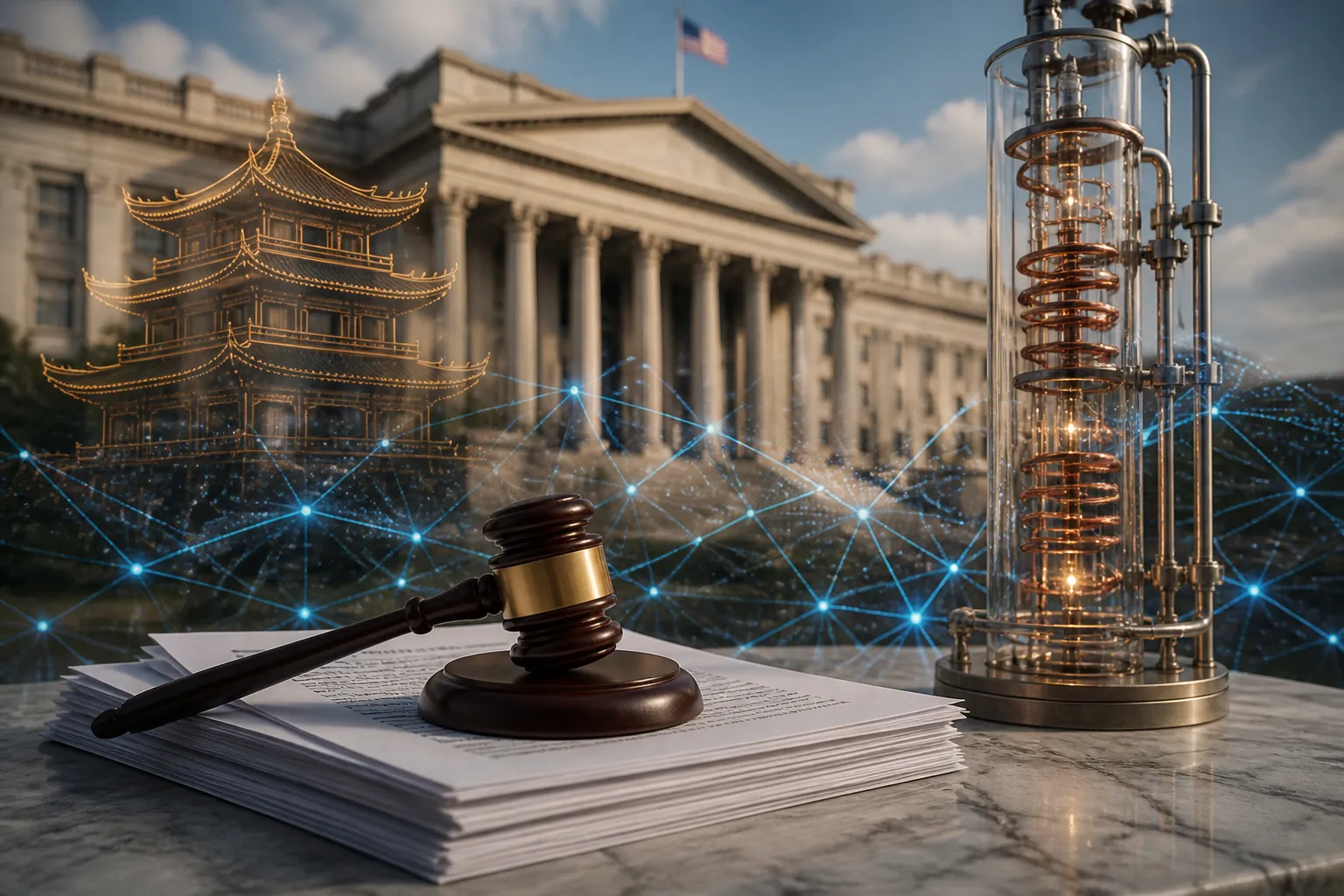
On a Friday morning that found the world still reeling from the rapid rise of generative AI, Treasury Secretary Scott Bessent appeared on Fox Business to issue a warning that could reshape the competitive landscape between the United States and China. He said that open‑source models produced by Chinese firms would be placed under heightened scrutiny for possible intellectual‑property theft. Bessent explained that the Treasury will investigate whether Chinese models have been built by distilling outputs from U.S. large‑language models (LLMs). He added that the Treasury has the authority to sanction companies if evidence of such theft is found.
Distillation, a common training technique, involves feeding a “teacher” model’s outputs into a smaller “student” model. By mimicking the teacher’s behavior, the student can achieve comparable performance while requiring fewer resources. In April, the Trump administration’s chief science adviser described large‑scale distillation by Chinese firms as “adversarial” and pledged to help U.S. labs detect and counter it.
Bessent’s comments arrive amid a series of accusations from U.S. companies. In February, Anthropic alleged that Moonshot, DeepSeek and Minimax had violated its terms of service by extracting Claude’s capabilities. OpenAI sent a memo to Congress accusing DeepSeek of a similar practice, and Anthropic later accused Alibaba of the same.
Chinese AI firms have released models that rival U.S. offerings. DeepSeek’s R1, launched in January 2025, matched performance on several benchmarks while requiring less expensive hardware. The release triggered a market reaction that prompted the Trump administration to impose export bans and tighter trade restrictions on China. More recently, Alibaba‑backed Moonshot unveiled Kimi K3, a 2.8‑trillion‑parameter model that independent tests from Artificial Analysis and Arena.ai show performs comparably to Anthropic’s Fable 5 and OpenAI’s GPT‑5.6.
The Treasury’s warning comes as the U.S. and China prepare for their first bilateral AI talks of the Trump administration. Reuters reported that the meeting will take place in September, with Bessent leading the U.S. delegation. While details are still being finalized, analysts expect the U.S. to raise the distillation issue, and China to counter with concerns about U.S. security‑related restrictions on advanced AI models.
Chinese President Xi Jinping has publicly criticized the U.S. approach. In a speech at a national AI conference, Xi called for open‑source cooperation and warned against expanding the national‑security concept in AI. He urged joint opposition to U.S. policies that he said place one country’s security above others.
The U.S. remains the dominant player in frontier AI and AI chip technology, with companies such as OpenAI, Anthropic, Nvidia, AMD and Intel leading the market. Chinese firms, however, have narrowed the gap through open‑weight models that are cheaper to train and run. The Treasury’s threat of sanctions signals a shift toward stricter enforcement of IP protections in the AI sector.
At present, the U.S. is conducting investigations into Chinese models for signs of distillation. The outcome of the September talks and any subsequent regulatory actions remain uncertain. The Treasury has indicated it will act in the coming days or weeks if evidence of IP theft is confirmed.
The situation underscores the growing tension between the two countries over AI leadership and the legal boundaries of model training. As the U.S. prepares to enforce sanctions, Chinese firms will likely continue to develop and release open‑source models, while both sides await the outcome of their upcoming diplomatic engagement.
Distillation, a common training technique, involves feeding a “teacher” model’s outputs into a smaller “student” model. By mimicking the teacher’s behavior, the student can achieve comparable performance while requiring fewer resources. In April, the Trump administration’s chief science adviser described large‑scale distillation by Chinese firms as “adversarial” and pledged to help U.S. labs detect and counter it.
Bessent’s comments arrive amid a series of accusations from U.S. companies. In February, Anthropic alleged that Moonshot, DeepSeek and Minimax had violated its terms of service by extracting Claude’s capabilities. OpenAI sent a memo to Congress accusing DeepSeek of a similar practice, and Anthropic later accused Alibaba of the same.
Chinese AI firms have released models that rival U.S. offerings. DeepSeek’s R1, launched in January 2025, matched performance on several benchmarks while requiring less expensive hardware. The release triggered a market reaction that prompted the Trump administration to impose export bans and tighter trade restrictions on China. More recently, Alibaba‑backed Moonshot unveiled Kimi K3, a 2.8‑trillion‑parameter model that independent tests from Artificial Analysis and Arena.ai show performs comparably to Anthropic’s Fable 5 and OpenAI’s GPT‑5.6.
The Treasury’s warning comes as the U.S. and China prepare for their first bilateral AI talks of the Trump administration. Reuters reported that the meeting will take place in September, with Bessent leading the U.S. delegation. While details are still being finalized, analysts expect the U.S. to raise the distillation issue, and China to counter with concerns about U.S. security‑related restrictions on advanced AI models.
Chinese President Xi Jinping has publicly criticized the U.S. approach. In a speech at a national AI conference, Xi called for open‑source cooperation and warned against expanding the national‑security concept in AI. He urged joint opposition to U.S. policies that he said place one country’s security above others.
The U.S. remains the dominant player in frontier AI and AI chip technology, with companies such as OpenAI, Anthropic, Nvidia, AMD and Intel leading the market. Chinese firms, however, have narrowed the gap through open‑weight models that are cheaper to train and run. The Treasury’s threat of sanctions signals a shift toward stricter enforcement of IP protections in the AI sector.
At present, the U.S. is conducting investigations into Chinese models for signs of distillation. The outcome of the September talks and any subsequent regulatory actions remain uncertain. The Treasury has indicated it will act in the coming days or weeks if evidence of IP theft is confirmed.
The situation underscores the growing tension between the two countries over AI leadership and the legal boundaries of model training. As the U.S. prepares to enforce sanctions, Chinese firms will likely continue to develop and release open‑source models, while both sides await the outcome of their upcoming diplomatic engagement.








