Blab Tech
Philips Brand, Business and Ownership: How the Dutch Icon Operates Today
Philips, the Dutch multinational that helped invent the compact disc, is now a publicly traded company that largely focuses on health technology. Its name is still used on a wide range of consumer products, but most of those items are made and sold by other companies under license.
The company is listed on the Euronext Amsterdam stock exchange and has a secondary listing on the New York Stock Exchange. Retail investors hold about 41 % of the shares, while institutional investors own roughly 40 %. The largest single shareholder is Exor N.V., an investment firm controlled by the Agnelli family, which holds about 19 % of the company. Other significant shareholders include Causeway Capital Management LLC with 3 % and BlackRock Fund Advisors with a little over 2 %.
Philips’ core business today is health technology. The firm manufactures diagnostic equipment such as MRI and CT scanners, patient monitoring devices, respiratory care products under the Respironics brand, and personal health items like electric shavers, Sonicare toothbrushes and Avent baby products.
Outside of healthcare, Philips does not produce most of the consumer goods that carry its name. Instead, it licenses the brand to independent manufacturers.
Domestic appliances were spun off from Philips in 2021 and sold to the Singapore‑based private‑equity firm Hillhouse Investment. The new company, renamed Versuni, operates under a 15‑year licensing agreement that allows it to use the Philips name on products such as air fryers, rice cookers, blenders, kettles, irons, steamers, vacuum cleaners, air purifiers, coffee makers and espresso machines.
The lighting division was separated in 2018 and became Signify, a company that continues to produce Philips‑branded lighting products. Signify owns the rights to Philips Hue smart lights and other lighting solutions.
Television manufacturing is handled by separate licensees. In the United States, Skyworth holds the rights to produce Philips‑branded TVs. In other markets, TP Vision manufactures the televisions that carry the Philips logo.
Because the Philips name is licensed to many different manufacturers, consumers may find Philips products made by a variety of companies. The brand’s long history of innovation—such as the invention of the CD alongside Sony—helps maintain consumer trust.
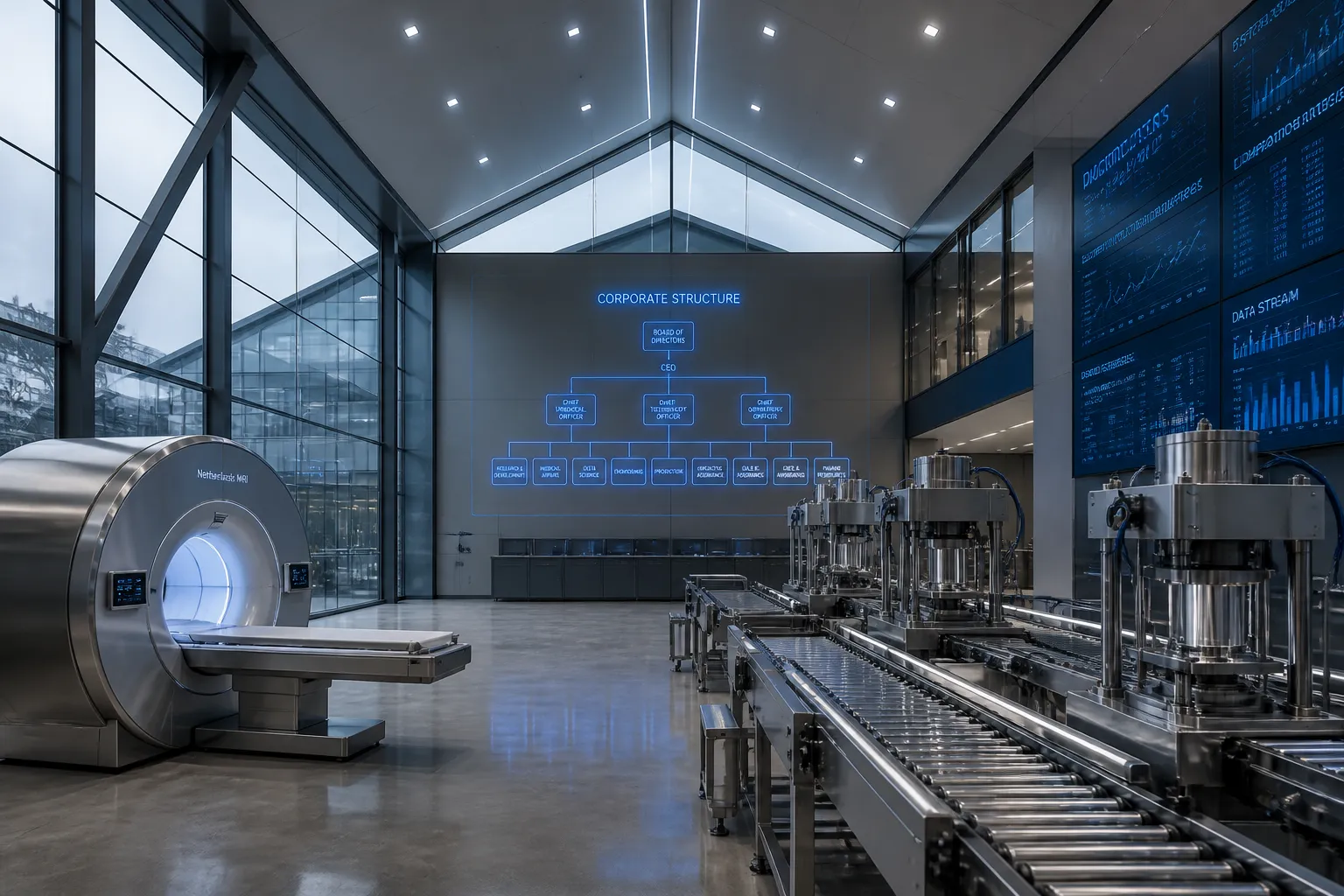
The company’s corporate structure reflects its transition from a diversified electronics conglomerate to a focused health‑tech firm. The three main divisions are Diagnosis and Treatment, Connected Care and Personal Health. Philips’ headquarters remain in Amsterdam, with a secondary office in Eindhoven.
Investors and analysts note that the company’s shift toward health technology has clarified its strategic direction. Exor’s stake, which has grown to 18.7 % in recent filings, signals confidence in Philips’ healthcare focus.
In summary, Philips is a public Dutch company whose shares are largely held by retail and institutional investors, with Exor as the largest shareholder. The firm produces health‑technology products in‑house but licenses its well‑known name to other manufacturers for appliances, lighting and televisions. The brand continues to appear on a broad array of consumer goods, even though the underlying production is handled by independent licensees.
The current situation is that Philips remains a major player in medical equipment, while its consumer‑electronics brand lives on through licensing agreements with Versuni, Signify, Skyworth and TP Vision. No major regulatory actions or legal disputes are reported, and the company’s next major corporate moves are likely to involve further development of its healthcare portfolio.
The company is listed on the Euronext Amsterdam stock exchange and has a secondary listing on the New York Stock Exchange. Retail investors hold about 41 % of the shares, while institutional investors own roughly 40 %. The largest single shareholder is Exor N.V., an investment firm controlled by the Agnelli family, which holds about 19 % of the company. Other significant shareholders include Causeway Capital Management LLC with 3 % and BlackRock Fund Advisors with a little over 2 %.
Philips’ core business today is health technology. The firm manufactures diagnostic equipment such as MRI and CT scanners, patient monitoring devices, respiratory care products under the Respironics brand, and personal health items like electric shavers, Sonicare toothbrushes and Avent baby products.
Outside of healthcare, Philips does not produce most of the consumer goods that carry its name. Instead, it licenses the brand to independent manufacturers.
Domestic appliances were spun off from Philips in 2021 and sold to the Singapore‑based private‑equity firm Hillhouse Investment. The new company, renamed Versuni, operates under a 15‑year licensing agreement that allows it to use the Philips name on products such as air fryers, rice cookers, blenders, kettles, irons, steamers, vacuum cleaners, air purifiers, coffee makers and espresso machines.
The lighting division was separated in 2018 and became Signify, a company that continues to produce Philips‑branded lighting products. Signify owns the rights to Philips Hue smart lights and other lighting solutions.
Television manufacturing is handled by separate licensees. In the United States, Skyworth holds the rights to produce Philips‑branded TVs. In other markets, TP Vision manufactures the televisions that carry the Philips logo.
Because the Philips name is licensed to many different manufacturers, consumers may find Philips products made by a variety of companies. The brand’s long history of innovation—such as the invention of the CD alongside Sony—helps maintain consumer trust.
The company’s corporate structure reflects its transition from a diversified electronics conglomerate to a focused health‑tech firm. The three main divisions are Diagnosis and Treatment, Connected Care and Personal Health. Philips’ headquarters remain in Amsterdam, with a secondary office in Eindhoven.
Investors and analysts note that the company’s shift toward health technology has clarified its strategic direction. Exor’s stake, which has grown to 18.7 % in recent filings, signals confidence in Philips’ healthcare focus.
In summary, Philips is a public Dutch company whose shares are largely held by retail and institutional investors, with Exor as the largest shareholder. The firm produces health‑technology products in‑house but licenses its well‑known name to other manufacturers for appliances, lighting and televisions. The brand continues to appear on a broad array of consumer goods, even though the underlying production is handled by independent licensees.
The current situation is that Philips remains a major player in medical equipment, while its consumer‑electronics brand lives on through licensing agreements with Versuni, Signify, Skyworth and TP Vision. No major regulatory actions or legal disputes are reported, and the company’s next major corporate moves are likely to involve further development of its healthcare portfolio.