Blab Tech
U.S. Congress Integrates Three Key Export-Control Bills into 2026 National Defense Authorization Act, Heightening Semiconductor Restrictions on China
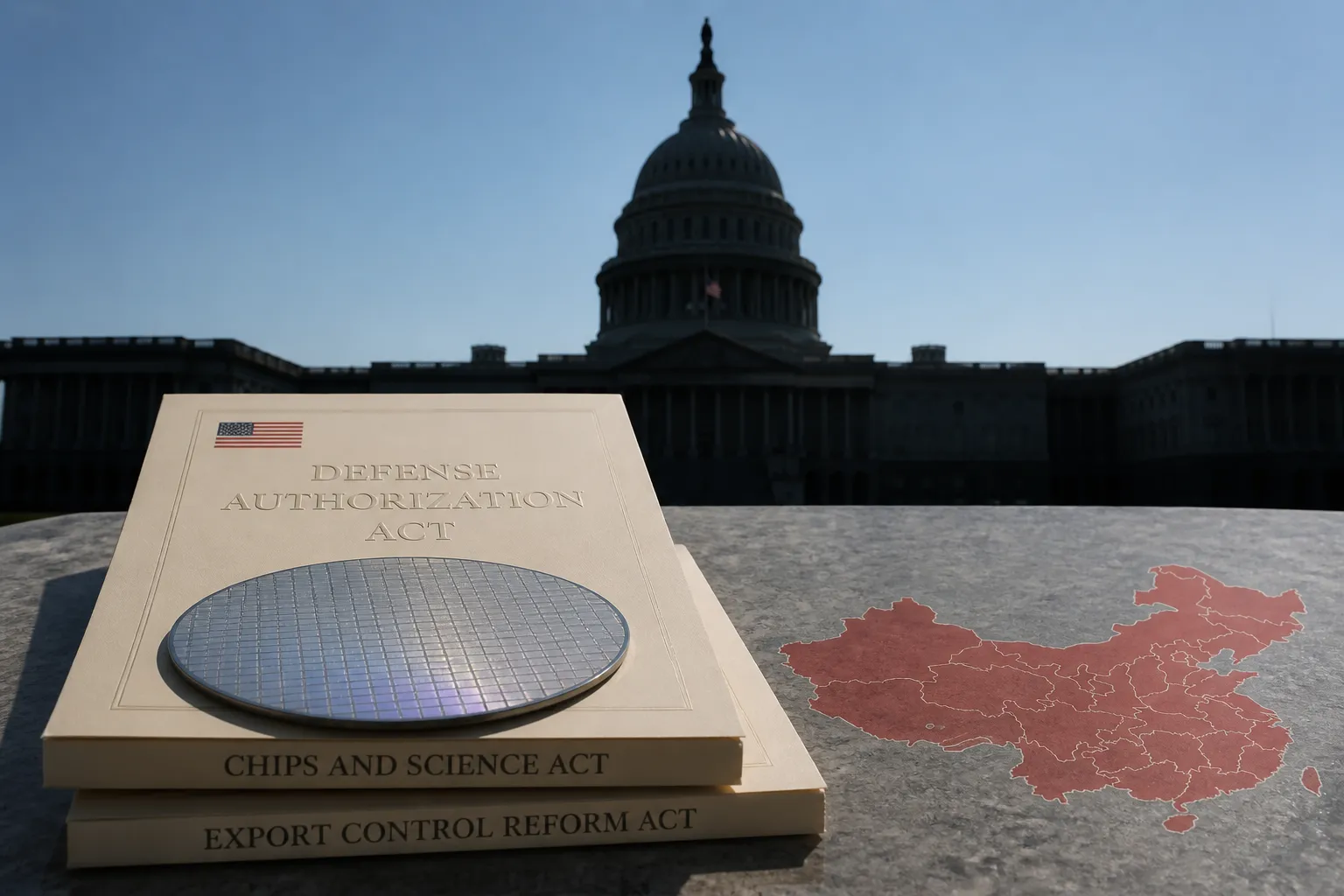
On July 19, 2026, the U.S. Senate approved the National Defense Authorization Act (NDAA) for fiscal year 2026, embedding three export‑control measures that sharpen restrictions on China’s access to advanced semiconductor technology. The Artificial Intelligence Overwatch Act, the Multilateral Alignment of Technology Controls on Hardware (MATCH) Act, and the Chip Security Act were added to the NDAA after passage in the House and committee approvals.
The AI Overwatch Act, first introduced in the House in 2025, limits the export of artificial‑intelligence hardware and software that could serve military or dual‑use purposes. The MATCH Act, approved by the House Foreign Affairs Committee on April 26, 2026, expands controls on hardware and software that could aid China’s military modernization. The Chip Security Act, also passed by the House, focuses on restricting the export of advanced semiconductor manufacturing equipment and design tools.
These bills fit into a broader U.S. strategy to preserve technology leadership and address national‑security concerns. The Bureau of Industry and Security (BIS) has already tightened licensing requirements for high‑performance chips. On January 13, 2026, BIS issued a rule revising its licensing policy for semiconductor exports to China, stating that it would review applications for chips such as the Nvidia H200 and AMD MI325X.
Industry analysts warn that the new controls will raise compliance burdens for U.S. semiconductor companies that export to China, a market that accounted for roughly $192.5 billion in sales in 2021. The Semiconductor Industry Association (SIA) cautioned that poorly calibrated controls could harm U.S. competitiveness if they are not aligned with other key supplier nations.
The export‑control framework traces back to October 2022 rules that targeted China’s access to advanced computing and semiconductor manufacturing items. Those rules expanded the list of controlled items to include intermediate‑node technology that had previously been available.
The bills also intersect with fiscal policy. The advanced manufacturing investment tax credit, which has supported U.S. chip production, is set to expire in 2026. The SIA has expressed concern that the expiration, combined with tighter export controls, could reduce incentives for domestic investment.
According to Deloitte’s 2026 outlook, semiconductor industry revenue is projected to reach $726.73 billion by 2027. However, the industry faces a risk of demand correction and supply‑chain disruptions as the U.S. tightens controls on China. The sector is also monitoring the U.S. Treasury’s Export‑Import Bank, which is authorized to finance U.S. exports and may need to adjust its policies to align with the new export‑control regime.
The bills’ passage has drawn international attention. Beijing has denounced the measures as a threat to global supply chains, while allies such as the European Union and Japan have called for a coordinated approach to technology controls.
In the short term, U.S. semiconductor firms will need to review their export‑control compliance programs and adjust supply‑chain strategies. BIS will continue to evaluate license applications, and the Department of Commerce will monitor the impact of the new controls on China’s semiconductor capabilities.
The NDAA contains other defense‑related provisions, but the export‑control measures are the most significant for the semiconductor sector. The bills are expected to remain in force for the duration of the NDAA, with potential extensions or revisions to come in future defense authorization acts.
The current situation is that the U.S. has formally incorporated the AI Overwatch Act, MATCH Act, and Chip Security Act into its defense budget. The semiconductor industry is adjusting to tighter export controls on China, while policymakers continue to debate the balance between national security and global supply‑chain stability.
The AI Overwatch Act, first introduced in the House in 2025, limits the export of artificial‑intelligence hardware and software that could serve military or dual‑use purposes. The MATCH Act, approved by the House Foreign Affairs Committee on April 26, 2026, expands controls on hardware and software that could aid China’s military modernization. The Chip Security Act, also passed by the House, focuses on restricting the export of advanced semiconductor manufacturing equipment and design tools.
These bills fit into a broader U.S. strategy to preserve technology leadership and address national‑security concerns. The Bureau of Industry and Security (BIS) has already tightened licensing requirements for high‑performance chips. On January 13, 2026, BIS issued a rule revising its licensing policy for semiconductor exports to China, stating that it would review applications for chips such as the Nvidia H200 and AMD MI325X.
Industry analysts warn that the new controls will raise compliance burdens for U.S. semiconductor companies that export to China, a market that accounted for roughly $192.5 billion in sales in 2021. The Semiconductor Industry Association (SIA) cautioned that poorly calibrated controls could harm U.S. competitiveness if they are not aligned with other key supplier nations.
The export‑control framework traces back to October 2022 rules that targeted China’s access to advanced computing and semiconductor manufacturing items. Those rules expanded the list of controlled items to include intermediate‑node technology that had previously been available.
The bills also intersect with fiscal policy. The advanced manufacturing investment tax credit, which has supported U.S. chip production, is set to expire in 2026. The SIA has expressed concern that the expiration, combined with tighter export controls, could reduce incentives for domestic investment.
According to Deloitte’s 2026 outlook, semiconductor industry revenue is projected to reach $726.73 billion by 2027. However, the industry faces a risk of demand correction and supply‑chain disruptions as the U.S. tightens controls on China. The sector is also monitoring the U.S. Treasury’s Export‑Import Bank, which is authorized to finance U.S. exports and may need to adjust its policies to align with the new export‑control regime.
The bills’ passage has drawn international attention. Beijing has denounced the measures as a threat to global supply chains, while allies such as the European Union and Japan have called for a coordinated approach to technology controls.
In the short term, U.S. semiconductor firms will need to review their export‑control compliance programs and adjust supply‑chain strategies. BIS will continue to evaluate license applications, and the Department of Commerce will monitor the impact of the new controls on China’s semiconductor capabilities.
The NDAA contains other defense‑related provisions, but the export‑control measures are the most significant for the semiconductor sector. The bills are expected to remain in force for the duration of the NDAA, with potential extensions or revisions to come in future defense authorization acts.
The current situation is that the U.S. has formally incorporated the AI Overwatch Act, MATCH Act, and Chip Security Act into its defense budget. The semiconductor industry is adjusting to tighter export controls on China, while policymakers continue to debate the balance between national security and global supply‑chain stability.