Blab Tech
Barcelona Agri-Tech Startup Agrikola AI Secures Pre-Seed Funding to Advance Autonomous Farming Robots
On July 13, 2026, a small team in Barcelona’s burgeoning agri‑tech scene secured a pre‑seed round that could change how crops are protected. Agrikola AI, the company founded by Ricard Pardell, closed a deal that brought together four venture funds—Zubi Capital, Norrsken VC, Masia VC and Ona Capital—providing the capital needed to turn prototype robots into commercial solutions.
The investors highlighted the startup’s dual promise: advanced robotics paired with measurable environmental gains. “Agrikola AI is positioning itself at the intersection of technology and sustainability,” said a representative from Zubi Capital. The other funds echoed that sentiment, noting the company’s potential to accelerate the adoption of low‑chemical farming practices across Europe.
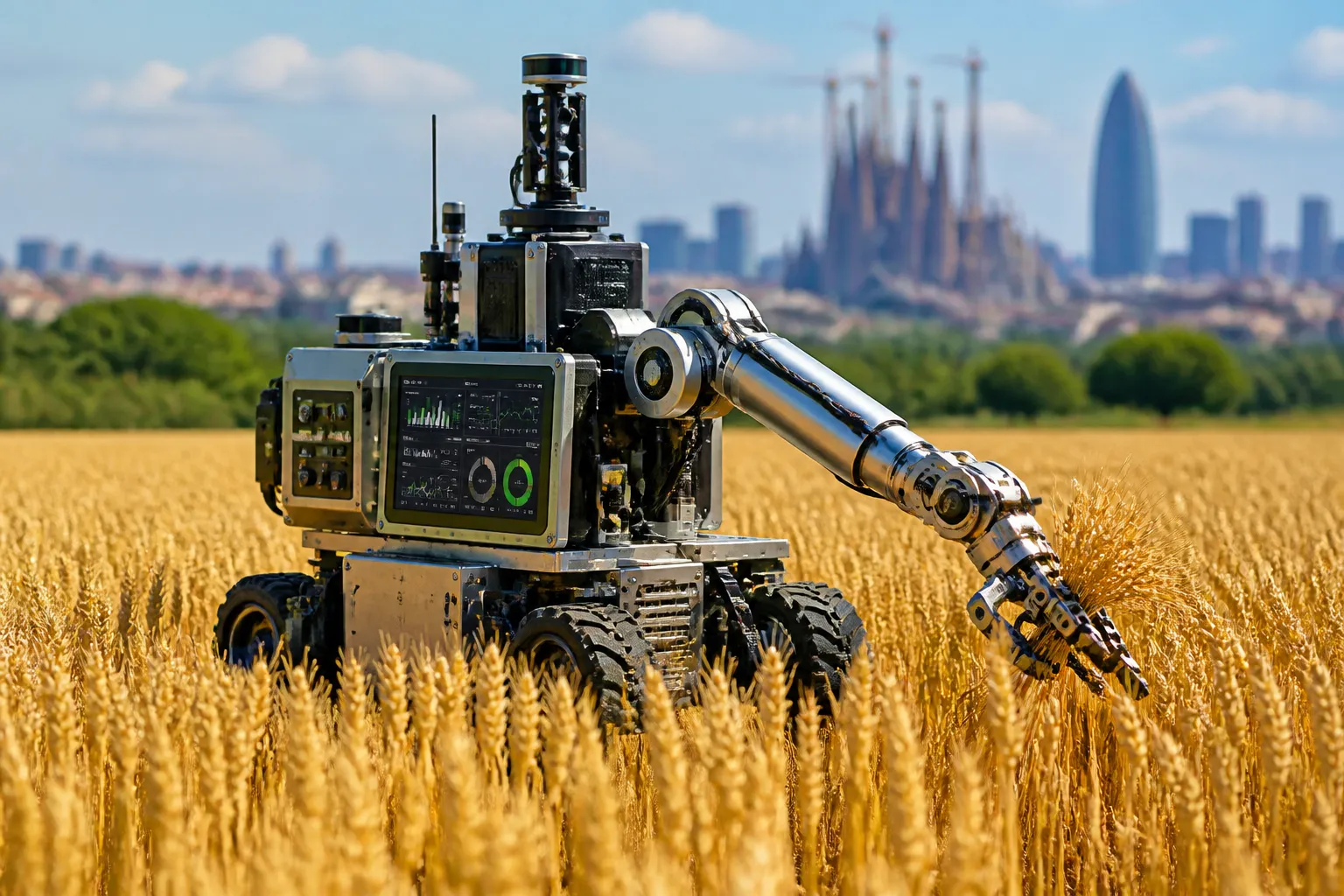
Pardell, a former software engineer with a background in precision agriculture, has built a vision around autonomous electric unmanned ground vehicles. These robots use a suite of high‑resolution cameras, multispectral sensors and LiDAR to scan fields in real time. As the data streams in, on‑board AI algorithms flag early signs of fungal infection and weed growth, while simultaneously logging environmental variables such as soil moisture and temperature.
The information collected feeds into predictive models that generate actionable insights for farmers. By knowing where a pathogen is likely to spread, a farmer can target interventions precisely, avoiding blanket pesticide applications. The company claims the robots can reduce chemical fungicide use by up to 70 % in pilot trials, though the exact figures are still under verification.
Beyond chemical savings, the electric nature of the vehicles addresses the carbon footprint of modern agriculture. Current mechanized equipment relies heavily on diesel engines, contributing to greenhouse‑gas emissions. Agrikola AI’s design eliminates that source, and the reduced need for manufactured fungicides further cuts the sector’s overall emissions profile.
The pre‑seed capital will go toward refining the hardware platform, expanding the engineering team and conducting market‑ready field tests. According to the company, the funding will also help secure regulatory approvals in the European Union, where pesticide usage is increasingly scrutinized.
Agrikola AI’s closed‑loop system is engineered for minimal human oversight. Once deployed, a robot can patrol a field for 12 hours, autonomously adjusting its path based on sensor feedback. When a disease hotspot is detected, the vehicle can deploy targeted biocontrol agents or trigger alerts for human intervention, ensuring that crops receive care only where it is needed.
The company’s focus on pesticide reduction aligns with growing regulatory pressure from bodies such as the European Food Safety Authority and consumer demands for “clean” produce. The EU’s Farm to Fork strategy, which aims to cut pesticide use by 50 % by 2030, provides a policy backdrop that could favor adoption of Agrikola AI’s technology.
While the pre‑seed round is the earliest stage of venture capital, the involvement of four reputable funds signals confidence in the startup’s technical roadmap. The capital will also enable Agrikola AI to build a broader data repository, a critical asset for improving the accuracy of its AI models over time.
In short, Agrikola AI’s July 13 funding round marks a pivotal step toward commercializing autonomous farming robots that promise lower pesticide use and a smaller carbon footprint. The company now faces the task of moving from prototype to production, a journey that will require continued investment, rigorous field validation and close engagement with regulatory bodies.
The investors highlighted the startup’s dual promise: advanced robotics paired with measurable environmental gains. “Agrikola AI is positioning itself at the intersection of technology and sustainability,” said a representative from Zubi Capital. The other funds echoed that sentiment, noting the company’s potential to accelerate the adoption of low‑chemical farming practices across Europe.
Pardell, a former software engineer with a background in precision agriculture, has built a vision around autonomous electric unmanned ground vehicles. These robots use a suite of high‑resolution cameras, multispectral sensors and LiDAR to scan fields in real time. As the data streams in, on‑board AI algorithms flag early signs of fungal infection and weed growth, while simultaneously logging environmental variables such as soil moisture and temperature.
The information collected feeds into predictive models that generate actionable insights for farmers. By knowing where a pathogen is likely to spread, a farmer can target interventions precisely, avoiding blanket pesticide applications. The company claims the robots can reduce chemical fungicide use by up to 70 % in pilot trials, though the exact figures are still under verification.
Beyond chemical savings, the electric nature of the vehicles addresses the carbon footprint of modern agriculture. Current mechanized equipment relies heavily on diesel engines, contributing to greenhouse‑gas emissions. Agrikola AI’s design eliminates that source, and the reduced need for manufactured fungicides further cuts the sector’s overall emissions profile.
The pre‑seed capital will go toward refining the hardware platform, expanding the engineering team and conducting market‑ready field tests. According to the company, the funding will also help secure regulatory approvals in the European Union, where pesticide usage is increasingly scrutinized.
Agrikola AI’s closed‑loop system is engineered for minimal human oversight. Once deployed, a robot can patrol a field for 12 hours, autonomously adjusting its path based on sensor feedback. When a disease hotspot is detected, the vehicle can deploy targeted biocontrol agents or trigger alerts for human intervention, ensuring that crops receive care only where it is needed.
The company’s focus on pesticide reduction aligns with growing regulatory pressure from bodies such as the European Food Safety Authority and consumer demands for “clean” produce. The EU’s Farm to Fork strategy, which aims to cut pesticide use by 50 % by 2030, provides a policy backdrop that could favor adoption of Agrikola AI’s technology.
While the pre‑seed round is the earliest stage of venture capital, the involvement of four reputable funds signals confidence in the startup’s technical roadmap. The capital will also enable Agrikola AI to build a broader data repository, a critical asset for improving the accuracy of its AI models over time.
In short, Agrikola AI’s July 13 funding round marks a pivotal step toward commercializing autonomous farming robots that promise lower pesticide use and a smaller carbon footprint. The company now faces the task of moving from prototype to production, a journey that will require continued investment, rigorous field validation and close engagement with regulatory bodies.