Blab Tech
UK Civil Aviation Authority Issues Guidance Amid Surge in Military and Police Radio-Frequency Jamming
The sky is getting louder.
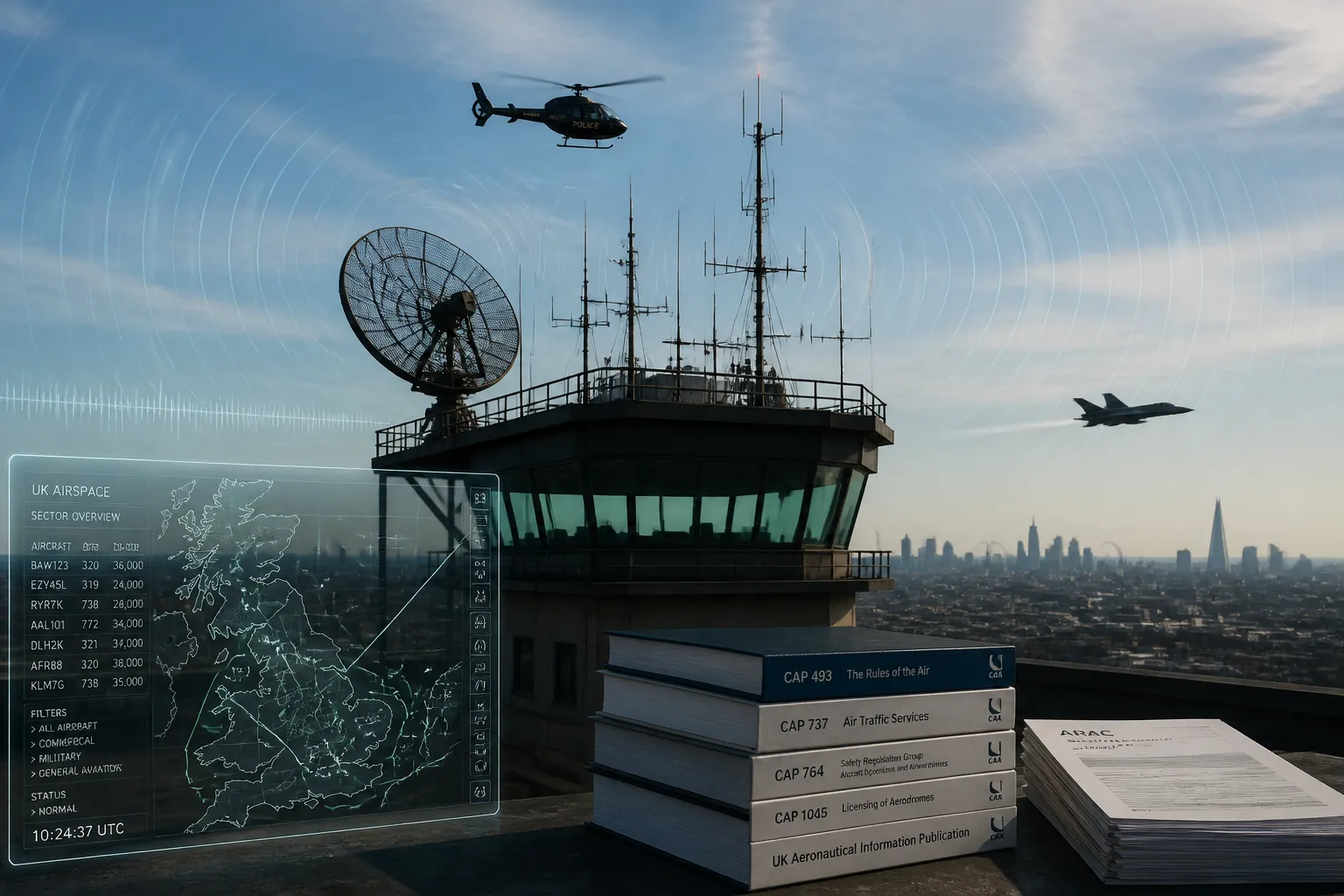
On 6 July 2026, the UK Civil Aviation Authority (CAA) issued new guidance for every airspace user, warning that a sharp rise in radio‑frequency (RF) jamming by the armed forces and law‑enforcement agencies is threatening the reliability of aircraft navigation and communication.
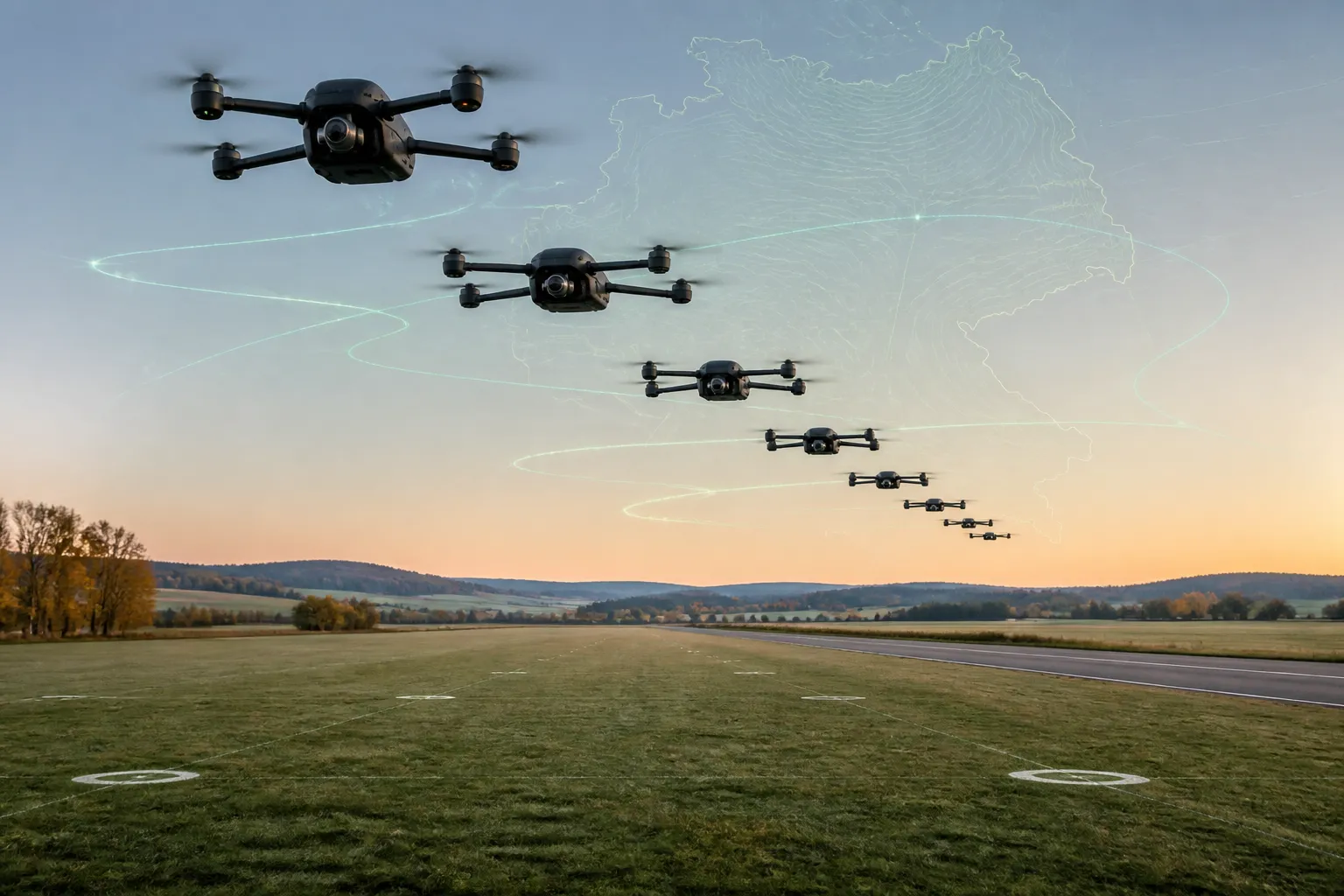
The surge, the CAA says, is driven by the rapid expansion of remotely piloted aircraft systems (RPAS) and the need to counter potential misuse. RF jamming deliberately blocks or interferes with radio signals, and while its primary aim is to disable a target drone’s command‑and‑control link, the high‑power emissions can spill over to any nearby aviation equipment.
The authority cautions that jamming can degrade Global Navigation Satellite Systems—GPS, GLONASS, and Galileo—as well as the Industrial, Science and Medical (ISM) bands that underpin Wi‑Fi, Bluetooth, and other critical avionics. Historical CAA data show that large‑scale military trials have already caused GPS receivers to fail up to 100 nautical miles from the jamming source, with effects reaching altitudes of 40,000 feet.
Beyond satellite navigation, interference in ISM bands can disable pilot‑display devices, drone video feeds, and electronic conspicuity systems that maintain situational awareness and collision avoidance. For drone operators, a loss of reliable command signals can mean loss of control or corrupted data, potentially preventing the activation of safety functions such as “return‑to‑home” or digital geofencing. Manned aircraft that rely on moving‑map displays may see incorrect positions, and the loss of GNSS data can impair air‑space warnings.
To mitigate these safety risks, the CAA advises operators not to rely solely on GNSS during known jamming trials and to be prepared to revert to conventional navigation methods such as dead‑reckoning. Air‑traffic controllers are also being placed on alert to assist aircraft that may need navigation support.
The guidance requires sponsors of jamming activities to coordinate and notify affected airspace users. Planned jamming events are announced through Notices to Aviation (NOTAMs) and Aeronautical Information Circulars (AICs), which outline the predicted geographic impact. The authority has introduced a three‑tier risk classification—Green (interference unlikely), Amber (interference possible), and Red (interference probable)—to help pilots prepare.
Lower‑power jamming equipment is now regularly deployed for operational reasons, such as protecting major public events or responding to emergency threats. Major scheduled military exercises contributing to the disruption include Exercise Enduring Look at RAF Spadeadam and GNSS jamming and spoofing trials at the Sennybridge Training Area in Wales.
Pilots who experience unnotified jamming are urged to report performance issues to the CAA to aid the identification of illegal jamming activities and improve future impact predictions.
In addition to the guidance, the CAA has published an upcoming jamming activity alert for July and August 2026, reminding stakeholders that known jamming events are typically notified a few days in advance. The alert lists the expected impact zones and the corresponding risk tiers.
The current situation reflects a growing need for coordination between military, law‑enforcement, and civil aviation stakeholders. While the CAA’s guidance provides a framework for notification and risk mitigation, the extent to which lower‑power jamming will continue to be used in unplanned emergency responses remains uncertain. The authority has not yet announced any regulatory changes to restrict the use of jamming equipment, and it is unclear how future exercises will balance the operational benefits of counter‑drone measures against the safety risks to the broader aviation community.
The CAA’s latest guidance underscores the importance of maintaining situational awareness and preparedness among all airspace users. As drone operations expand and counter‑measures become more sophisticated, the aviation sector will need to adapt to the increased likelihood of RF interference and ensure that both manned and unmanned aircraft can navigate safely even when GNSS signals are compromised.
On 6 July 2026, the UK Civil Aviation Authority (CAA) issued new guidance for every airspace user, warning that a sharp rise in radio‑frequency (RF) jamming by the armed forces and law‑enforcement agencies is threatening the reliability of aircraft navigation and communication.
The surge, the CAA says, is driven by the rapid expansion of remotely piloted aircraft systems (RPAS) and the need to counter potential misuse. RF jamming deliberately blocks or interferes with radio signals, and while its primary aim is to disable a target drone’s command‑and‑control link, the high‑power emissions can spill over to any nearby aviation equipment.
The authority cautions that jamming can degrade Global Navigation Satellite Systems—GPS, GLONASS, and Galileo—as well as the Industrial, Science and Medical (ISM) bands that underpin Wi‑Fi, Bluetooth, and other critical avionics. Historical CAA data show that large‑scale military trials have already caused GPS receivers to fail up to 100 nautical miles from the jamming source, with effects reaching altitudes of 40,000 feet.
Beyond satellite navigation, interference in ISM bands can disable pilot‑display devices, drone video feeds, and electronic conspicuity systems that maintain situational awareness and collision avoidance. For drone operators, a loss of reliable command signals can mean loss of control or corrupted data, potentially preventing the activation of safety functions such as “return‑to‑home” or digital geofencing. Manned aircraft that rely on moving‑map displays may see incorrect positions, and the loss of GNSS data can impair air‑space warnings.
To mitigate these safety risks, the CAA advises operators not to rely solely on GNSS during known jamming trials and to be prepared to revert to conventional navigation methods such as dead‑reckoning. Air‑traffic controllers are also being placed on alert to assist aircraft that may need navigation support.
The guidance requires sponsors of jamming activities to coordinate and notify affected airspace users. Planned jamming events are announced through Notices to Aviation (NOTAMs) and Aeronautical Information Circulars (AICs), which outline the predicted geographic impact. The authority has introduced a three‑tier risk classification—Green (interference unlikely), Amber (interference possible), and Red (interference probable)—to help pilots prepare.
Lower‑power jamming equipment is now regularly deployed for operational reasons, such as protecting major public events or responding to emergency threats. Major scheduled military exercises contributing to the disruption include Exercise Enduring Look at RAF Spadeadam and GNSS jamming and spoofing trials at the Sennybridge Training Area in Wales.
Pilots who experience unnotified jamming are urged to report performance issues to the CAA to aid the identification of illegal jamming activities and improve future impact predictions.
In addition to the guidance, the CAA has published an upcoming jamming activity alert for July and August 2026, reminding stakeholders that known jamming events are typically notified a few days in advance. The alert lists the expected impact zones and the corresponding risk tiers.
The current situation reflects a growing need for coordination between military, law‑enforcement, and civil aviation stakeholders. While the CAA’s guidance provides a framework for notification and risk mitigation, the extent to which lower‑power jamming will continue to be used in unplanned emergency responses remains uncertain. The authority has not yet announced any regulatory changes to restrict the use of jamming equipment, and it is unclear how future exercises will balance the operational benefits of counter‑drone measures against the safety risks to the broader aviation community.
The CAA’s latest guidance underscores the importance of maintaining situational awareness and preparedness among all airspace users. As drone operations expand and counter‑measures become more sophisticated, the aviation sector will need to adapt to the increased likelihood of RF interference and ensure that both manned and unmanned aircraft can navigate safely even when GNSS signals are compromised.