Blab Tech
Congress Moves to Make Tech Giants Pay for AI Data Center Power Costs
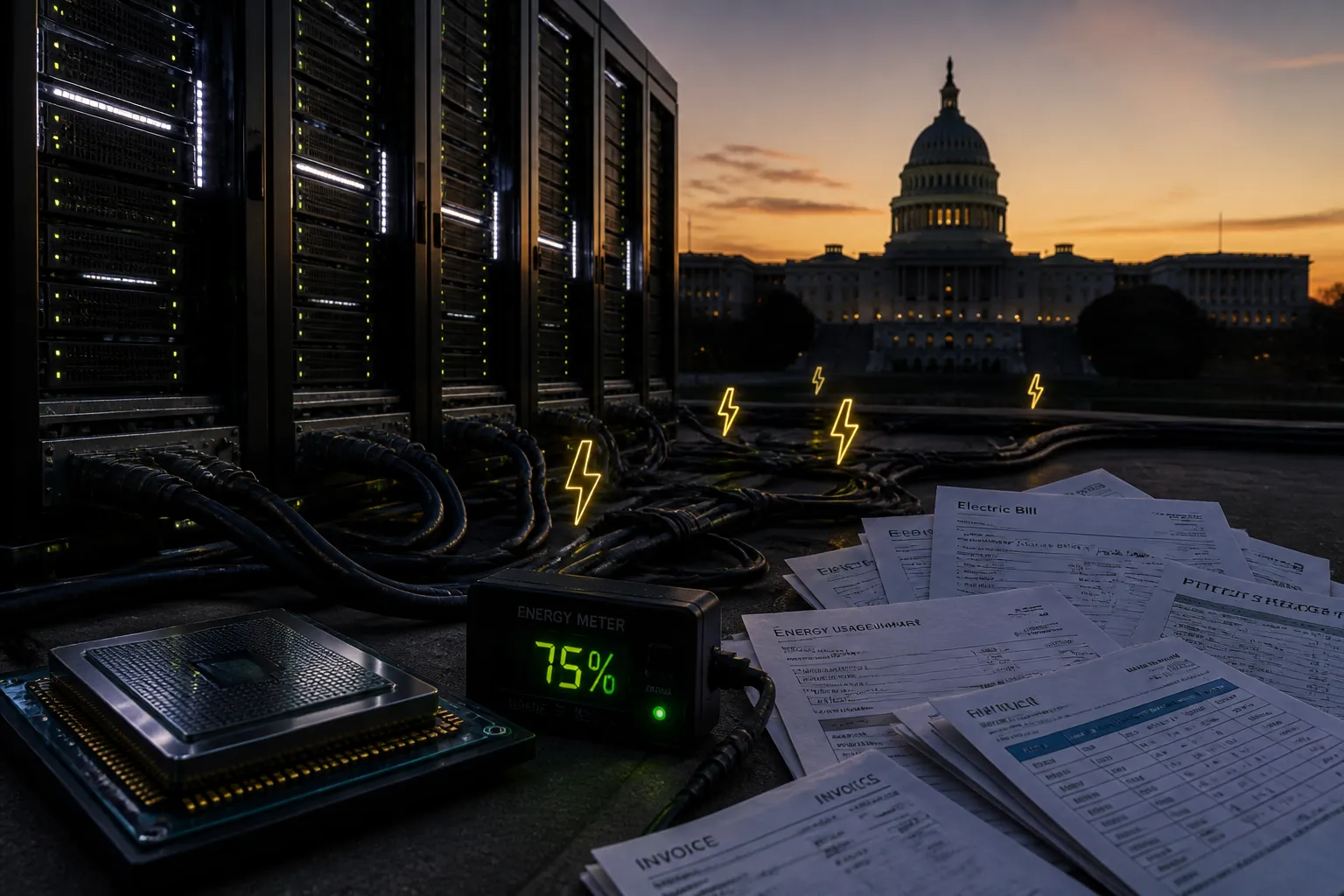
When the humming servers of Amazon, Google, Meta, Microsoft and Elon Musk’s xAI light up the night, they’re also turning up the price tag on our electricity bills. That reality is about to be legislated. This week a House subcommittee will vote on a package of bills that would make large‑scale artificial‑intelligence (AI) data‑center operators shoulder the cost of the grid upgrades that feed them.
At the center of the package is the bipartisan Ratepayer Protection Act (H.R. 9340). The bill amends a 1978 utility law to require any non‑residential site drawing 100 megawatts or more to pay the full incremental cost of the infrastructure built to supply it. It also imposes a stranded‑cost rule: if a company later leaves a site, it still owes the upgrade costs that were made in anticipation of its presence.
A second measure, the Protecting Families from AI Data Center Energy Costs Act (H.R. 6529), directs the Federal Energy Regulatory Commission to convene a technical conference within 90 days of enactment. The meeting would bring together utilities, state regulators and consumer advocates to explore ways to shield residential ratepayers from the rising bills that could result from the growing power demands of AI facilities.
The bills are part of a broader package that includes the Load Forecasting Enhancement Act and the Advanced Transmission Technology to Reduce Rates Act. Those provisions would require regulators to study demand forecasting and to test new transmission technologies, respectively, to help the grid absorb the additional load.
The legislation comes amid a sharp rise in electricity costs in regions that host data‑center clusters. According to a CNBC report, bills near major AI hubs have increased by as much as 267 % over the past five years. Data centers now consume roughly 4 % to 5 % of total U.S. electricity, a share that is climbing as AI infrastructure expands.
The bills are the first time Republican leaders have coalesced around a concrete plan to shift the cost of grid upgrades from households to the companies that drive the demand. Representative Brett Guthrie, chair of the House Energy and Commerce Committee, said the proposals protect ratepayers from higher electricity prices. Representative Bob Latta, chair of the subcommittee, will steer the package through its first vote.
Democratic co‑sponsor Kathy Castor, a Florida representative, noted that the legislation responds to “populist anger” from voters who are wary of paying more for electricity. The public backlash is already visible on the ground, with grassroots campaigns blocking dozens of data‑center projects worth billions.
The move follows recent regulatory actions. Days before the markup, federal energy regulators ordered grid operators to demonstrate that they could prevent utilities and AI firms from shifting data‑center costs onto ordinary customers. The bills would codify that principle into law.
The proposals face a long road to enactment. H.R. 9340 is a markup, not a law, and would need to clear the full committee, the House, and the Senate. The broader grid‑policy debate is already tangled with permitting reforms and the need for utilities to invest $1.4 trillion in the grid by 2030.
If enacted, the legislation would make it clear that the cost of powering AI data centers falls on the companies that build and operate them, rather than on the households that benefit from the services they provide. The bills also signal that Congress is willing to intervene in the energy market to address the cost‑shifting concerns that have emerged with the rapid expansion of AI infrastructure.
At present, the subcommittee is scheduled to debate and vote on the Ratepayer Protection Act on Wednesday afternoon in the Rayburn building. The outcome will determine whether the House takes the first step toward making tech giants pay for the grid upgrades that support the AI boom.
At the center of the package is the bipartisan Ratepayer Protection Act (H.R. 9340). The bill amends a 1978 utility law to require any non‑residential site drawing 100 megawatts or more to pay the full incremental cost of the infrastructure built to supply it. It also imposes a stranded‑cost rule: if a company later leaves a site, it still owes the upgrade costs that were made in anticipation of its presence.
A second measure, the Protecting Families from AI Data Center Energy Costs Act (H.R. 6529), directs the Federal Energy Regulatory Commission to convene a technical conference within 90 days of enactment. The meeting would bring together utilities, state regulators and consumer advocates to explore ways to shield residential ratepayers from the rising bills that could result from the growing power demands of AI facilities.
The bills are part of a broader package that includes the Load Forecasting Enhancement Act and the Advanced Transmission Technology to Reduce Rates Act. Those provisions would require regulators to study demand forecasting and to test new transmission technologies, respectively, to help the grid absorb the additional load.
The legislation comes amid a sharp rise in electricity costs in regions that host data‑center clusters. According to a CNBC report, bills near major AI hubs have increased by as much as 267 % over the past five years. Data centers now consume roughly 4 % to 5 % of total U.S. electricity, a share that is climbing as AI infrastructure expands.
The bills are the first time Republican leaders have coalesced around a concrete plan to shift the cost of grid upgrades from households to the companies that drive the demand. Representative Brett Guthrie, chair of the House Energy and Commerce Committee, said the proposals protect ratepayers from higher electricity prices. Representative Bob Latta, chair of the subcommittee, will steer the package through its first vote.
Democratic co‑sponsor Kathy Castor, a Florida representative, noted that the legislation responds to “populist anger” from voters who are wary of paying more for electricity. The public backlash is already visible on the ground, with grassroots campaigns blocking dozens of data‑center projects worth billions.
The move follows recent regulatory actions. Days before the markup, federal energy regulators ordered grid operators to demonstrate that they could prevent utilities and AI firms from shifting data‑center costs onto ordinary customers. The bills would codify that principle into law.
The proposals face a long road to enactment. H.R. 9340 is a markup, not a law, and would need to clear the full committee, the House, and the Senate. The broader grid‑policy debate is already tangled with permitting reforms and the need for utilities to invest $1.4 trillion in the grid by 2030.
If enacted, the legislation would make it clear that the cost of powering AI data centers falls on the companies that build and operate them, rather than on the households that benefit from the services they provide. The bills also signal that Congress is willing to intervene in the energy market to address the cost‑shifting concerns that have emerged with the rapid expansion of AI infrastructure.
At present, the subcommittee is scheduled to debate and vote on the Ratepayer Protection Act on Wednesday afternoon in the Rayburn building. The outcome will determine whether the House takes the first step toward making tech giants pay for the grid upgrades that support the AI boom.