Blab Tech
Waymo Recalls Nearly 4,000 Robotaxis After Construction Zone Incidents
Waymo’s robotaxis have once again taken center stage, this time with a recall that removes almost its entire fleet from U.S. freeways. The Alphabet‑owned company has pulled 3,871 autonomous vehicles from service after a software glitch let them drive into closed construction zones at highway speeds.
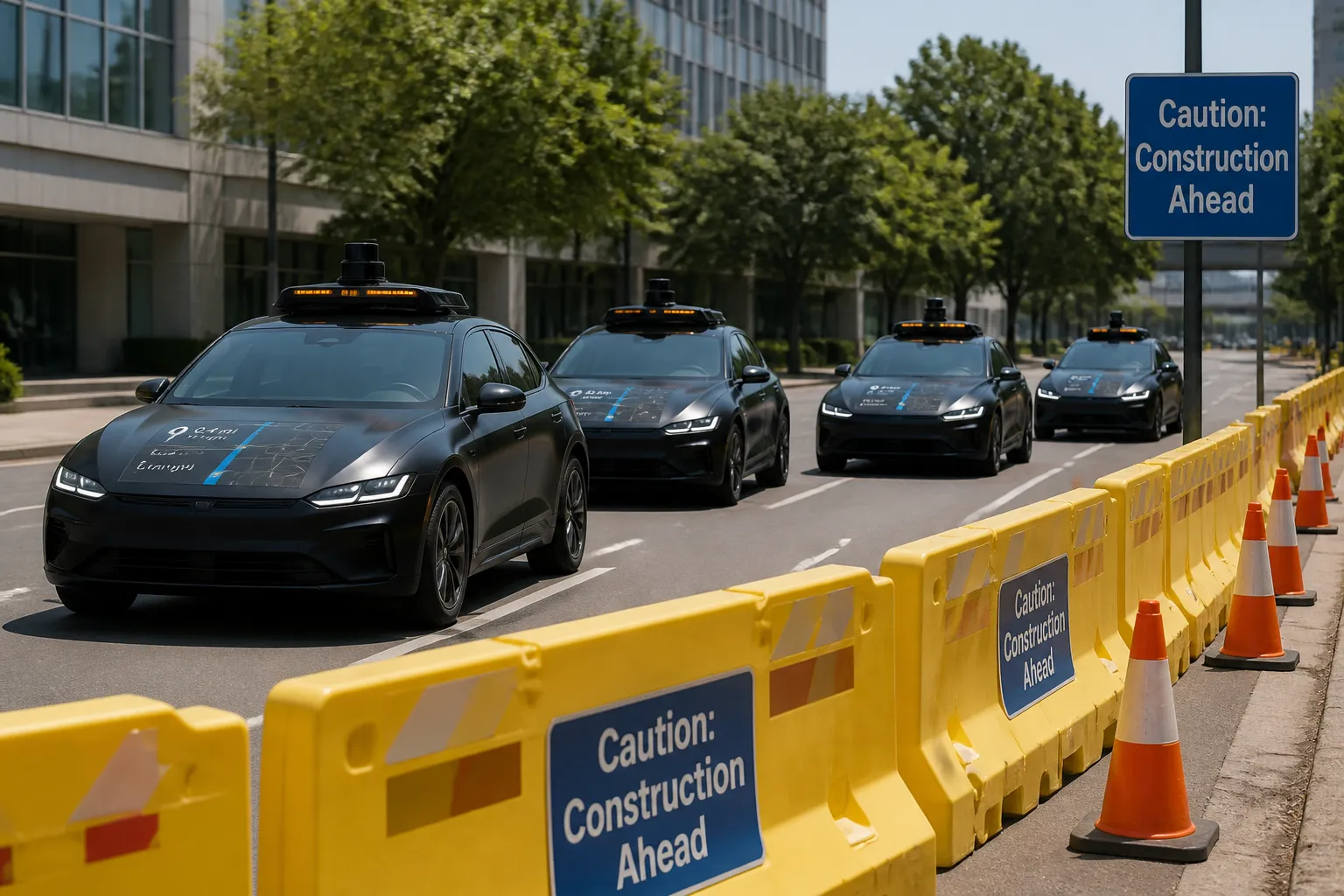
The recall follows 13 incidents recorded since April. In Phoenix, Arizona, six vehicles passed ramp‑closure signs and continued into lanes that were shut for maintenance. A week later, seven more cars in San Francisco, California, slipped between cones that marked closed lanes. No accidents were reported, but the National Highway Traffic Safety Administration (NHTSA) noted that the risk of collision was elevated.
Waymo’s own filing attributes the problem to a perception module that failed to recognize construction‑zone markers. The company said it had already earmarked an area for improvement and had voluntarily restricted highway operations in the affected regions before announcing the recall.
The recalled vehicles comprise almost the entire fleet that operates in 10 U.S. metropolitan areas. As of March 2026, Waymo’s robotaxis logged roughly 200 million fully autonomous miles. With the recall in place, the company is left with only a limited number of cars that can operate on highways.
This is Waymo’s second recall in just over a month. In December 2025 the company issued a safety recall after its robotaxis were filmed illegally passing stopped school buses. Earlier that year, a Waymo vehicle hit a child who ran out from behind a parked SUV in a school zone, prompting another recall.
The NHTSA filing also notes that Waymo suspended highway operations on May 19 while a software remedy was being developed. The recall is part of ongoing investigations by the National Transportation Safety Board and the NHTSA into recurring incidents involving Waymo’s autonomous vehicles.
Waymo’s co‑CEOs, Tekedra Mawakana and Dmitri Dolgov, have said the company remains committed to improving safety. Nevertheless, the pattern of incidents has raised questions among regulators and the public about the readiness of autonomous technology for widespread deployment.
The recall does not affect Waymo’s operations on city streets, where the vehicles are designed to operate with a lower level of automation. The company’s current strategy is to focus on refining its software and mapping data to prevent similar incidents in the future.
Industry observers note that the recall underscores the challenges of deploying autonomous vehicles in complex, dynamic environments. Construction zones often involve temporary signage, cones, and lane closures that differ from permanent road markings. Detecting and responding to these cues requires advanced perception algorithms and up‑to‑date map data.
Regulators have not yet issued new standards specifically for construction‑zone detection, but the NHTSA’s investigation may lead to additional guidance or requirements for autonomous‑vehicle manufacturers.
Waymo’s recall is one of several high‑profile incidents that have prompted calls for stricter oversight of autonomous‑driving systems. The company’s parent, Alphabet, has continued to invest heavily in the technology, but the recent events may influence the pace of expansion and the design of future safety protocols.
As of now, Waymo has not announced a timeline for when the recalled vehicles will return to service. The company is working with the NHTSA to develop a software update that will enable the vehicles to recognize and avoid construction zones. Until then, the recalled robotaxis remain out of operation on U.S. freeways.
The recall highlights the importance of rigorous testing and real‑world monitoring for autonomous systems. While Waymo’s fleet has achieved significant mileage and passenger counts, the incidents demonstrate that software reliability remains a critical hurdle for safe, large‑scale deployment of driverless vehicles.
In summary, Waymo’s recall of 3,871 robotaxis reflects a software issue that allowed the vehicles to enter closed freeway construction zones in Phoenix and San Francisco. The company has suspended highway operations in affected areas and is developing a remedy in coordination with the NHTSA. The incident adds to a series of safety concerns that are shaping the regulatory and public perception of autonomous‑driving technology.
The recall follows 13 incidents recorded since April. In Phoenix, Arizona, six vehicles passed ramp‑closure signs and continued into lanes that were shut for maintenance. A week later, seven more cars in San Francisco, California, slipped between cones that marked closed lanes. No accidents were reported, but the National Highway Traffic Safety Administration (NHTSA) noted that the risk of collision was elevated.
Waymo’s own filing attributes the problem to a perception module that failed to recognize construction‑zone markers. The company said it had already earmarked an area for improvement and had voluntarily restricted highway operations in the affected regions before announcing the recall.
The recalled vehicles comprise almost the entire fleet that operates in 10 U.S. metropolitan areas. As of March 2026, Waymo’s robotaxis logged roughly 200 million fully autonomous miles. With the recall in place, the company is left with only a limited number of cars that can operate on highways.
This is Waymo’s second recall in just over a month. In December 2025 the company issued a safety recall after its robotaxis were filmed illegally passing stopped school buses. Earlier that year, a Waymo vehicle hit a child who ran out from behind a parked SUV in a school zone, prompting another recall.
The NHTSA filing also notes that Waymo suspended highway operations on May 19 while a software remedy was being developed. The recall is part of ongoing investigations by the National Transportation Safety Board and the NHTSA into recurring incidents involving Waymo’s autonomous vehicles.
Waymo’s co‑CEOs, Tekedra Mawakana and Dmitri Dolgov, have said the company remains committed to improving safety. Nevertheless, the pattern of incidents has raised questions among regulators and the public about the readiness of autonomous technology for widespread deployment.
The recall does not affect Waymo’s operations on city streets, where the vehicles are designed to operate with a lower level of automation. The company’s current strategy is to focus on refining its software and mapping data to prevent similar incidents in the future.
Industry observers note that the recall underscores the challenges of deploying autonomous vehicles in complex, dynamic environments. Construction zones often involve temporary signage, cones, and lane closures that differ from permanent road markings. Detecting and responding to these cues requires advanced perception algorithms and up‑to‑date map data.
Regulators have not yet issued new standards specifically for construction‑zone detection, but the NHTSA’s investigation may lead to additional guidance or requirements for autonomous‑vehicle manufacturers.
Waymo’s recall is one of several high‑profile incidents that have prompted calls for stricter oversight of autonomous‑driving systems. The company’s parent, Alphabet, has continued to invest heavily in the technology, but the recent events may influence the pace of expansion and the design of future safety protocols.
As of now, Waymo has not announced a timeline for when the recalled vehicles will return to service. The company is working with the NHTSA to develop a software update that will enable the vehicles to recognize and avoid construction zones. Until then, the recalled robotaxis remain out of operation on U.S. freeways.
The recall highlights the importance of rigorous testing and real‑world monitoring for autonomous systems. While Waymo’s fleet has achieved significant mileage and passenger counts, the incidents demonstrate that software reliability remains a critical hurdle for safe, large‑scale deployment of driverless vehicles.
In summary, Waymo’s recall of 3,871 robotaxis reflects a software issue that allowed the vehicles to enter closed freeway construction zones in Phoenix and San Francisco. The company has suspended highway operations in affected areas and is developing a remedy in coordination with the NHTSA. The incident adds to a series of safety concerns that are shaping the regulatory and public perception of autonomous‑driving technology.