Blab Tech
TD Bank Introduces WorkiQ Monitoring Software to Track Remote Employees' Time
Toronto‑Dominion Bank (TD) announced that it will deploy the WorkiQ monitoring tool, developed by ActiveOps, to track the time its financial‑crimes and risk‑management staff spend on browsers, internal chat and meeting applications. The announcement came after a recorded team call on June 14 in which TD’s associate vice‑president of high‑risk investigations, Deanna Pacitti, explained the software’s purpose and addressed employee questions.
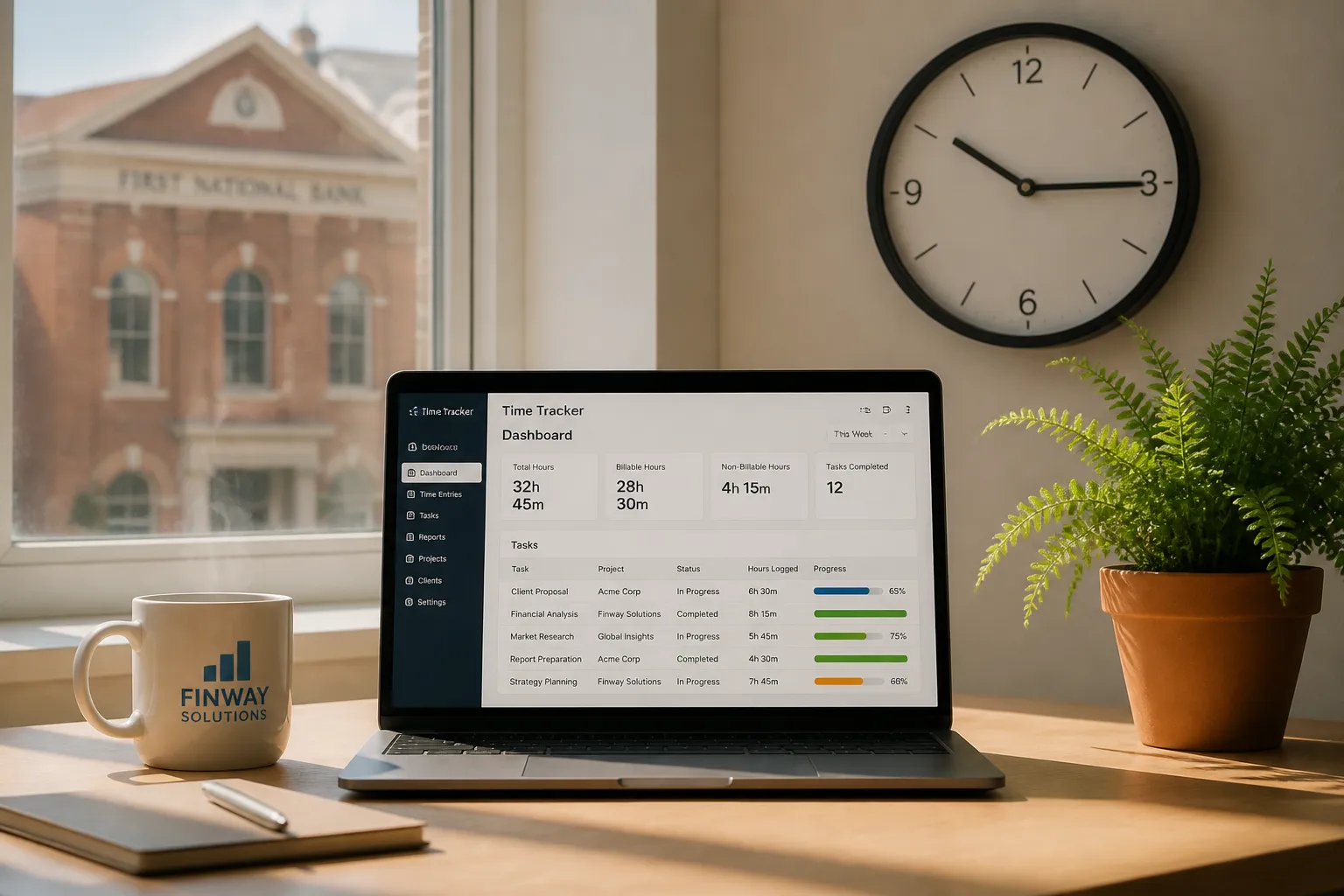
According to the recording, WorkiQ runs in the background on employees’ computers and records when a user is active or inactive. Pacitti clarified that the tool does not record the content of conversations or the specific actions taken within applications such as Excel. The software is intended to provide managers with “pain points” and insights into where teams spend time, according to TD’s statement to Reuters. TD said the system is not an artificial‑intelligence platform and is not tied to any particular business unit.
TD’s spokesperson said the deployment is “standard practice across the industry” and that the bank uses automated solutions to improve insights and better allocate resources. The company added that it has safeguards in place to protect colleagues’ privacy and that employees are informed about where the tool is used and for what purpose. The bank also released an FAQ document that explains how WorkiQ will help managers regain transparency lost in a hybrid work environment and answers questions such as whether internet use during lunch is allowed and how much unaccounted time is acceptable.
Employees raised concerns during the call about consent, data usage and the possibility of the tool being used for performance management. Several staff members asked whether they would be asked for consent and how the data would be used. Pacitti responded that the system had undergone a privacy review and that it would not listen to conversations during meetings. She also noted that the tool would capture an employee’s activity status but not the content of the work performed.
The move comes as TD has expanded its financial‑crimes and compliance unit in recent years, following a record fine for money‑laundering violations in the United States. The fine was the largest paid by a major bank in Canada. Most TD employees have worked on a hybrid basis between the office and home since the pandemic, and the bank said it is looking for ways to monitor productivity without infringing on privacy.
The initiative is part of a broader trend of employee monitoring in the financial sector. In March, the Financial Times reported that JPMorgan Chase was beginning to monitor the hours of its junior investment bankers, citing employee well‑being as a justification. Meta has also scaled back plans to collect detailed mouse‑movement and keystroke data for AI training after staff pushback.
A source who spoke anonymously said that 90 to 100 people were on the call, though Reuters could not confirm the exact number or whether the deployment would be limited to Canada. The source also noted that some employees suggested that the resources used for monitoring could instead be directed toward reducing manual processes.
TD’s statement to Reuters emphasized that the WorkiQ tool is intended to improve workflow management and team capacity, not to serve as a performance‑evaluation system. The bank said it would continue to refine its approach to employee monitoring and that it remains committed to protecting privacy.
At present, TD has not announced a rollout date for the software, nor has it indicated whether the tool will be extended beyond the financial‑crimes unit. The bank has also not released any data on how many employees will be monitored or the specific metrics that will be tracked.
The deployment of WorkiQ highlights the tension between the need for operational oversight in a hybrid work environment and employees’ expectations of privacy. As other banks and tech firms grapple with similar issues, the industry will likely see continued scrutiny of monitoring practices and the development of clearer guidelines and safeguards.
TD’s next steps will likely involve finalizing the scope of the rollout, communicating detailed privacy safeguards to employees, and monitoring the impact on productivity and employee satisfaction. The bank’s approach to employee monitoring will be closely watched by regulators, employees, and industry observers as the conversation around workplace surveillance evolves.
According to the recording, WorkiQ runs in the background on employees’ computers and records when a user is active or inactive. Pacitti clarified that the tool does not record the content of conversations or the specific actions taken within applications such as Excel. The software is intended to provide managers with “pain points” and insights into where teams spend time, according to TD’s statement to Reuters. TD said the system is not an artificial‑intelligence platform and is not tied to any particular business unit.
TD’s spokesperson said the deployment is “standard practice across the industry” and that the bank uses automated solutions to improve insights and better allocate resources. The company added that it has safeguards in place to protect colleagues’ privacy and that employees are informed about where the tool is used and for what purpose. The bank also released an FAQ document that explains how WorkiQ will help managers regain transparency lost in a hybrid work environment and answers questions such as whether internet use during lunch is allowed and how much unaccounted time is acceptable.
Employees raised concerns during the call about consent, data usage and the possibility of the tool being used for performance management. Several staff members asked whether they would be asked for consent and how the data would be used. Pacitti responded that the system had undergone a privacy review and that it would not listen to conversations during meetings. She also noted that the tool would capture an employee’s activity status but not the content of the work performed.
The move comes as TD has expanded its financial‑crimes and compliance unit in recent years, following a record fine for money‑laundering violations in the United States. The fine was the largest paid by a major bank in Canada. Most TD employees have worked on a hybrid basis between the office and home since the pandemic, and the bank said it is looking for ways to monitor productivity without infringing on privacy.
The initiative is part of a broader trend of employee monitoring in the financial sector. In March, the Financial Times reported that JPMorgan Chase was beginning to monitor the hours of its junior investment bankers, citing employee well‑being as a justification. Meta has also scaled back plans to collect detailed mouse‑movement and keystroke data for AI training after staff pushback.
A source who spoke anonymously said that 90 to 100 people were on the call, though Reuters could not confirm the exact number or whether the deployment would be limited to Canada. The source also noted that some employees suggested that the resources used for monitoring could instead be directed toward reducing manual processes.
TD’s statement to Reuters emphasized that the WorkiQ tool is intended to improve workflow management and team capacity, not to serve as a performance‑evaluation system. The bank said it would continue to refine its approach to employee monitoring and that it remains committed to protecting privacy.
At present, TD has not announced a rollout date for the software, nor has it indicated whether the tool will be extended beyond the financial‑crimes unit. The bank has also not released any data on how many employees will be monitored or the specific metrics that will be tracked.
The deployment of WorkiQ highlights the tension between the need for operational oversight in a hybrid work environment and employees’ expectations of privacy. As other banks and tech firms grapple with similar issues, the industry will likely see continued scrutiny of monitoring practices and the development of clearer guidelines and safeguards.
TD’s next steps will likely involve finalizing the scope of the rollout, communicating detailed privacy safeguards to employees, and monitoring the impact on productivity and employee satisfaction. The bank’s approach to employee monitoring will be closely watched by regulators, employees, and industry observers as the conversation around workplace surveillance evolves.