Blab Tech
Rocket Lab Expands Synspective Constellation and Acquires Mars-Proven Robotics Firm Motiv Space Systems
On May 22, 2026, Rocket Lab USA, Inc. (NASDAQ: RKLB) carried out its ninth dedicated Electron launch for the Japanese satellite operator Synspective. The flight deployed the StriX synthetic‑aperture radar (SAR) satellite from Launch Complex 1 in Mahia, New Zealand, adding a new node to Synspective’s Earth‑observation constellation. Rocket Lab announced that 18 additional Synspective launches are now booked, underscoring sustained commercial demand for its Electron vehicle.
Synspective, a specialist in SAR satellites that provide global imaging, has built a reputation for delivering high‑resolution radar data that feeds environmental monitoring, disaster response, and resource‑management applications. The StriX mission extended Synspective’s coverage of radar imagery, enabling more frequent and detailed observations of the planet’s surface.
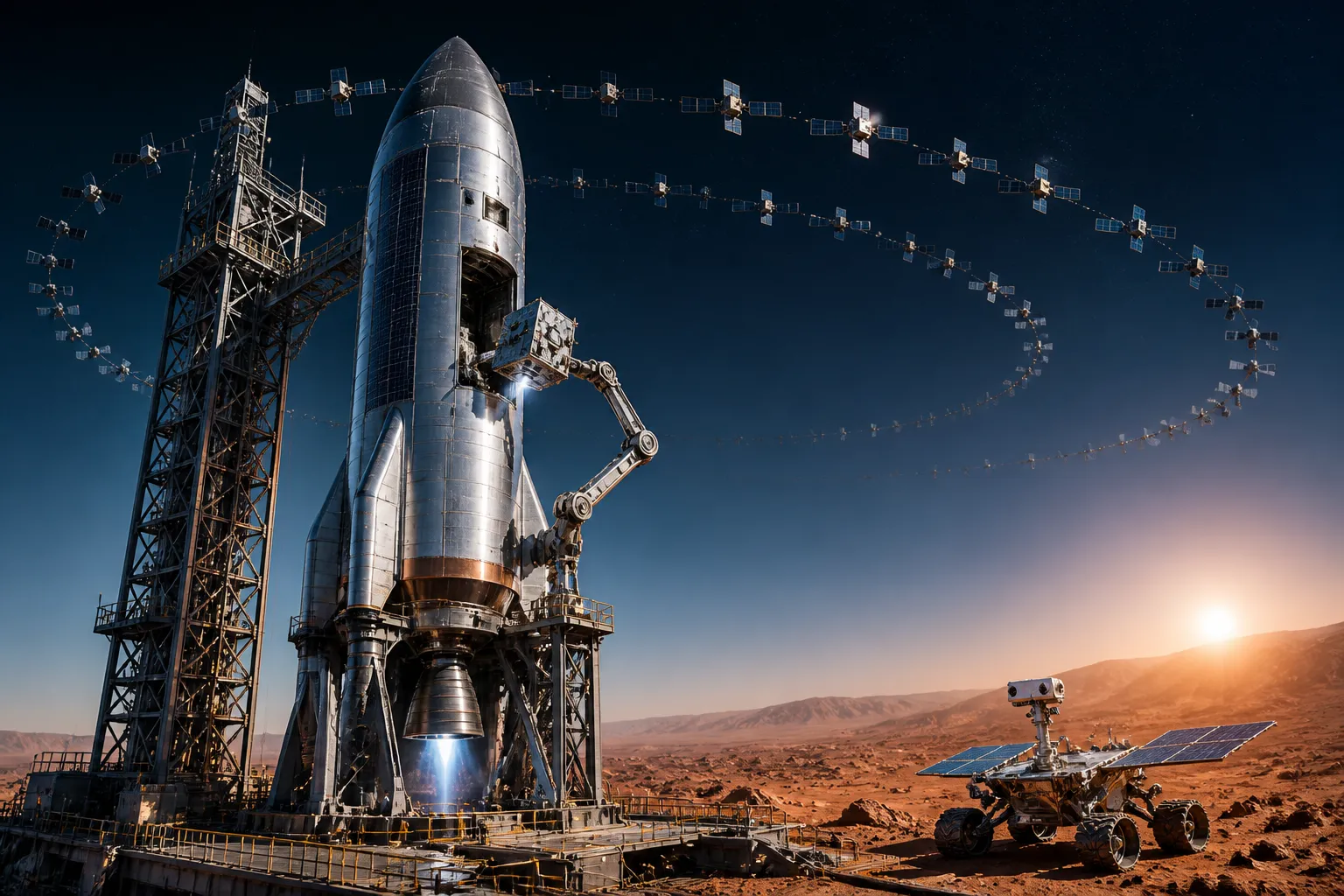
The launch is part of Rocket Lab’s broader strategy to boost revenue from higher‑value space systems. Just four days later, on May 26, the company completed the acquisition of Motiv Space Systems, a California‑based manufacturer of robotics and precision mechanisms. Motiv is best known for producing the robotic arm that NASA’s Perseverance rover uses on Mars, as well as for supplying actuators and solar‑array drive assemblies for lunar and Mars missions.
The deal, which now positions Motiv as Rocket Lab Robotics, adds Mars‑proven robotic technology to Rocket Lab’s portfolio. The company said the move supports planetary exploration, satellite constellations, and orbital infrastructure. Motiv’s Pasadena team will be integrated into Rocket Lab’s existing facilities.
Financially, Rocket Lab reported first‑quarter 2026 revenue of $200.3 million, a 63.5 % increase from the same period a year earlier. The company’s backlog exceeded $2.2 billion, reflecting a mix of launch services and space‑systems contracts. The revenue growth is attributed to both the Electron launch cadence and the expansion of the company’s space‑systems segment.
Rocket Lab’s business model spans launch services, spacecraft and satellite components, solar solutions, and spacecraft software. The firm has earned a reputation for rapid deployment of small‑satellite payloads and for developing satellite buses and complete spacecraft. The Motiv acquisition aligns with Rocket Lab’s goal of becoming a vertically integrated, end‑to‑end space company.
The StriX mission and the Motiv acquisition are linked by Rocket Lab’s focus on delivering integrated solutions. The Electron rocket has completed more than 80 missions, making it the most prolific small‑lift launch vehicle in operation worldwide. The new robotics capabilities will enable Rocket Lab to offer on‑orbit servicing, satellite assembly, and planetary surface operations.
Industry analysts note that the combination of repeat commercial launches and robotics integration positions Rocket Lab to compete for larger contracts, including those from government agencies and commercial constellations. The company’s backlog and revenue growth suggest a healthy pipeline of launch and systems orders.
Regulatory and market implications are still developing. Rocket Lab’s expansion into robotics may attract additional government contracts, particularly for Mars and lunar missions. The company’s recent revenue figures and backlog indicate strong demand for its launch and systems services.
In summary, Rocket Lab’s May 22 launch of a StriX satellite for Synspective and its May 26 acquisition of Motiv Space Systems demonstrate a dual strategy of expanding launch cadence and enhancing space‑systems capabilities. The company’s Q1 2026 revenue growth and backlog underscore the commercial viability of its integrated approach. Upcoming launches and further acquisitions will determine how quickly Rocket Lab can translate these capabilities into larger contracts and market share.
Synspective, a specialist in SAR satellites that provide global imaging, has built a reputation for delivering high‑resolution radar data that feeds environmental monitoring, disaster response, and resource‑management applications. The StriX mission extended Synspective’s coverage of radar imagery, enabling more frequent and detailed observations of the planet’s surface.
The launch is part of Rocket Lab’s broader strategy to boost revenue from higher‑value space systems. Just four days later, on May 26, the company completed the acquisition of Motiv Space Systems, a California‑based manufacturer of robotics and precision mechanisms. Motiv is best known for producing the robotic arm that NASA’s Perseverance rover uses on Mars, as well as for supplying actuators and solar‑array drive assemblies for lunar and Mars missions.
The deal, which now positions Motiv as Rocket Lab Robotics, adds Mars‑proven robotic technology to Rocket Lab’s portfolio. The company said the move supports planetary exploration, satellite constellations, and orbital infrastructure. Motiv’s Pasadena team will be integrated into Rocket Lab’s existing facilities.
Financially, Rocket Lab reported first‑quarter 2026 revenue of $200.3 million, a 63.5 % increase from the same period a year earlier. The company’s backlog exceeded $2.2 billion, reflecting a mix of launch services and space‑systems contracts. The revenue growth is attributed to both the Electron launch cadence and the expansion of the company’s space‑systems segment.
Rocket Lab’s business model spans launch services, spacecraft and satellite components, solar solutions, and spacecraft software. The firm has earned a reputation for rapid deployment of small‑satellite payloads and for developing satellite buses and complete spacecraft. The Motiv acquisition aligns with Rocket Lab’s goal of becoming a vertically integrated, end‑to‑end space company.
The StriX mission and the Motiv acquisition are linked by Rocket Lab’s focus on delivering integrated solutions. The Electron rocket has completed more than 80 missions, making it the most prolific small‑lift launch vehicle in operation worldwide. The new robotics capabilities will enable Rocket Lab to offer on‑orbit servicing, satellite assembly, and planetary surface operations.
Industry analysts note that the combination of repeat commercial launches and robotics integration positions Rocket Lab to compete for larger contracts, including those from government agencies and commercial constellations. The company’s backlog and revenue growth suggest a healthy pipeline of launch and systems orders.
Regulatory and market implications are still developing. Rocket Lab’s expansion into robotics may attract additional government contracts, particularly for Mars and lunar missions. The company’s recent revenue figures and backlog indicate strong demand for its launch and systems services.
In summary, Rocket Lab’s May 22 launch of a StriX satellite for Synspective and its May 26 acquisition of Motiv Space Systems demonstrate a dual strategy of expanding launch cadence and enhancing space‑systems capabilities. The company’s Q1 2026 revenue growth and backlog underscore the commercial viability of its integrated approach. Upcoming launches and further acquisitions will determine how quickly Rocket Lab can translate these capabilities into larger contracts and market share.








