Blab Tech
Redwire Secures First Commercial Space Greenhouse Contract, Boosts Q1 2026 Revenue
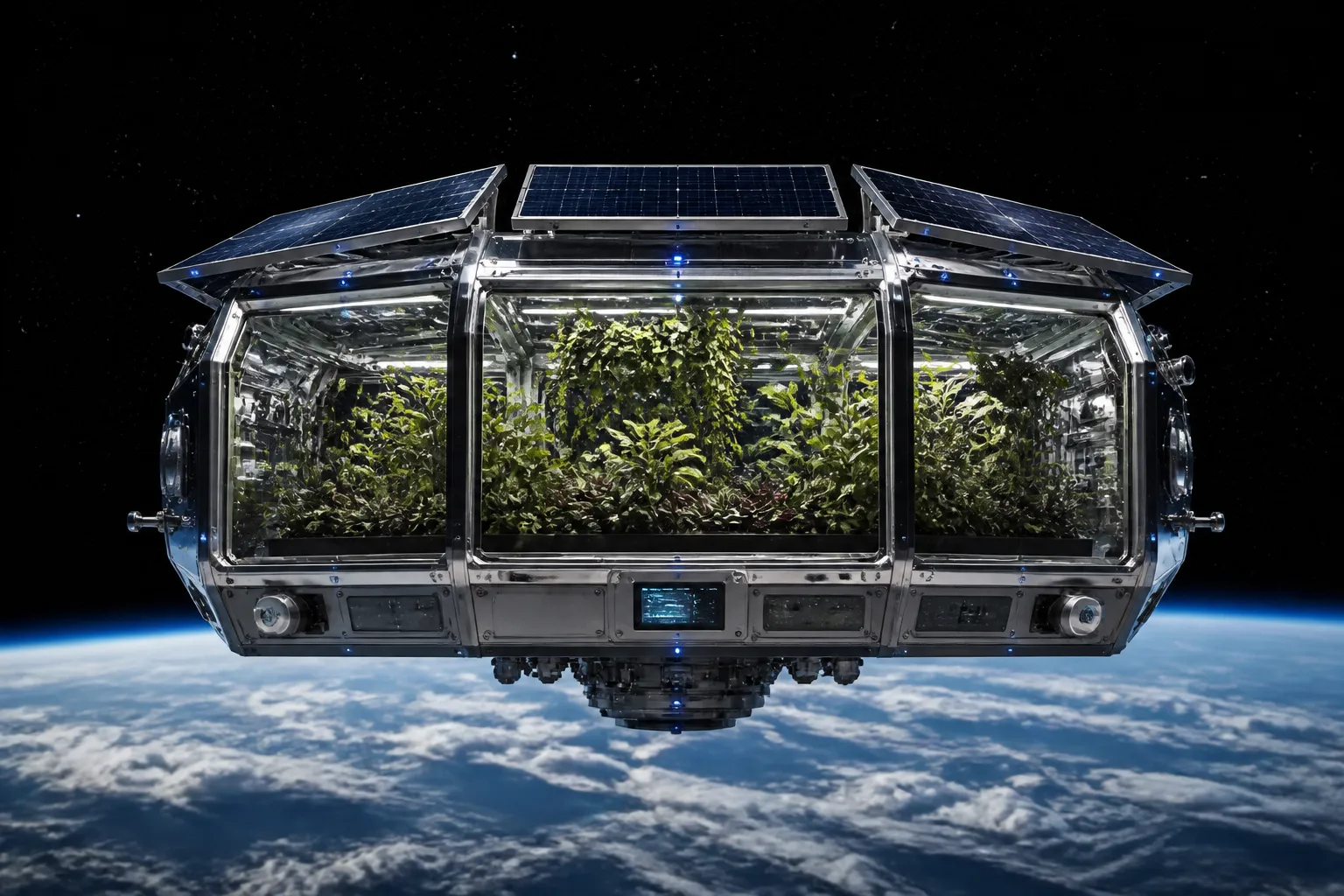
On June 4, 2026, Redwire Corporation (NYSE: RDW) announced that it had won a contract from Astrobiome Space to launch its Greenhouse system aboard the International Space Station (ISS). The experiment will grow strawberries and test Astrobiome’s soil‑enhancement product, making it the world’s first commercial space greenhouse.
The deal expands Redwire’s line of microgravity research platforms and life‑support technologies. Its Greenhouse system is engineered for long‑duration missions and is meant to support commercial agriculture in orbit. Astrobiome Space, a Japan‑based agri‑biotech firm, will use a proprietary biostimulant—derived from microbes that thrive in extreme space environments—to cultivate the first wild strawberries in microgravity.
Redwire’s announcement follows a robust first‑quarter 2026 performance. In its earnings release dated May 6, 2026, the company reported revenue of $97.0 million for the three months ended March 31, up 57.9 % year‑over‑year. Gross margin rose to 26.6 % from 14.7 % in the same period a year earlier, although the firm remained unprofitable. A record backlog of $498.1 million and a book‑to‑bill ratio of 1.92 signaled strong demand for its space infrastructure and autonomous systems.
Redwire’s CEO expressed confidence in the company’s ability to meet growing demand for space‑based research and commercial services. The firm also reiterated its full‑year revenue outlook of $450 million to $500 million, as noted in the earnings call transcript on May 7, 2026.
The ISS greenhouse contract carries several implications. First, it demonstrates the feasibility of commercial agriculture in microgravity—a capability essential for future long‑duration missions to the Moon, Mars, and beyond. Second, it gives Redwire a new customer use case that can spur further development of its deployable structures, sensors, and life‑support systems. Finally, the partnership with Astrobiome Space introduces a new dimension to Redwire’s business model by coupling hardware delivery with biological research and product testing.
Astrobiome’s soil‑enhancement product, described as a super‑postbiotic, aims to boost plant growth in low‑gravity environments. The company earned recognition as a top agri‑biotech provider in 2024 and previously worked with the Luxembourg Space Agency to send bacterial strains into orbit. The upcoming ISS experiment will validate its product’s efficacy in space, potentially opening a market for commercial space agriculture.
Industry analysts note that Redwire’s contract aligns with a broader trend of increasing private investment in space infrastructure. The company’s backlog of nearly half a billion dollars reflects a growing pipeline of missions that require deployable structures, autonomous systems, and life‑support technologies. While the award’s size was not disclosed, analysts view it as a strategic win that could lead to additional commercial biology contracts.
Redwire’s financial results also highlight a shift in its cost structure. The jump in gross margin to 26.6 % suggests improved pricing power or cost efficiencies in hardware production, yet the firm remains unprofitable, indicating continued heavy investment in research and development and customer acquisition.
Looking ahead, Redwire plans to broaden its product portfolio. The company has launched a new venture, SpaceMD, focused on pharmaceutical development in microgravity, and secured a royalty agreement with ExesaLibero Pharma. These initiatives, combined with the ISS greenhouse contract, position Redwire to capture a growing share of the commercial space market.
In sum, Redwire’s June 4 contract with Astrobiome Space marks the first commercial deployment of its greenhouse system on the ISS and underscores the company’s expanding role in space biology. Coupled with strong Q1 2026 revenue growth and a sizable backlog, the contract signals continued momentum as Redwire seeks to capitalize on the emerging commercial space economy. The company’s next steps will involve launching the greenhouse experiment, further developing autonomous systems, and pursuing additional life‑support contracts.
The deal expands Redwire’s line of microgravity research platforms and life‑support technologies. Its Greenhouse system is engineered for long‑duration missions and is meant to support commercial agriculture in orbit. Astrobiome Space, a Japan‑based agri‑biotech firm, will use a proprietary biostimulant—derived from microbes that thrive in extreme space environments—to cultivate the first wild strawberries in microgravity.
Redwire’s announcement follows a robust first‑quarter 2026 performance. In its earnings release dated May 6, 2026, the company reported revenue of $97.0 million for the three months ended March 31, up 57.9 % year‑over‑year. Gross margin rose to 26.6 % from 14.7 % in the same period a year earlier, although the firm remained unprofitable. A record backlog of $498.1 million and a book‑to‑bill ratio of 1.92 signaled strong demand for its space infrastructure and autonomous systems.
Redwire’s CEO expressed confidence in the company’s ability to meet growing demand for space‑based research and commercial services. The firm also reiterated its full‑year revenue outlook of $450 million to $500 million, as noted in the earnings call transcript on May 7, 2026.
The ISS greenhouse contract carries several implications. First, it demonstrates the feasibility of commercial agriculture in microgravity—a capability essential for future long‑duration missions to the Moon, Mars, and beyond. Second, it gives Redwire a new customer use case that can spur further development of its deployable structures, sensors, and life‑support systems. Finally, the partnership with Astrobiome Space introduces a new dimension to Redwire’s business model by coupling hardware delivery with biological research and product testing.
Astrobiome’s soil‑enhancement product, described as a super‑postbiotic, aims to boost plant growth in low‑gravity environments. The company earned recognition as a top agri‑biotech provider in 2024 and previously worked with the Luxembourg Space Agency to send bacterial strains into orbit. The upcoming ISS experiment will validate its product’s efficacy in space, potentially opening a market for commercial space agriculture.
Industry analysts note that Redwire’s contract aligns with a broader trend of increasing private investment in space infrastructure. The company’s backlog of nearly half a billion dollars reflects a growing pipeline of missions that require deployable structures, autonomous systems, and life‑support technologies. While the award’s size was not disclosed, analysts view it as a strategic win that could lead to additional commercial biology contracts.
Redwire’s financial results also highlight a shift in its cost structure. The jump in gross margin to 26.6 % suggests improved pricing power or cost efficiencies in hardware production, yet the firm remains unprofitable, indicating continued heavy investment in research and development and customer acquisition.
Looking ahead, Redwire plans to broaden its product portfolio. The company has launched a new venture, SpaceMD, focused on pharmaceutical development in microgravity, and secured a royalty agreement with ExesaLibero Pharma. These initiatives, combined with the ISS greenhouse contract, position Redwire to capture a growing share of the commercial space market.
In sum, Redwire’s June 4 contract with Astrobiome Space marks the first commercial deployment of its greenhouse system on the ISS and underscores the company’s expanding role in space biology. Coupled with strong Q1 2026 revenue growth and a sizable backlog, the contract signals continued momentum as Redwire seeks to capitalize on the emerging commercial space economy. The company’s next steps will involve launching the greenhouse experiment, further developing autonomous systems, and pursuing additional life‑support contracts.