Blab Tech
Firefly Aerospace Secures $75 Million NASA Subcontract to Deliver Lunar Drones
Firefly Aerospace Inc. (NASDAQ: FLY) announced on May 26 2026 that it has won a $75 million subcontract from NASA’s Jet Propulsion Laboratory (JPL) to deliver four autonomous drones to the Moon’s south pole for the MoonFall mission, which is scheduled for launch no earlier than 2028.
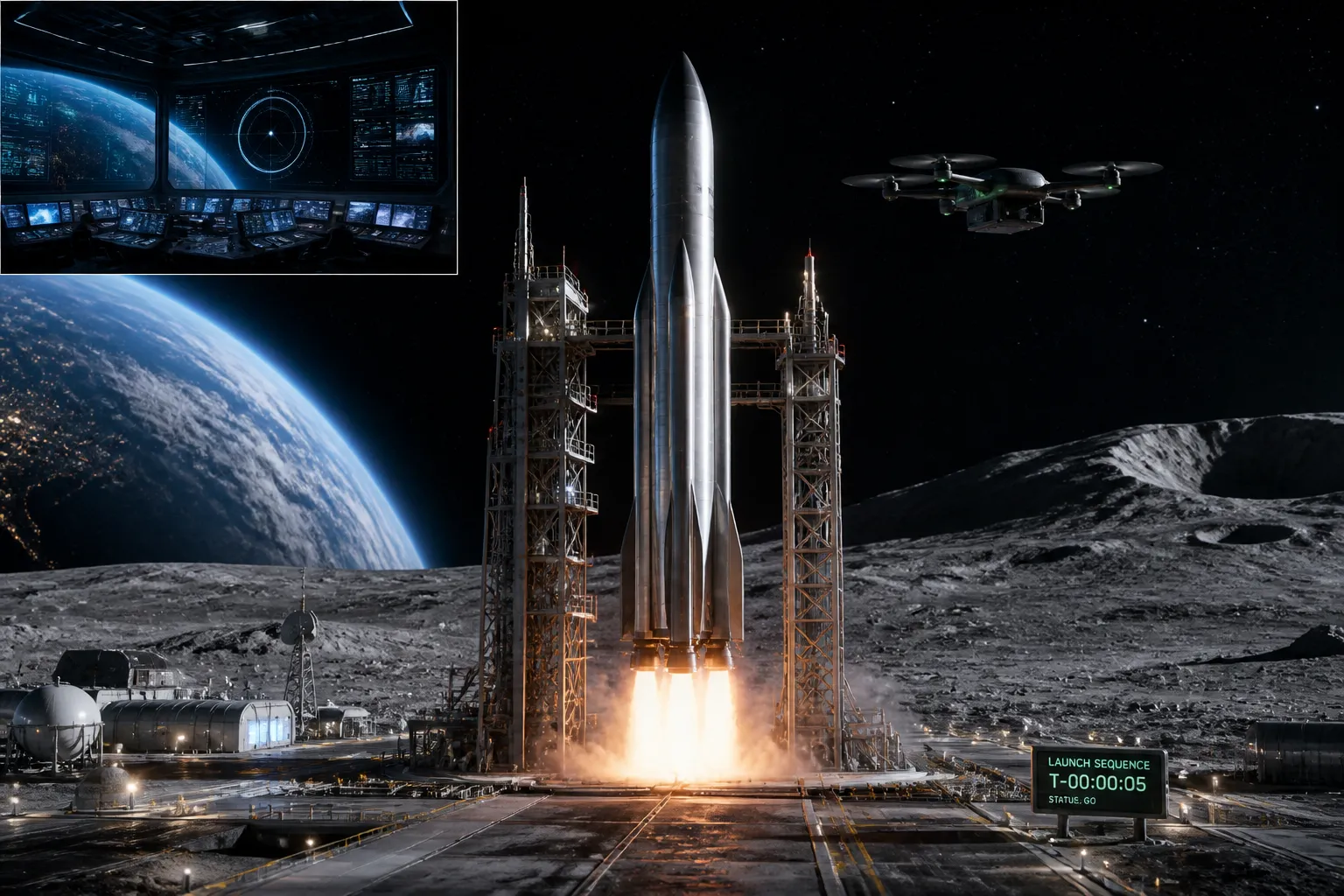
The award expands Firefly’s existing lunar portfolio and extends the use of its Elytra orbital transfer vehicle beyond simple transport. Under the fixed‑price commercial agreement, the company will launch the Elytra from Earth orbit, deploy the drones mid‑descent, and place them on the lunar surface. The drones will then conduct high‑resolution imaging of the south‑pole terrain to support NASA’s Moon Base initiative.
Firefly’s first‑quarter 2026 financial results, released on May 4, showed revenue of $80.9 million, a 45 % increase from $55.9 million in Q1 2025. The company reaffirmed its full‑year revenue guidance of $420 million to $450 million. The quarter’s growth was driven by progress on several projects, including the Blue Ghost lunar lander, the Alpha Flight 7 national‑security program, and additional launch services.
The MoonFall mission, managed by JPL, will launch four “hopping” drones that will land near the lunar south pole, a region of interest for water‑ice resources and future Artemis astronaut landing sites. Firefly’s Elytra, a modular platform powered by the Spectre engine, will carry the drones from low Earth orbit through cislunar space into lunar orbit. The vehicle’s design allows it to deploy payloads during descent, a capability that has been demonstrated during a recent commercial lunar lander descent.
Firefly’s broader program includes the Blue Ghost Mission 2, slated for a late‑2026 launch on a SpaceX Falcon 9 Block 5. The mission will deploy a lunar lander and a Lunar Pathfinder satellite into lunar orbit, where the lander will deliver a seismometer and rover to the surface. The company also maintains a portfolio of national‑security launches under the U.S. Department of Defense’s Space Launch Initiative.
The subcontract’s fixed‑price structure is notable because it keeps mission costs predictable, a feature that contrasts with traditional cost‑plus government contracts. By outsourcing transit and deployment logistics to Firefly, JPL can focus on the science and mission management aspects of MoonFall.
Firefly’s growth narrative is therefore multi‑faceted: it is expanding its lunar infrastructure role, adding launch services for commercial and defense customers, and building a backlog of funded missions. The company’s recent revenue increase and guidance suggest that demand for its launch and deployment capabilities is rising.
At present, Firefly is preparing for the upcoming launch of the Elytra vehicle, expected in 2027, and the Blue Ghost Mission 2 in late 2026. The company’s guidance for 2026 remains in the $420 million to $450 million range, while analysts project a 2027 revenue of roughly $746 million.
In summary, Firefly Aerospace’s $75 million NASA subcontract marks a significant milestone in the company’s expansion into lunar deployment services. The deal adds a funded lunar mission to its backlog, extends the operational scope of its Elytra vehicle, and aligns with NASA’s broader Moon Base strategy. The company’s financial performance and upcoming launches indicate continued momentum in the commercial space sector.
The award expands Firefly’s existing lunar portfolio and extends the use of its Elytra orbital transfer vehicle beyond simple transport. Under the fixed‑price commercial agreement, the company will launch the Elytra from Earth orbit, deploy the drones mid‑descent, and place them on the lunar surface. The drones will then conduct high‑resolution imaging of the south‑pole terrain to support NASA’s Moon Base initiative.
Firefly’s first‑quarter 2026 financial results, released on May 4, showed revenue of $80.9 million, a 45 % increase from $55.9 million in Q1 2025. The company reaffirmed its full‑year revenue guidance of $420 million to $450 million. The quarter’s growth was driven by progress on several projects, including the Blue Ghost lunar lander, the Alpha Flight 7 national‑security program, and additional launch services.
The MoonFall mission, managed by JPL, will launch four “hopping” drones that will land near the lunar south pole, a region of interest for water‑ice resources and future Artemis astronaut landing sites. Firefly’s Elytra, a modular platform powered by the Spectre engine, will carry the drones from low Earth orbit through cislunar space into lunar orbit. The vehicle’s design allows it to deploy payloads during descent, a capability that has been demonstrated during a recent commercial lunar lander descent.
Firefly’s broader program includes the Blue Ghost Mission 2, slated for a late‑2026 launch on a SpaceX Falcon 9 Block 5. The mission will deploy a lunar lander and a Lunar Pathfinder satellite into lunar orbit, where the lander will deliver a seismometer and rover to the surface. The company also maintains a portfolio of national‑security launches under the U.S. Department of Defense’s Space Launch Initiative.
The subcontract’s fixed‑price structure is notable because it keeps mission costs predictable, a feature that contrasts with traditional cost‑plus government contracts. By outsourcing transit and deployment logistics to Firefly, JPL can focus on the science and mission management aspects of MoonFall.
Firefly’s growth narrative is therefore multi‑faceted: it is expanding its lunar infrastructure role, adding launch services for commercial and defense customers, and building a backlog of funded missions. The company’s recent revenue increase and guidance suggest that demand for its launch and deployment capabilities is rising.
At present, Firefly is preparing for the upcoming launch of the Elytra vehicle, expected in 2027, and the Blue Ghost Mission 2 in late 2026. The company’s guidance for 2026 remains in the $420 million to $450 million range, while analysts project a 2027 revenue of roughly $746 million.
In summary, Firefly Aerospace’s $75 million NASA subcontract marks a significant milestone in the company’s expansion into lunar deployment services. The deal adds a funded lunar mission to its backlog, extends the operational scope of its Elytra vehicle, and aligns with NASA’s broader Moon Base strategy. The company’s financial performance and upcoming launches indicate continued momentum in the commercial space sector.








