Blab Tech
AST SpaceMobile Launches Next-Generation BlueBird Satellites, Boosting Direct-to-Device Broadband Path
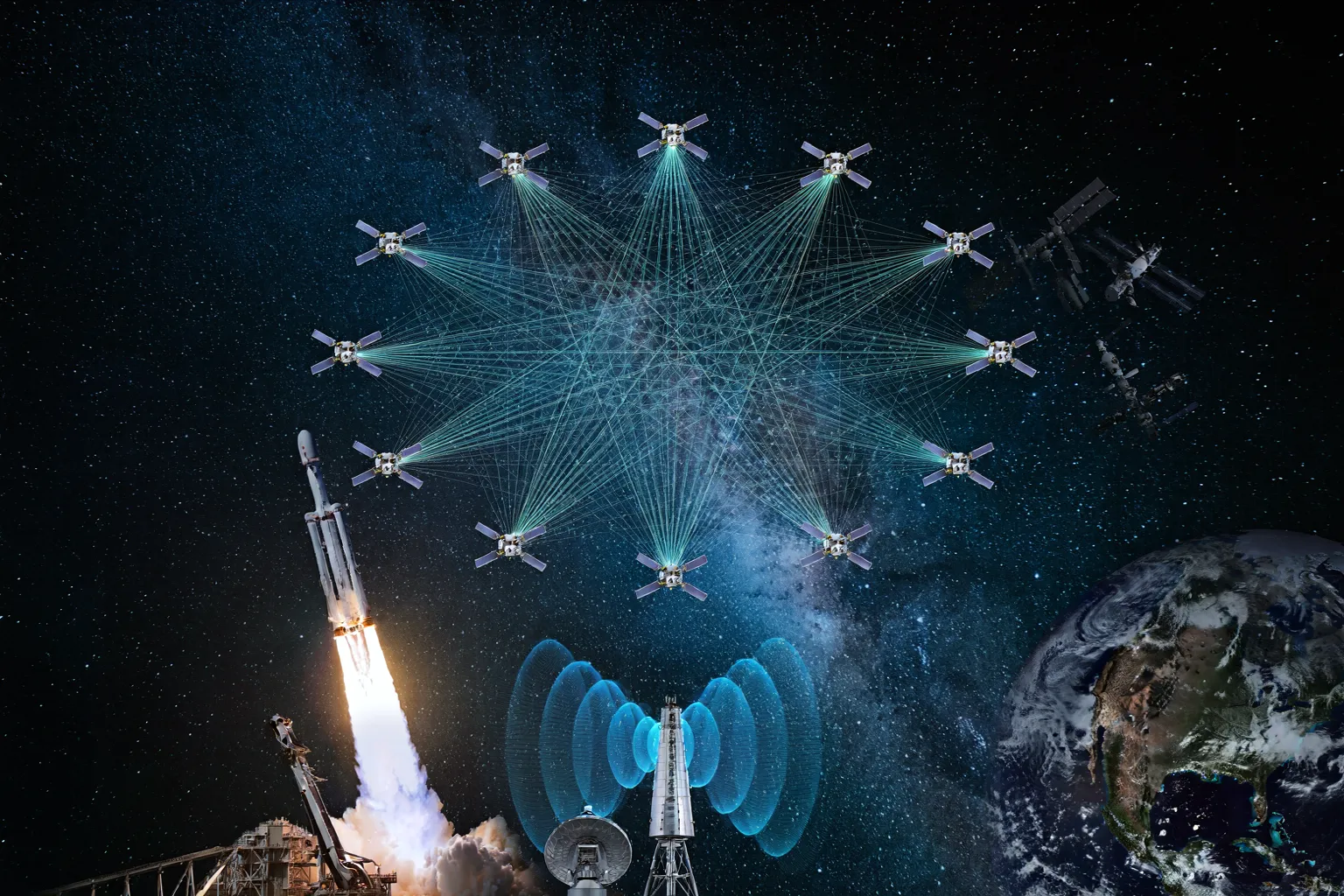
On June 17, 2026, AST SpaceMobile, Inc. (NASDAQ:ASTS) celebrated a milestone that brings the promise of satellite‑based cellular service closer to reality. The company launched three next‑generation BlueBird satellites—BlueBird 8, 9 and 10—from Cape Canaveral aboard a SpaceX Falcon 9. The payloads, each armed with a 2,400‑square‑foot phased‑array antenna, represent the largest commercial communications array ever deployed in low‑Earth orbit and double the peak data speeds of the original Block 1 satellites.
The launch, carried out by the Falcon 9, the most frequently flown commercial launch vehicle in the United States, placed the satellites into low‑Earth orbit. Each BlueBird carries a 2,400‑square‑foot phased‑array antenna, a feature that the company touts as the biggest commercial array in orbit, and is engineered to deliver roughly twice the peak data rates of the first‑generation satellites. The addition of these three spacecraft brings the constellation closer to the orbital density required for global coverage.
AST SpaceMobile’s first‑quarter 2026 earnings, released on May 11, revealed revenue of $14.7 million—a dramatic jump from $718,000 in the same period a year earlier. The surge was largely driven by deliveries of ground‑gateway equipment and the successful launch of the new satellites. While the revenue base remains modest, the figures underscore that the company’s commercialization trajectory is now linked to tangible satellite deployments rather than future network projections.
The company’s ability to launch was enabled by a commercial authority from the Federal Communications Commission, granted on April 22, 2026. The FCC approval allows AST SpaceMobile to provide direct‑to‑device cellular broadband across the United States from its low‑Earth‑orbit satellites. The authorization was a prerequisite for the launch and a cornerstone of the firm’s broader business plan.
During the earnings call, the company reiterated its full‑year 2026 revenue guidance of $150 million to $200 million. The guidance reflects expectations that the additional satellites and expanded ground‑gateway deployments will drive revenue growth as the network edges toward commercial service. The projection represents a substantial uptick from the $14.7 million reported in the first quarter.
The BlueBird satellites are part of a lineage that began with the BlueWalker 3 prototype in 2022 and the first commercial BlueBirds in 2024. The company has consistently highlighted the size of its phased‑array antennas as a differentiator; the 2,400‑square‑foot array on BlueBird 6, for example, was described as the largest commercial communications array deployed in orbit. The newer satellites are expected to deliver higher data rates and improved coverage, enabling voice, video and data services on ordinary smartphones without specialized hardware.
AST SpaceMobile’s reliance on SpaceX’s Falcon 9 is evident. As of June 2026, the rocket has flown 665 missions, 662 of which were successful. Its reusable first‑stage boosters and reflown fairing halves have helped keep launch costs lower than those of traditional expendable vehicles, making the constellation’s deployment more economically viable.
The company’s business model centers on building a constellation capable of beam‑ing cellular signals directly to phones on the ground. AST SpaceMobile has partnered with mobile network operators and formed a joint venture, SatCo, with Vodafone to offer satellite direct‑to‑device broadband. Although commercial service has not yet commenced, the recent launch brings the company closer to the point at which it can begin serving consumers and businesses.
In sum, the June 17 launch of BlueBird 8, 9 and 10 marks a tangible step toward AST SpaceMobile’s vision of global direct‑to‑device broadband. Revenue growth in Q1, FCC authority, and the deployment of larger, faster satellites all signal progress toward commercial service, even as the network remains in its early deployment phase and the company’s revenue base stays modest.
The launch, carried out by the Falcon 9, the most frequently flown commercial launch vehicle in the United States, placed the satellites into low‑Earth orbit. Each BlueBird carries a 2,400‑square‑foot phased‑array antenna, a feature that the company touts as the biggest commercial array in orbit, and is engineered to deliver roughly twice the peak data rates of the first‑generation satellites. The addition of these three spacecraft brings the constellation closer to the orbital density required for global coverage.
AST SpaceMobile’s first‑quarter 2026 earnings, released on May 11, revealed revenue of $14.7 million—a dramatic jump from $718,000 in the same period a year earlier. The surge was largely driven by deliveries of ground‑gateway equipment and the successful launch of the new satellites. While the revenue base remains modest, the figures underscore that the company’s commercialization trajectory is now linked to tangible satellite deployments rather than future network projections.
The company’s ability to launch was enabled by a commercial authority from the Federal Communications Commission, granted on April 22, 2026. The FCC approval allows AST SpaceMobile to provide direct‑to‑device cellular broadband across the United States from its low‑Earth‑orbit satellites. The authorization was a prerequisite for the launch and a cornerstone of the firm’s broader business plan.
During the earnings call, the company reiterated its full‑year 2026 revenue guidance of $150 million to $200 million. The guidance reflects expectations that the additional satellites and expanded ground‑gateway deployments will drive revenue growth as the network edges toward commercial service. The projection represents a substantial uptick from the $14.7 million reported in the first quarter.
The BlueBird satellites are part of a lineage that began with the BlueWalker 3 prototype in 2022 and the first commercial BlueBirds in 2024. The company has consistently highlighted the size of its phased‑array antennas as a differentiator; the 2,400‑square‑foot array on BlueBird 6, for example, was described as the largest commercial communications array deployed in orbit. The newer satellites are expected to deliver higher data rates and improved coverage, enabling voice, video and data services on ordinary smartphones without specialized hardware.
AST SpaceMobile’s reliance on SpaceX’s Falcon 9 is evident. As of June 2026, the rocket has flown 665 missions, 662 of which were successful. Its reusable first‑stage boosters and reflown fairing halves have helped keep launch costs lower than those of traditional expendable vehicles, making the constellation’s deployment more economically viable.
The company’s business model centers on building a constellation capable of beam‑ing cellular signals directly to phones on the ground. AST SpaceMobile has partnered with mobile network operators and formed a joint venture, SatCo, with Vodafone to offer satellite direct‑to‑device broadband. Although commercial service has not yet commenced, the recent launch brings the company closer to the point at which it can begin serving consumers and businesses.
In sum, the June 17 launch of BlueBird 8, 9 and 10 marks a tangible step toward AST SpaceMobile’s vision of global direct‑to‑device broadband. Revenue growth in Q1, FCC authority, and the deployment of larger, faster satellites all signal progress toward commercial service, even as the network remains in its early deployment phase and the company’s revenue base stays modest.








