Blab Tech
Apple CEOs Memory-Cost Warning Sends SanDisk Shares Soaring to 52-Week High
Apple Inc. CEO Tim Cook confirmed that the company will raise prices across its product lineup because of a structural shortage of DRAM and NAND flash memory. The announcement, made in a Wall Street Journal interview published on June 17, 2026, triggered a sharp rally in SanDisk Corporation (NASDAQ:SNDK) shares, which rose 10.38 % to $2,162.10 on Thursday.
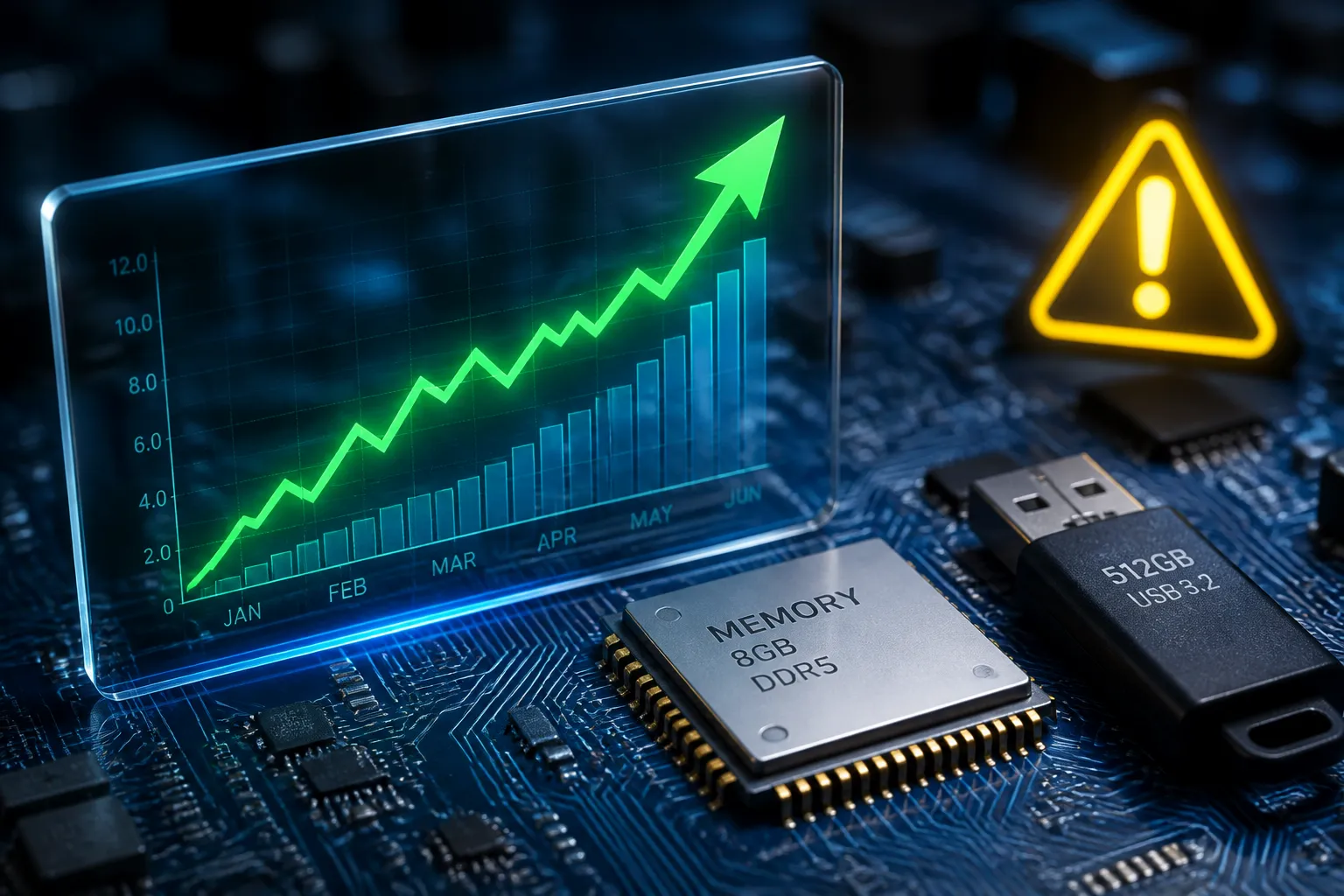
Cook said Apple’s ability to absorb rising component costs has become unsustainable. He described the current commodity cycle as unprecedented, noting that the surge in memory prices is driven by the massive capital‑expenditure expansion by AI‑focused companies such as Alphabet, Microsoft, Meta and Amazon. The reallocation of memory production capacity toward data‑center infrastructure has left fewer chips available for consumer and enterprise devices, pushing prices higher.
SanDisk’s stock reaction reflects the broader market’s perception of the memory‑chip sector’s valuation upside. The company’s shares have been in a steep uptrend across all timeframes, with a 12‑month gain of 4,565.38 %. At the time of reporting, SNDK was trading 26.5 % above its 20‑day simple moving average (SMA), 58.6 % above its 50‑day SMA, 117.6 % above its 100‑day SMA and 261.1 % above its 200‑day SMA. The moving‑average structure remains bullish, with the 20‑day SMA above the 50‑day SMA and the 50‑day SMA above the 200‑day SMA, indicating alignment of intermediate and long‑term trends.
The stock is currently above its prior 52‑week high of $2,167.33, a level that could act as a breakout trigger if it holds. Key resistance sits at $2,167.33 and support at $1,720.47.
The rally is not limited to SanDisk. Other memory‑chip stocks, including Micron Technology and Western Digital, also experienced gains on the same day. The surge reflects investors’ reassessment of the supply‑chain constraints and the pricing power of memory manufacturers.
Industry analysts have pointed out that the memory‑chip shortage is expected to persist until at least 2030, according to a 2026 Kearney PERLab analysis. The shortage has already begun to affect consumer‑electronics pricing, with some entry‑level smartphones seeing price increases of more than 50 % since last year.
Apple’s announcement comes amid a broader trend of rising component costs across the technology sector. The company’s decision to raise prices is a direct response to the escalating cost of memory and storage components, which it has been unable to shield consumers from.
While Apple has not yet disclosed the specific products or price ranges that will be affected, the company’s statement signals that price hikes are inevitable. The impact on consumers will depend on the timing and magnitude of those increases.
In summary, Tim Cook’s confirmation of a memory‑cost crisis has validated the pricing power of memory manufacturers and has led to a significant rally in SanDisk shares. The memory‑chip shortage, driven by AI demand, is expected to continue for several years, influencing the pricing strategies of major consumer‑electronics companies.
The current situation remains fluid. Apple’s forthcoming product announcements and any further clarification on price adjustments will be closely watched by investors and industry observers. The memory‑chip market’s trajectory will also be monitored as supply‑chain dynamics evolve and AI infrastructure demand continues to grow.
Cook said Apple’s ability to absorb rising component costs has become unsustainable. He described the current commodity cycle as unprecedented, noting that the surge in memory prices is driven by the massive capital‑expenditure expansion by AI‑focused companies such as Alphabet, Microsoft, Meta and Amazon. The reallocation of memory production capacity toward data‑center infrastructure has left fewer chips available for consumer and enterprise devices, pushing prices higher.
SanDisk’s stock reaction reflects the broader market’s perception of the memory‑chip sector’s valuation upside. The company’s shares have been in a steep uptrend across all timeframes, with a 12‑month gain of 4,565.38 %. At the time of reporting, SNDK was trading 26.5 % above its 20‑day simple moving average (SMA), 58.6 % above its 50‑day SMA, 117.6 % above its 100‑day SMA and 261.1 % above its 200‑day SMA. The moving‑average structure remains bullish, with the 20‑day SMA above the 50‑day SMA and the 50‑day SMA above the 200‑day SMA, indicating alignment of intermediate and long‑term trends.
The stock is currently above its prior 52‑week high of $2,167.33, a level that could act as a breakout trigger if it holds. Key resistance sits at $2,167.33 and support at $1,720.47.
The rally is not limited to SanDisk. Other memory‑chip stocks, including Micron Technology and Western Digital, also experienced gains on the same day. The surge reflects investors’ reassessment of the supply‑chain constraints and the pricing power of memory manufacturers.
Industry analysts have pointed out that the memory‑chip shortage is expected to persist until at least 2030, according to a 2026 Kearney PERLab analysis. The shortage has already begun to affect consumer‑electronics pricing, with some entry‑level smartphones seeing price increases of more than 50 % since last year.
Apple’s announcement comes amid a broader trend of rising component costs across the technology sector. The company’s decision to raise prices is a direct response to the escalating cost of memory and storage components, which it has been unable to shield consumers from.
While Apple has not yet disclosed the specific products or price ranges that will be affected, the company’s statement signals that price hikes are inevitable. The impact on consumers will depend on the timing and magnitude of those increases.
In summary, Tim Cook’s confirmation of a memory‑cost crisis has validated the pricing power of memory manufacturers and has led to a significant rally in SanDisk shares. The memory‑chip shortage, driven by AI demand, is expected to continue for several years, influencing the pricing strategies of major consumer‑electronics companies.
The current situation remains fluid. Apple’s forthcoming product announcements and any further clarification on price adjustments will be closely watched by investors and industry observers. The memory‑chip market’s trajectory will also be monitored as supply‑chain dynamics evolve and AI infrastructure demand continues to grow.