Blab Tech
Hexagon ABs Robot Generation Study Shows Adults Favor Robots for Physical Tasks but Not Caregiving, While Children Are More Open to Robot Colleagues
When Hexagon AB, the Swedish industrial‑technology group, unveiled its Robot Generation study on 16 June 2026, the results were as clear as a polished factory floor. The survey, carried out by Vitreous World in October–November 2025, asked 4,500 adults and 1,200 children in 18 countries whether a human or a robot should perform specific workplace tasks. Adults were ready to hand over heavy lifting, hazardous work, and routine monitoring to machines, but they balked at letting robots care for the sick, elderly, or children. Children, by contrast, were more willing to see robots as full colleagues.
The data paint a detailed picture of task preference. Across the board, 68 % of adults said they would let a robot lift and transport heavy items, 54 % would allow a robot to carry and deliver goods, and 52 % would let a robot monitor hazards. Children’s numbers were similar but slightly higher: 69 % for heavy lifting and 59 % for carrying and delivering. When empathy or accountability came into play, the scale tipped decisively toward humans. For caregiving—caring for the sick, elderly, or children—71 % of adults and 67 % of children said a human should perform the role; only 12 % of adults and 16 % of children would choose a robot.
Beyond task selection, the study examined how participants view robot assistants. Adults most often cited practical help: 53 % said they would want a robot to capture measurements or conduct simple research, 38 % for administrative support, and 34 % for ensuring workplace safety. Children, meanwhile, wanted robots to help them understand school lessons (60 %) and generate ideas (48 %). When asked whether robots should be considered full colleagues, only 21 % of adults answered yes, and just 14 % would want a robot in a leadership role. Children were 50 % more likely to view robots as full colleagues, indicating a generational shift.
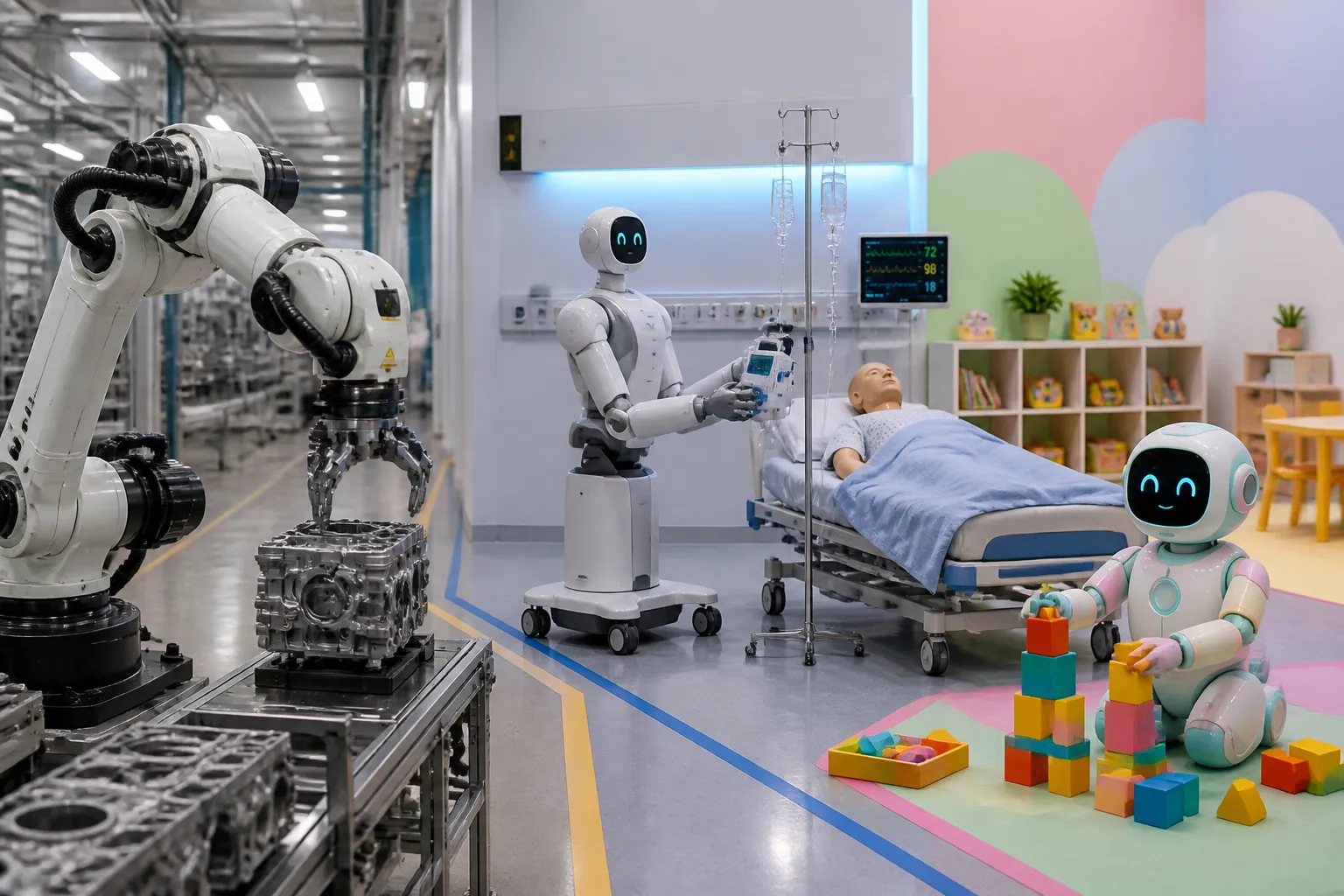
The setting in which robots are deployed matters. Adults reported the greatest comfort with robots in factories and warehouses (63 %), followed by hospitals and clinics (45 %) and classrooms (39 %). Exposure to robots influenced attitudes: in China, where 75 % of adults have seen robots in real life, 63 % would feel comfortable with a robot at home, whereas only 32 % of adults in the United Kingdom—where robot exposure is lowest—expressed similar comfort. The study also found that adults prefer machine‑like robots (28 %) over human‑like designs (22 %), suggesting that functional performance is more important than appearance.
Trust and governance emerged as critical factors. A striking 86 % of adults said clear rules defining what robots can and cannot do are essential. Concerns about security (51 %), reliability (21 %), and trust (26 %) were also highlighted. Burkhard Boeckem, Hexagon’s chief technology officer, noted that “people are telling us exactly where robots belong and where they don’t, and their instincts are remarkably consistent across markets. Industrial environments are where the tasks for robots are the most defined, the safety cases are mature, and governance is in public view. That is where people feel most comfortable working alongside humanoids, and it’s precisely where our technologies already operate.”
Expert commentary underscores the nuanced view of robot adoption. Dr Jim Everett, associate professor of moral psychology, said, “There’s real potential for robots in areas like elderly care or classrooms, but as assistive devices, not as replacements for that essential human role.” Dr Blay Whitby, technology ethicist, added, “Ask people if they want to be cared for by a robot, and most say no. Ask if technology should help them remain independent in their own home for longer, and most say yes. It’s the same technology, just framed differently.”
The study’s findings suggest that while the market for industrial and safety robots is growing, broader acceptance in caregiving and domestic contexts will require clear governance, robust safety cases, and a focus on assistive rather than replacement roles. Hexagon AB has positioned its autonomous solutions for industrial applications, and the company’s acquisition of AutonomouStuff in 2024 has expanded its portfolio in autonomous vehicle and robotics platforms.
In summary, Hexagon’s Robot Generation study confirms that adults are willing to delegate physically demanding and hazardous tasks to robots but remain cautious about caregiving roles. Children are more open to robot colleagues, indicating a generational shift that may shape future workforce integration. Trust, clear rules, and proven safety remain the main barriers to wider robot adoption across all settings.
The data paint a detailed picture of task preference. Across the board, 68 % of adults said they would let a robot lift and transport heavy items, 54 % would allow a robot to carry and deliver goods, and 52 % would let a robot monitor hazards. Children’s numbers were similar but slightly higher: 69 % for heavy lifting and 59 % for carrying and delivering. When empathy or accountability came into play, the scale tipped decisively toward humans. For caregiving—caring for the sick, elderly, or children—71 % of adults and 67 % of children said a human should perform the role; only 12 % of adults and 16 % of children would choose a robot.
Beyond task selection, the study examined how participants view robot assistants. Adults most often cited practical help: 53 % said they would want a robot to capture measurements or conduct simple research, 38 % for administrative support, and 34 % for ensuring workplace safety. Children, meanwhile, wanted robots to help them understand school lessons (60 %) and generate ideas (48 %). When asked whether robots should be considered full colleagues, only 21 % of adults answered yes, and just 14 % would want a robot in a leadership role. Children were 50 % more likely to view robots as full colleagues, indicating a generational shift.
The setting in which robots are deployed matters. Adults reported the greatest comfort with robots in factories and warehouses (63 %), followed by hospitals and clinics (45 %) and classrooms (39 %). Exposure to robots influenced attitudes: in China, where 75 % of adults have seen robots in real life, 63 % would feel comfortable with a robot at home, whereas only 32 % of adults in the United Kingdom—where robot exposure is lowest—expressed similar comfort. The study also found that adults prefer machine‑like robots (28 %) over human‑like designs (22 %), suggesting that functional performance is more important than appearance.
Trust and governance emerged as critical factors. A striking 86 % of adults said clear rules defining what robots can and cannot do are essential. Concerns about security (51 %), reliability (21 %), and trust (26 %) were also highlighted. Burkhard Boeckem, Hexagon’s chief technology officer, noted that “people are telling us exactly where robots belong and where they don’t, and their instincts are remarkably consistent across markets. Industrial environments are where the tasks for robots are the most defined, the safety cases are mature, and governance is in public view. That is where people feel most comfortable working alongside humanoids, and it’s precisely where our technologies already operate.”
Expert commentary underscores the nuanced view of robot adoption. Dr Jim Everett, associate professor of moral psychology, said, “There’s real potential for robots in areas like elderly care or classrooms, but as assistive devices, not as replacements for that essential human role.” Dr Blay Whitby, technology ethicist, added, “Ask people if they want to be cared for by a robot, and most say no. Ask if technology should help them remain independent in their own home for longer, and most say yes. It’s the same technology, just framed differently.”
The study’s findings suggest that while the market for industrial and safety robots is growing, broader acceptance in caregiving and domestic contexts will require clear governance, robust safety cases, and a focus on assistive rather than replacement roles. Hexagon AB has positioned its autonomous solutions for industrial applications, and the company’s acquisition of AutonomouStuff in 2024 has expanded its portfolio in autonomous vehicle and robotics platforms.
In summary, Hexagon’s Robot Generation study confirms that adults are willing to delegate physically demanding and hazardous tasks to robots but remain cautious about caregiving roles. Children are more open to robot colleagues, indicating a generational shift that may shape future workforce integration. Trust, clear rules, and proven safety remain the main barriers to wider robot adoption across all settings.








