Blab Tech
Stellantis Integrates Factorials Solid-State Battery into Dodge Charger Daytona for First North American Road Test
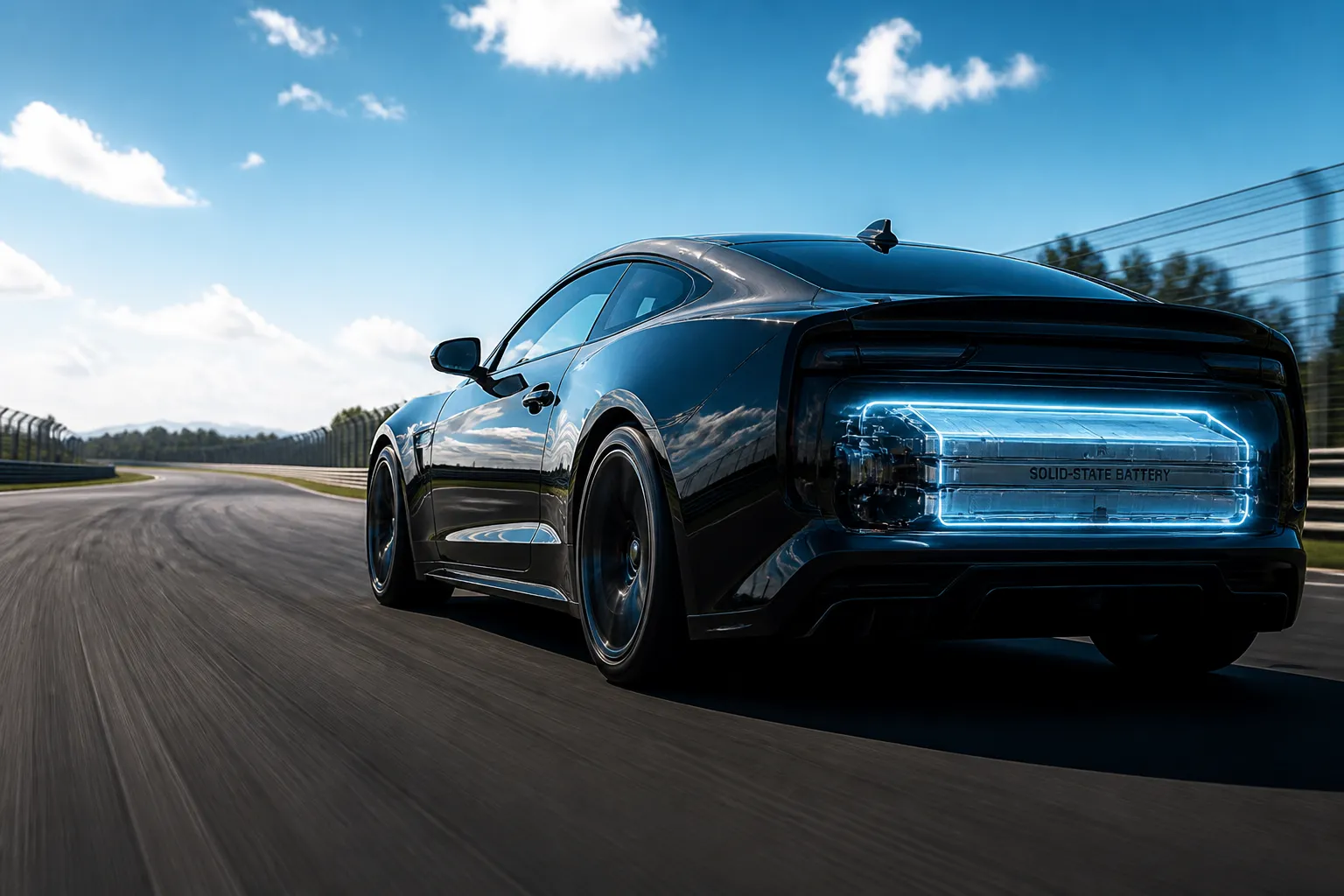
Stellantis and Factorial Inc. have just finished the first North American automotive integration of Factorial’s FEST solid‑state battery technology, installing the pack in a Dodge Charger Daytona development vehicle and launching a road‑testing program to validate its performance, safety and reliability.
The milestone, first revealed in a Stellantis press release in April 2025, builds on a partnership that began when Stellantis invested $75 million in Factorial Energy in 2021. The goal has been to move solid‑state batteries from the lab to production vehicles, and the Charger Daytona was chosen as the testbed.
Factorial’s FEST (Factorial Electrolyte System Technology) cells are 77‑amp‑hour units that, according to laboratory tests in 2025, deliver an energy density of 375 Wh/kg—well above the 200‑300 Wh/kg typical for conventional lithium‑ion packs. They can charge from 15 % to 90 % state of charge in 18 minutes, operate safely between –30 °C and 45 °C, and have survived more than 600 charge‑discharge cycles in controlled conditions.
To accommodate the FEST cells in a production‑grade vehicle, Stellantis engineers created a patented mechanical architecture that nests the solid‑state modules within the existing battery pack layout of the Charger Daytona. The team also tweaked the vehicle’s control systems and pack design to keep performance stable across temperatures and to handle the higher power density of the new cells.
The U.S. road‑testing program now measures the battery under real‑world driving and charging scenarios. Test parameters include range, charging speed, thermal stability and long‑term durability. The data will determine whether the technology can meet the safety and reliability standards required for commercial deployment.
“Bringing solid‑state batteries to the road is a balancing act,” said Stellantis Chief Engineering and Technology Officer Ned Curic. “It’s not enough to optimize a single metric. We need a system that delivers real benefits in a real vehicle… This milestone shows we are bringing solid‑state batteries closer to our customers with the potential for longer range, faster charging and lower costs.” Factorial CEO Siyu Huang added, “We are deeply honored to work alongside Stellantis, one of the world’s great mass‑market automakers, on this STLA Large‑based development car… This milestone doesn’t just validate FEST; it sets a new bar for what automotive‑grade solid‑state batteries can deliver.”
This marks the first time a solid‑state battery has been installed in a vehicle in North America. While laboratory demonstrations have been successful, the road‑testing phase is the critical step toward commercial viability. Stellantis says the Charger Daytona data will inform the design of future production models.
At present, the program focuses on collecting performance and safety data. Neither company has announced a commercial launch date, and the battery’s scalability to mass production remains an open question. Regulators and safety authorities will likely review the test results before any broader deployment.
In short, Stellantis and Factorial have completed the first automotive integration of a FEST solid‑state battery in a Dodge Charger Daytona and begun a road‑testing program to validate the technology under real‑world conditions. The collaboration, rooted in a multi‑year partnership and a significant Stellantis investment, will determine whether the high‑energy, fast‑charging cells can be scaled for commercial electric vehicles.
The milestone, first revealed in a Stellantis press release in April 2025, builds on a partnership that began when Stellantis invested $75 million in Factorial Energy in 2021. The goal has been to move solid‑state batteries from the lab to production vehicles, and the Charger Daytona was chosen as the testbed.
Factorial’s FEST (Factorial Electrolyte System Technology) cells are 77‑amp‑hour units that, according to laboratory tests in 2025, deliver an energy density of 375 Wh/kg—well above the 200‑300 Wh/kg typical for conventional lithium‑ion packs. They can charge from 15 % to 90 % state of charge in 18 minutes, operate safely between –30 °C and 45 °C, and have survived more than 600 charge‑discharge cycles in controlled conditions.
To accommodate the FEST cells in a production‑grade vehicle, Stellantis engineers created a patented mechanical architecture that nests the solid‑state modules within the existing battery pack layout of the Charger Daytona. The team also tweaked the vehicle’s control systems and pack design to keep performance stable across temperatures and to handle the higher power density of the new cells.
The U.S. road‑testing program now measures the battery under real‑world driving and charging scenarios. Test parameters include range, charging speed, thermal stability and long‑term durability. The data will determine whether the technology can meet the safety and reliability standards required for commercial deployment.
“Bringing solid‑state batteries to the road is a balancing act,” said Stellantis Chief Engineering and Technology Officer Ned Curic. “It’s not enough to optimize a single metric. We need a system that delivers real benefits in a real vehicle… This milestone shows we are bringing solid‑state batteries closer to our customers with the potential for longer range, faster charging and lower costs.” Factorial CEO Siyu Huang added, “We are deeply honored to work alongside Stellantis, one of the world’s great mass‑market automakers, on this STLA Large‑based development car… This milestone doesn’t just validate FEST; it sets a new bar for what automotive‑grade solid‑state batteries can deliver.”
This marks the first time a solid‑state battery has been installed in a vehicle in North America. While laboratory demonstrations have been successful, the road‑testing phase is the critical step toward commercial viability. Stellantis says the Charger Daytona data will inform the design of future production models.
At present, the program focuses on collecting performance and safety data. Neither company has announced a commercial launch date, and the battery’s scalability to mass production remains an open question. Regulators and safety authorities will likely review the test results before any broader deployment.
In short, Stellantis and Factorial have completed the first automotive integration of a FEST solid‑state battery in a Dodge Charger Daytona and begun a road‑testing program to validate the technology under real‑world conditions. The collaboration, rooted in a multi‑year partnership and a significant Stellantis investment, will determine whether the high‑energy, fast‑charging cells can be scaled for commercial electric vehicles.