Blab Tech
Shopify Accelerates AI Commerce, Boosts Orders, Expands Share Repurchase Program
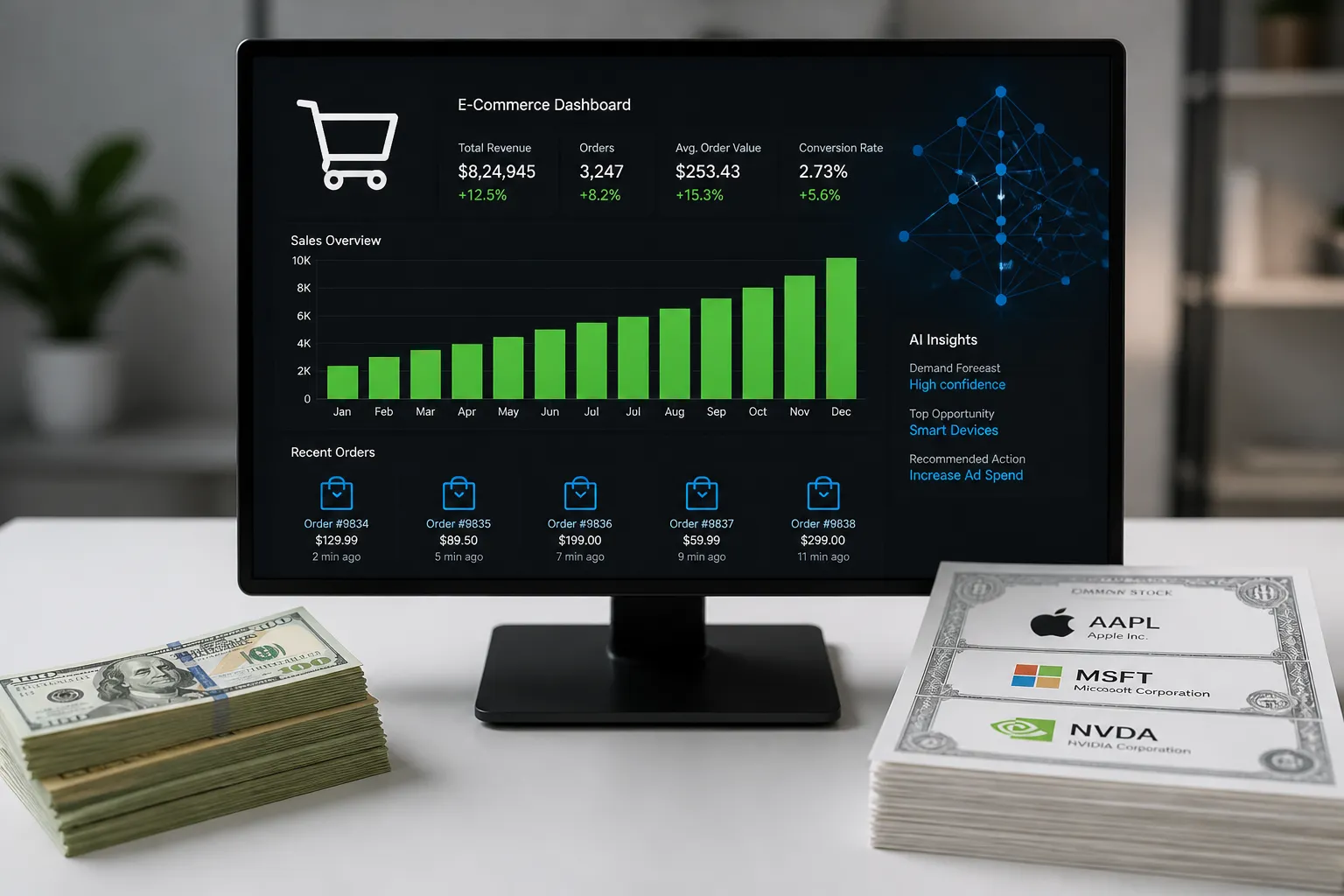
Shopify Inc. (NASDAQ: SHOP) announced on June 1 that orders arriving at merchant stores through AI‑powered search channels were up 13 times year‑over‑year. Those orders converted 49 % more often than those coming from traditional search and carried average order values 14 % higher. The company said the shift reflects a broader move away from search bars and social feeds toward AI‑driven product discovery.
The platform is built for that shift. Merchants can sell online, in‑person, across social media, locally, globally, and through AI. Shopify’s Agentic Storefronts, which went live for all U.S. merchants on March 24, let products be found and purchased inside chat experiences on tools such as ChatGPT, Google AI Mode, Gemini, and Microsoft Copilot. The feature turns an AI assistant into a personal shopper, recommending items and completing checkout without the customer leaving the chat.
Beyond the storefronts, Shopify’s App Store hosts more than 21,000 commerce apps that cover payments, marketing, fulfillment, analytics, and specialized needs, giving merchants a broad set of tools to customize and grow their businesses.
Investor updates followed. On June 2 the board authorized an additional $3 billion for the repurchase of Class A subordinate voting shares, raising the total buy‑back authorization to $5 billion. The move follows an earlier $2 billion program that began in 2021 and, according to the filing, reflects confidence in the company’s operating cash flow and balance‑sheet strength.
Shopify’s growth metrics underscore its role as a core e‑commerce infrastructure provider. The company serves over 5 million merchants worldwide and processed $292.3 billion in transactions in 2024, with 57 % of that volume in the United States. Major customers include Tesla, LVMH, Nestlé, PepsiCo, AB InBev, Kraft Heinz, Lindt, Whole Foods Market, Red Bull, and Hyatt.
The AI‑commerce data aligns with broader industry observations. A January 2026 report on Shopify’s AI transformation noted that the platform was well positioned to capture the AI revolution, with 2026 growth metrics already indicating a paradigm shift in how commerce is conducted. The report highlighted that Shopify had made the AI channel a reality with Agentic Storefronts, Shopify Catalog, and the Universal Commerce Protocol (UCP) co‑built with Google.
From a technical perspective, Agentic Storefronts rely on UCP, which standardizes how product data is exposed to AI agents. The protocol enables AI assistants to retrieve product information, apply pricing rules, and initiate payment flows through Shopify Payments or other providers. Integration with chat platforms also leverages Shopify’s Shop Pay checkout, which allows one‑click purchases across participating stores.
Market analysts view the AI‑commerce push as a natural extension of Shopify’s existing strengths. The company’s ability to embed commerce into diverse channels—online, in‑person, social, and AI—positions it to capture a larger share of the global e‑commerce market. The 13‑fold increase in AI‑search orders and the higher conversion and average order values suggest that merchants are willing to experiment with AI‑driven discovery and that the technology is delivering measurable results.
Regulatory developments are currently limited. No new data‑privacy or antitrust filings have been reported that would affect Shopify’s AI initiatives. The share‑repurchase authorization expansion is a corporate governance action and does not trigger regulatory scrutiny beyond standard disclosure requirements.
In summary, Shopify’s latest data shows a significant uptick in AI‑driven orders, higher conversion rates, and larger average order values. The company’s Agentic Storefronts and extensive app ecosystem support merchants in adopting AI commerce, while the board’s decision to increase the share‑repurchase program to $5 billion signals confidence in its financial position. Upcoming product releases or regulatory actions remain unannounced, but the current trajectory suggests that Shopify will continue to expand its AI commerce capabilities while returning capital to shareholders.
The platform is built for that shift. Merchants can sell online, in‑person, across social media, locally, globally, and through AI. Shopify’s Agentic Storefronts, which went live for all U.S. merchants on March 24, let products be found and purchased inside chat experiences on tools such as ChatGPT, Google AI Mode, Gemini, and Microsoft Copilot. The feature turns an AI assistant into a personal shopper, recommending items and completing checkout without the customer leaving the chat.
Beyond the storefronts, Shopify’s App Store hosts more than 21,000 commerce apps that cover payments, marketing, fulfillment, analytics, and specialized needs, giving merchants a broad set of tools to customize and grow their businesses.
Investor updates followed. On June 2 the board authorized an additional $3 billion for the repurchase of Class A subordinate voting shares, raising the total buy‑back authorization to $5 billion. The move follows an earlier $2 billion program that began in 2021 and, according to the filing, reflects confidence in the company’s operating cash flow and balance‑sheet strength.
Shopify’s growth metrics underscore its role as a core e‑commerce infrastructure provider. The company serves over 5 million merchants worldwide and processed $292.3 billion in transactions in 2024, with 57 % of that volume in the United States. Major customers include Tesla, LVMH, Nestlé, PepsiCo, AB InBev, Kraft Heinz, Lindt, Whole Foods Market, Red Bull, and Hyatt.
The AI‑commerce data aligns with broader industry observations. A January 2026 report on Shopify’s AI transformation noted that the platform was well positioned to capture the AI revolution, with 2026 growth metrics already indicating a paradigm shift in how commerce is conducted. The report highlighted that Shopify had made the AI channel a reality with Agentic Storefronts, Shopify Catalog, and the Universal Commerce Protocol (UCP) co‑built with Google.
From a technical perspective, Agentic Storefronts rely on UCP, which standardizes how product data is exposed to AI agents. The protocol enables AI assistants to retrieve product information, apply pricing rules, and initiate payment flows through Shopify Payments or other providers. Integration with chat platforms also leverages Shopify’s Shop Pay checkout, which allows one‑click purchases across participating stores.
Market analysts view the AI‑commerce push as a natural extension of Shopify’s existing strengths. The company’s ability to embed commerce into diverse channels—online, in‑person, social, and AI—positions it to capture a larger share of the global e‑commerce market. The 13‑fold increase in AI‑search orders and the higher conversion and average order values suggest that merchants are willing to experiment with AI‑driven discovery and that the technology is delivering measurable results.
Regulatory developments are currently limited. No new data‑privacy or antitrust filings have been reported that would affect Shopify’s AI initiatives. The share‑repurchase authorization expansion is a corporate governance action and does not trigger regulatory scrutiny beyond standard disclosure requirements.
In summary, Shopify’s latest data shows a significant uptick in AI‑driven orders, higher conversion rates, and larger average order values. The company’s Agentic Storefronts and extensive app ecosystem support merchants in adopting AI commerce, while the board’s decision to increase the share‑repurchase program to $5 billion signals confidence in its financial position. Upcoming product releases or regulatory actions remain unannounced, but the current trajectory suggests that Shopify will continue to expand its AI commerce capabilities while returning capital to shareholders.