Blab Tech
CSIR Deploys AI-Based Crocodile Alert System in Odishas Kusunpur as Part of Smart Village Upgrade
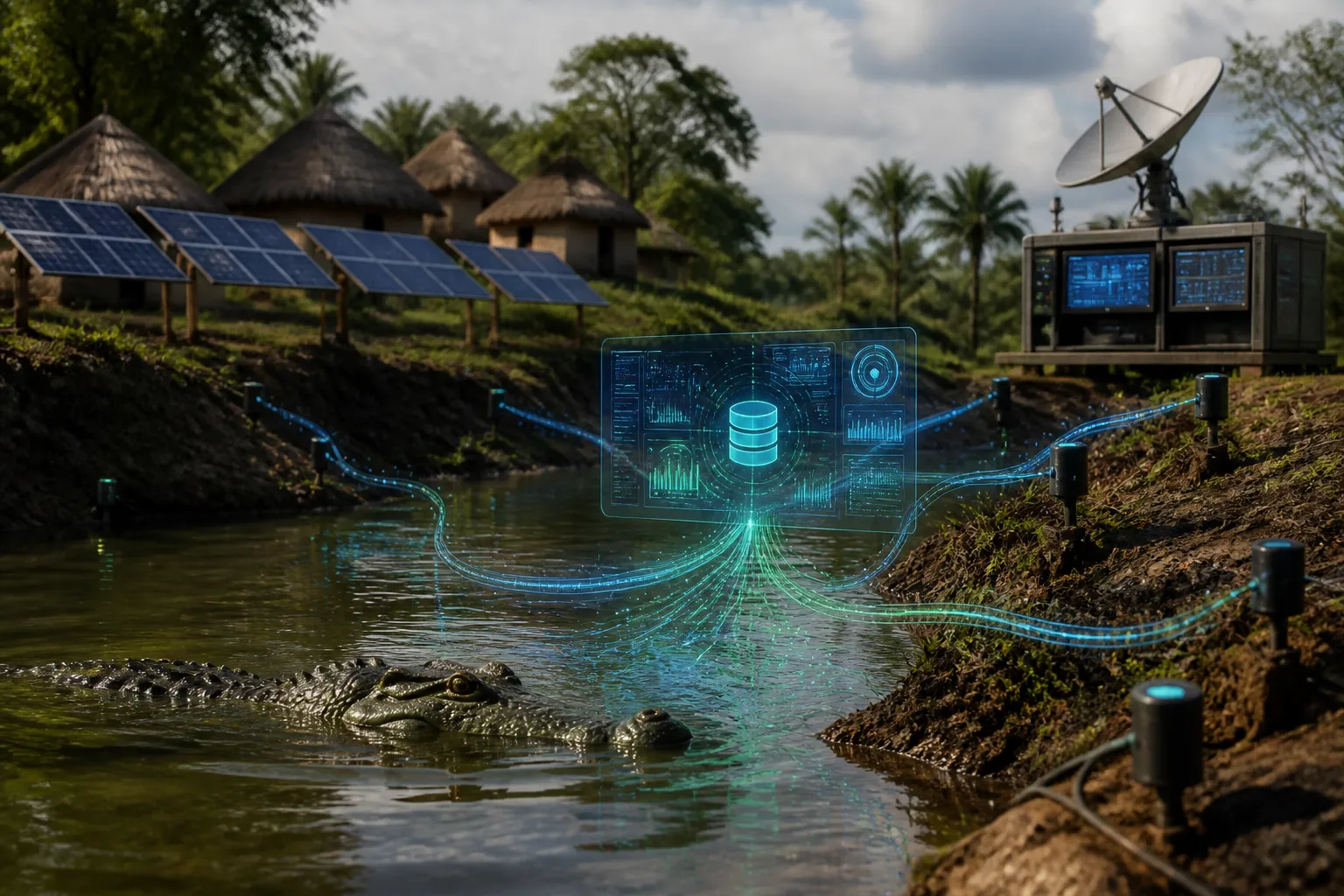
The Council of Scientific and Industrial Research (CSIR) announced that it will install an artificial‑intelligence (AI)–enabled wild‑animal detection and alert system in Kusunpur, a remote village in Odisha’s Kendrapara district. The system, which will be positioned at two key entry points, is intended to give residents warnings when crocodiles approach their homes. The initiative is part of a broader Smart Village programme that also includes extensive infrastructure upgrades and a suite of small‑scale processing projects.
Kendrapara has one of the highest rates of human‑crocodile conflict in Odisha. Over the past four years, more than 20 people have been killed by estuarine crocodiles, according to state records. The new AI system is designed to reduce these fatalities by providing real‑time alerts. The CSIR laboratories plan to use computer vision models trained on local wildlife footage to detect crocodile presence and trigger notifications to village residents.
In addition to the wildlife‑monitoring technology, the Smart Village upgrade will renovate the village’s water gate, install an underground drainage system, rebuild the community building, construct new community toilets, and refurbish the cremation centre. Road construction will employ cold‑mix technology, waste‑plastic road technology, and cement‑grouted bituminous mix, all of which are low‑carbon alternatives to conventional asphalt. The combined infrastructure work is expected to improve connectivity, sanitation, and water management for the 1,200 residents of Kusunpur.
The programme also aims to create green livelihoods. Over the next few years, the CSIR will introduce a range of value‑added processing units, including dry‑flower processing, freeze‑dried crispy fruit production, and the manufacture of nutritious food products to address malnutrition. Other planned units are biodegradable tableware, small‑scale processing for household goods, herbal floor‑cleaning liquids, mosquito‑repellent lotions, and scented candles made from natural beeswax. The initiative will also install brick‑and‑block‑making machines, village‑scale rice and moong dal milling units, and a scientifically designed parboiled rice processing plant.
According to the CSIR‑CBRI director, Pradeep Kumar Ramancharla, scientists from 17 CSIR laboratories will visit Kusunpur over the next three years to ensure the smooth deployment of the technologies. The CSIR‑Institute of Minerals & Materials Technology (IMMT) will contribute sustainable water filters and smokeless chullahs (stoves) for the village, as stated by IMMT director Ramanuj Narayan. Natural‑resource mapping, need assessment, and consultations with villagers were completed by Kishor S. Kulkarni, principal scientist at CBRI and the nodal official for the Smart Village implementation.
The project follows CSIR’s guiding principle of ‘lab to land’, which seeks to translate laboratory research into practical solutions for rural communities. The Smart Village concept, adopted by national and state governments, aims to integrate villages into India’s broader economic development by combining technology, infrastructure, and sustainable livelihoods.
At present, the AI detection system is in the planning stage, with installation sites identified and technology partners engaged. The village’s infrastructure upgrades are scheduled to begin in the next quarter, and the processing units are slated for phased roll‑out over the following 12–18 months. No regulatory approvals or court actions have been reported, and the CSIR has not announced any funding rounds or external investment for the project.
The Smart Village initiative in Kusunpur represents a coordinated effort to address a pressing human‑wildlife safety issue while simultaneously improving basic services and creating economic opportunities for a rural community. As the CSIR laboratories move forward with the AI system and related projects, the village will serve as a test bed for technology transfer and rural development models across India.
Kendrapara has one of the highest rates of human‑crocodile conflict in Odisha. Over the past four years, more than 20 people have been killed by estuarine crocodiles, according to state records. The new AI system is designed to reduce these fatalities by providing real‑time alerts. The CSIR laboratories plan to use computer vision models trained on local wildlife footage to detect crocodile presence and trigger notifications to village residents.
In addition to the wildlife‑monitoring technology, the Smart Village upgrade will renovate the village’s water gate, install an underground drainage system, rebuild the community building, construct new community toilets, and refurbish the cremation centre. Road construction will employ cold‑mix technology, waste‑plastic road technology, and cement‑grouted bituminous mix, all of which are low‑carbon alternatives to conventional asphalt. The combined infrastructure work is expected to improve connectivity, sanitation, and water management for the 1,200 residents of Kusunpur.
The programme also aims to create green livelihoods. Over the next few years, the CSIR will introduce a range of value‑added processing units, including dry‑flower processing, freeze‑dried crispy fruit production, and the manufacture of nutritious food products to address malnutrition. Other planned units are biodegradable tableware, small‑scale processing for household goods, herbal floor‑cleaning liquids, mosquito‑repellent lotions, and scented candles made from natural beeswax. The initiative will also install brick‑and‑block‑making machines, village‑scale rice and moong dal milling units, and a scientifically designed parboiled rice processing plant.
According to the CSIR‑CBRI director, Pradeep Kumar Ramancharla, scientists from 17 CSIR laboratories will visit Kusunpur over the next three years to ensure the smooth deployment of the technologies. The CSIR‑Institute of Minerals & Materials Technology (IMMT) will contribute sustainable water filters and smokeless chullahs (stoves) for the village, as stated by IMMT director Ramanuj Narayan. Natural‑resource mapping, need assessment, and consultations with villagers were completed by Kishor S. Kulkarni, principal scientist at CBRI and the nodal official for the Smart Village implementation.
The project follows CSIR’s guiding principle of ‘lab to land’, which seeks to translate laboratory research into practical solutions for rural communities. The Smart Village concept, adopted by national and state governments, aims to integrate villages into India’s broader economic development by combining technology, infrastructure, and sustainable livelihoods.
At present, the AI detection system is in the planning stage, with installation sites identified and technology partners engaged. The village’s infrastructure upgrades are scheduled to begin in the next quarter, and the processing units are slated for phased roll‑out over the following 12–18 months. No regulatory approvals or court actions have been reported, and the CSIR has not announced any funding rounds or external investment for the project.
The Smart Village initiative in Kusunpur represents a coordinated effort to address a pressing human‑wildlife safety issue while simultaneously improving basic services and creating economic opportunities for a rural community. As the CSIR laboratories move forward with the AI system and related projects, the village will serve as a test bed for technology transfer and rural development models across India.