Blab Tech
Apple Unveils Siri AI and Apple Intelligence at WWDC 2026
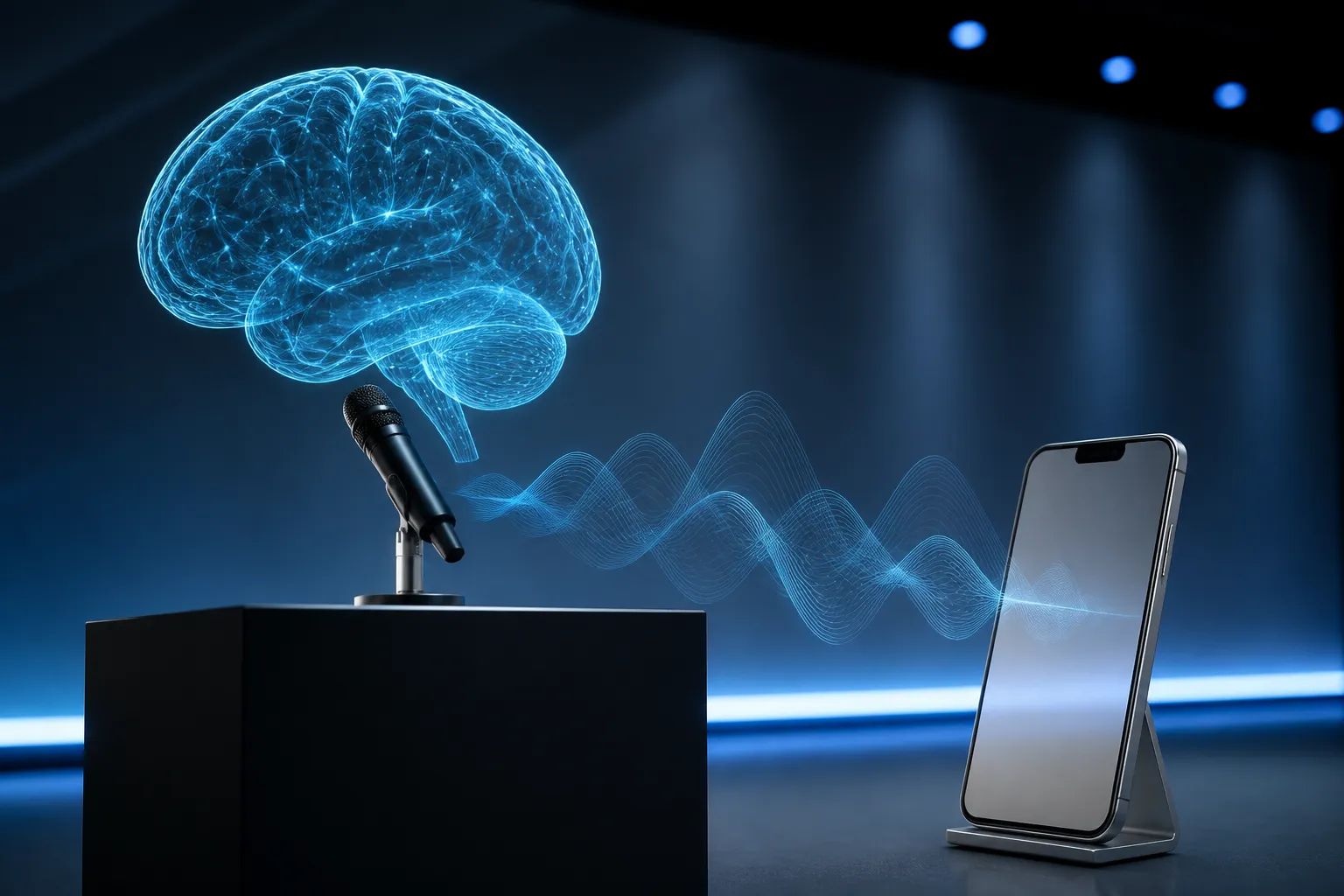
Apple Park buzzed with anticipation on June 8 2026 as the company opened its 2026 Worldwide Developers Conference. The keynote, delivered to a mix of in‑person and online audiences, centered on Apple’s evolving artificial‑intelligence strategy and introduced two headline announcements: a re‑branded version of its virtual assistant, now called "Siri AI," and the expansion of a new suite called Apple Intelligence across iOS 27, iPadOS 27, macOS Golden Gate, visionOS 27, and watchOS 27.
In the presentation, Apple detailed the technical backbone of Siri AI. The assistant runs on a new system orchestrator that coordinates on‑device foundation models supplied by Apple itself and by Google’s Gemini. According to Apple’s newsroom release dated June 10 2026, the orchestrator taps the Spotlight index and an App Toolbox to keep all data local, thereby preserving user privacy while delivering contextual awareness.
The keynote showcased several live demos that illustrated this claim. In one, Siri AI correctly identified a user’s hometown by referencing a passport photo stored in iCloud. In another, the assistant recalled a trip to Rome in April 2025, citing photos and messages with a partner. A third demonstration had Siri AI summarize a slide deck that the user had photographed, turning dense text into concise bullet points. These examples were meant to demonstrate the contextual‑awareness capability Apple first highlighted in 2024 when it introduced foundation‑model functionality to Siri.
Apple also acknowledged that the new assistant still has blind spots. Internal testing showed that Siri AI could not retrieve recent Slack messages or Facebook Messenger conversations, and it could not access Gmail data. The assistant can read Apple‑Mail, but third‑party email services remain inaccessible unless the app developers provide an integration. The limitation aligns with Apple’s privacy‑first approach, but it also means that Siri AI cannot match the breadth of information that competitors such as Google Gemini can offer.
Alongside the AI updates, Apple announced new parental‑control features. The updated Screen Time controls allow parents to block content such as graphic material and unsolicited adult images. A new confirmation‑code display appears when a user dials a business number, a feature Apple said improves security for children.
Apple’s AI architecture is built on the third‑generation Apple Foundation Models, which the company described as a "personal intelligence system" that developers can access through a new framework. The models are trained on a mix of public and private data, with human oversight to mitigate bias. Apple’s partnership with Google Gemini is intended to provide additional language‑model capabilities while keeping the core processing on the device.
Regulatory and market implications remain uncertain. The new AI features are not yet available on devices purchased in mainland China, and Apple has not yet addressed the European Union’s data‑protection requirements for on‑device AI. Analysts note that the two‑year delay in delivering a fully functional Siri has left Apple behind competitors that released AI assistants earlier.
In summary, WWDC 2026 marked Apple’s first major AI overhaul in several years. Siri AI and Apple Intelligence promise deeper contextual understanding and on‑device privacy, but the assistant still lacks access to many third‑party data sources. The next steps for Apple will involve refining the system orchestrator, expanding developer support for foundation models, and addressing regulatory gaps in the EU and China. The company will likely roll out the new features in the fall with iOS 27 and related updates.
In the presentation, Apple detailed the technical backbone of Siri AI. The assistant runs on a new system orchestrator that coordinates on‑device foundation models supplied by Apple itself and by Google’s Gemini. According to Apple’s newsroom release dated June 10 2026, the orchestrator taps the Spotlight index and an App Toolbox to keep all data local, thereby preserving user privacy while delivering contextual awareness.
The keynote showcased several live demos that illustrated this claim. In one, Siri AI correctly identified a user’s hometown by referencing a passport photo stored in iCloud. In another, the assistant recalled a trip to Rome in April 2025, citing photos and messages with a partner. A third demonstration had Siri AI summarize a slide deck that the user had photographed, turning dense text into concise bullet points. These examples were meant to demonstrate the contextual‑awareness capability Apple first highlighted in 2024 when it introduced foundation‑model functionality to Siri.
Apple also acknowledged that the new assistant still has blind spots. Internal testing showed that Siri AI could not retrieve recent Slack messages or Facebook Messenger conversations, and it could not access Gmail data. The assistant can read Apple‑Mail, but third‑party email services remain inaccessible unless the app developers provide an integration. The limitation aligns with Apple’s privacy‑first approach, but it also means that Siri AI cannot match the breadth of information that competitors such as Google Gemini can offer.
Alongside the AI updates, Apple announced new parental‑control features. The updated Screen Time controls allow parents to block content such as graphic material and unsolicited adult images. A new confirmation‑code display appears when a user dials a business number, a feature Apple said improves security for children.
Apple’s AI architecture is built on the third‑generation Apple Foundation Models, which the company described as a "personal intelligence system" that developers can access through a new framework. The models are trained on a mix of public and private data, with human oversight to mitigate bias. Apple’s partnership with Google Gemini is intended to provide additional language‑model capabilities while keeping the core processing on the device.
Regulatory and market implications remain uncertain. The new AI features are not yet available on devices purchased in mainland China, and Apple has not yet addressed the European Union’s data‑protection requirements for on‑device AI. Analysts note that the two‑year delay in delivering a fully functional Siri has left Apple behind competitors that released AI assistants earlier.
In summary, WWDC 2026 marked Apple’s first major AI overhaul in several years. Siri AI and Apple Intelligence promise deeper contextual understanding and on‑device privacy, but the assistant still lacks access to many third‑party data sources. The next steps for Apple will involve refining the system orchestrator, expanding developer support for foundation models, and addressing regulatory gaps in the EU and China. The company will likely roll out the new features in the fall with iOS 27 and related updates.








