Blab Tech
NVIDIA Expands into Physical AI, Partners with LG on Humanoid Robots and Launches New Robotics Lab
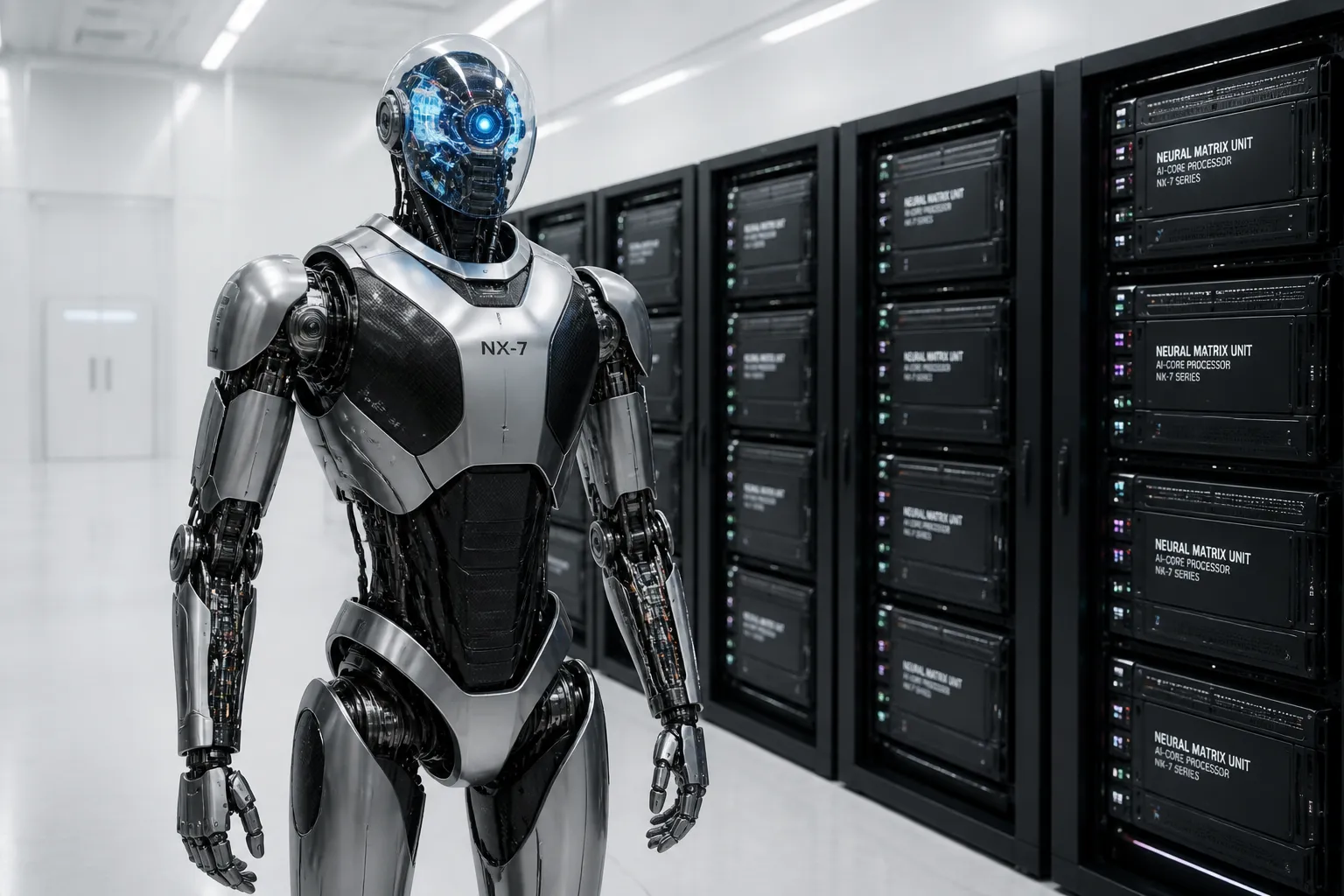
NVIDIA Corporation (NASDAQ:NVDA) announced a new partnership with South Korea’s LG Group on June 8, 2026, after a meeting between CEO Jensen Huang and LG Group Chairman Koo Kwang‑mo in Seoul. The collaboration focuses on motor technology and mechanical systems for humanoid robots and on next‑generation data‑center architecture.
The following day, AI‑cloud provider Nebius launched the Physical AI Living Lab, a six‑month program that will equip British and European robotics startups with NVIDIA’s physical‑AI development tools and Nebius’s cloud infrastructure. The first cohort is slated to begin in September 2026. Participating companies will gain access to NVIDIA’s OSMO orchestrator, Cosmos world foundation models, Isaac Sim, and Isaac Lab, all running on Nebius infrastructure built around NVIDIA RTX PRO 6000 Blackwell Server Edition GPUs.
These initiatives come on the heels of NVIDIA’s record fiscal first‑quarter 2027 results. On May 20, 2026 the company reported revenue of $81.6 billion, an 85 % year‑over‑year increase, and Data Center revenue of $75.2 billion, up 92 % annually. Non‑GAAP diluted earnings per share reached $1.87, a 140 % rise from the prior year. NVIDIA guided fiscal second‑quarter revenue to $91 billion, plus or minus 2 %.
NVIDIA’s financial performance underscores the high demand for its GPU and AI‑accelerator products across data‑center, automotive, and scientific‑research markets. The company’s CUDA ecosystem enables a wide range of industries to deploy massively parallel compute workloads, and its suite of software tools—including OSMO, Isaac Sim, and Isaac Lab—supports the development of autonomous systems and physical‑AI applications.
The partnership with LG represents a strategic move into the robotics sector, where NVIDIA’s simulation and training platforms can be combined with LG’s manufacturing expertise. According to Reuters coverage, the joint effort will target the creation of humanoid robots that can operate in human‑centric environments and the design of data‑center solutions that integrate physical‑AI workloads.
Nebius’s Physical AI Living Lab is designed to lower the barrier to entry for startups that need high‑performance compute and simulation tools. By providing access to NVIDIA’s foundation models and simulation environments on a cloud platform powered by Blackwell GPUs, the lab aims to accelerate the transition from virtual prototypes to real‑world deployments.
NVIDIA’s profit margin of 62.97 % and net income of $120.07 billion for fiscal year 2026 place the company among the most profitable blue‑chip stocks, according to hedge‑fund analysis that projects a 36.90 % upside. The firm’s expanding footprint beyond chips and data centers into physical AI and robotics reflects a broader strategy to diversify revenue streams while leveraging its core hardware and software strengths.
At present, NVIDIA’s partnership with LG is focused on joint development of motor and mechanical systems for humanoid robots, while the Nebius lab is preparing to launch its first cohort of startups in September. The company’s Q2 revenue guidance of $91 billion indicates continued growth momentum, and its ongoing investment in AI infrastructure positions it to support the next wave of robotics and autonomous‑system applications.
The developments signal a continued shift toward integrated hardware‑software ecosystems that support physical‑AI workloads, with NVIDIA at the center of this transformation. As the company moves deeper into robotics and expands its cloud‑based development platforms, stakeholders will be watching for how these collaborations translate into commercial products and market adoption.
The following day, AI‑cloud provider Nebius launched the Physical AI Living Lab, a six‑month program that will equip British and European robotics startups with NVIDIA’s physical‑AI development tools and Nebius’s cloud infrastructure. The first cohort is slated to begin in September 2026. Participating companies will gain access to NVIDIA’s OSMO orchestrator, Cosmos world foundation models, Isaac Sim, and Isaac Lab, all running on Nebius infrastructure built around NVIDIA RTX PRO 6000 Blackwell Server Edition GPUs.
These initiatives come on the heels of NVIDIA’s record fiscal first‑quarter 2027 results. On May 20, 2026 the company reported revenue of $81.6 billion, an 85 % year‑over‑year increase, and Data Center revenue of $75.2 billion, up 92 % annually. Non‑GAAP diluted earnings per share reached $1.87, a 140 % rise from the prior year. NVIDIA guided fiscal second‑quarter revenue to $91 billion, plus or minus 2 %.
NVIDIA’s financial performance underscores the high demand for its GPU and AI‑accelerator products across data‑center, automotive, and scientific‑research markets. The company’s CUDA ecosystem enables a wide range of industries to deploy massively parallel compute workloads, and its suite of software tools—including OSMO, Isaac Sim, and Isaac Lab—supports the development of autonomous systems and physical‑AI applications.
The partnership with LG represents a strategic move into the robotics sector, where NVIDIA’s simulation and training platforms can be combined with LG’s manufacturing expertise. According to Reuters coverage, the joint effort will target the creation of humanoid robots that can operate in human‑centric environments and the design of data‑center solutions that integrate physical‑AI workloads.
Nebius’s Physical AI Living Lab is designed to lower the barrier to entry for startups that need high‑performance compute and simulation tools. By providing access to NVIDIA’s foundation models and simulation environments on a cloud platform powered by Blackwell GPUs, the lab aims to accelerate the transition from virtual prototypes to real‑world deployments.
NVIDIA’s profit margin of 62.97 % and net income of $120.07 billion for fiscal year 2026 place the company among the most profitable blue‑chip stocks, according to hedge‑fund analysis that projects a 36.90 % upside. The firm’s expanding footprint beyond chips and data centers into physical AI and robotics reflects a broader strategy to diversify revenue streams while leveraging its core hardware and software strengths.
At present, NVIDIA’s partnership with LG is focused on joint development of motor and mechanical systems for humanoid robots, while the Nebius lab is preparing to launch its first cohort of startups in September. The company’s Q2 revenue guidance of $91 billion indicates continued growth momentum, and its ongoing investment in AI infrastructure positions it to support the next wave of robotics and autonomous‑system applications.
The developments signal a continued shift toward integrated hardware‑software ecosystems that support physical‑AI workloads, with NVIDIA at the center of this transformation. As the company moves deeper into robotics and expands its cloud‑based development platforms, stakeholders will be watching for how these collaborations translate into commercial products and market adoption.