Blab Tech
Singapore Expands Underground District Cooling to Punggol Digital District
Beneath the bustling streets of Singapore’s Punggol Digital District, a silent network of chilled water is being laid, promising a cooler future for the city‑state’s newest tech hub.
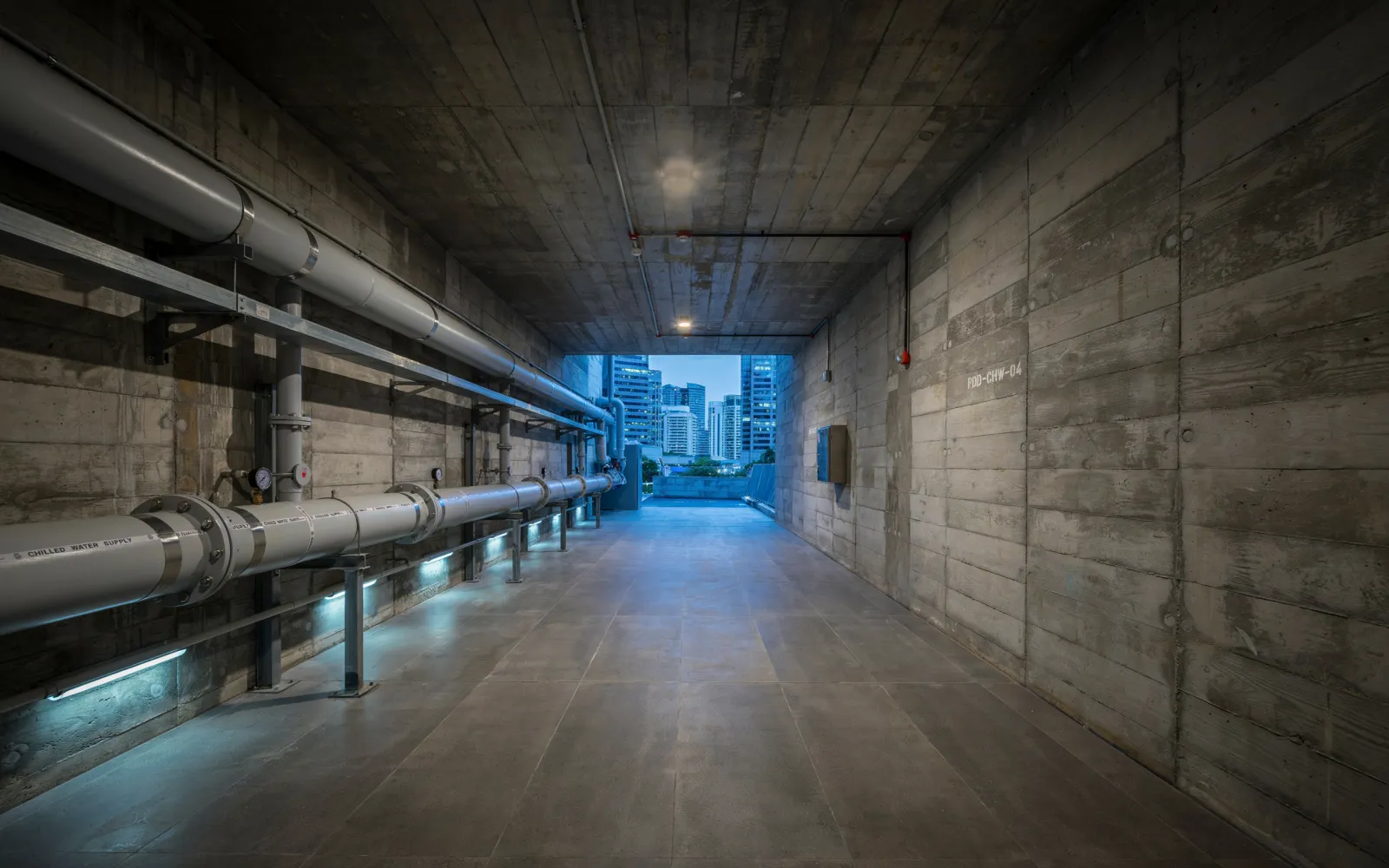
ENGIE South East Asia is spearheading the construction of an underground district cooling plant that will snake five kilometres of metal pipes beneath the district’s buildings. When complete, the system will deliver up to 30,000 refrigeration‑tons of chilled water, placing it among the world’s largest subterranean cooling networks.
The Punggol plant follows Singapore’s long‑standing district cooling strategy that began in 2006 with the first underground plant, built by Singapore District Cooling Private Limited—a subsidiary of the SP Group. That initial plant supplied One Raffles Quay and inaugurated a network that now spans the island. District cooling works by centralising chilled‑water production, allowing individual buildings to use smaller, more efficient chillers and reducing overall electricity consumption compared with traditional air‑conditioning units.
Under its contract with JTC Corporation, the agency that oversees the Punggol Digital District, ENGIE will own and operate the cooling plant. The company will also supply a building‑management system that monitors performance and supports the Singapore Institute of Technology’s forthcoming campus in the district. The partnership is designed to serve as a real‑world training ground for students studying district cooling and energy‑efficiency technologies.
Singapore’s focus on district cooling dovetails with its energy‑efficiency and climate‑adaptation goals. The island imports nearly all of its electricity and has pledged to improve energy efficiency by 36 % by 2030 relative to 2005 levels. Cooling demand is growing faster than the global average as temperatures rise, and district cooling is seen as a key lever for lowering electricity use in this sector.
Operating underground frees up above‑ground space and reduces visual impact, while tying into the broader Singapore District Cooling network—the world’s largest fully underground system. Centralised chilled‑water production delivers economies of scale and a lower carbon footprint compared with conventional, building‑level air‑conditioners.
The project fits into Singapore’s broader infrastructure strategy. The government’s Green Plan and the Energy Market Authority’s “4 Switches” initiative encourage technologies that improve energy efficiency and cut emissions. District cooling is one such technology, and the Punggol Digital District is expected to showcase sustainable urban development.
Construction is progressing in stages. The initial phase will focus on the core plant and main distribution lines, while later phases will extend the network to individual buildings. The system is slated to be fully operational in the coming months, after which it will provide a continuous supply of chilled water to the district’s offices, classrooms, and community facilities.
The expansion of district cooling to Punggol Digital District illustrates Singapore’s commitment to climate‑resilient infrastructure. It also demonstrates the practical benefits of underground cooling—reduced electricity use, lower emissions, and efficient use of limited urban space. As the plant nears completion, the city‑state will be better positioned to meet its energy‑efficiency targets and to offer a comfortable indoor environment for the district’s residents and workers.
ENGIE South East Asia is spearheading the construction of an underground district cooling plant that will snake five kilometres of metal pipes beneath the district’s buildings. When complete, the system will deliver up to 30,000 refrigeration‑tons of chilled water, placing it among the world’s largest subterranean cooling networks.
The Punggol plant follows Singapore’s long‑standing district cooling strategy that began in 2006 with the first underground plant, built by Singapore District Cooling Private Limited—a subsidiary of the SP Group. That initial plant supplied One Raffles Quay and inaugurated a network that now spans the island. District cooling works by centralising chilled‑water production, allowing individual buildings to use smaller, more efficient chillers and reducing overall electricity consumption compared with traditional air‑conditioning units.
Under its contract with JTC Corporation, the agency that oversees the Punggol Digital District, ENGIE will own and operate the cooling plant. The company will also supply a building‑management system that monitors performance and supports the Singapore Institute of Technology’s forthcoming campus in the district. The partnership is designed to serve as a real‑world training ground for students studying district cooling and energy‑efficiency technologies.
Singapore’s focus on district cooling dovetails with its energy‑efficiency and climate‑adaptation goals. The island imports nearly all of its electricity and has pledged to improve energy efficiency by 36 % by 2030 relative to 2005 levels. Cooling demand is growing faster than the global average as temperatures rise, and district cooling is seen as a key lever for lowering electricity use in this sector.
Operating underground frees up above‑ground space and reduces visual impact, while tying into the broader Singapore District Cooling network—the world’s largest fully underground system. Centralised chilled‑water production delivers economies of scale and a lower carbon footprint compared with conventional, building‑level air‑conditioners.
The project fits into Singapore’s broader infrastructure strategy. The government’s Green Plan and the Energy Market Authority’s “4 Switches” initiative encourage technologies that improve energy efficiency and cut emissions. District cooling is one such technology, and the Punggol Digital District is expected to showcase sustainable urban development.
Construction is progressing in stages. The initial phase will focus on the core plant and main distribution lines, while later phases will extend the network to individual buildings. The system is slated to be fully operational in the coming months, after which it will provide a continuous supply of chilled water to the district’s offices, classrooms, and community facilities.
The expansion of district cooling to Punggol Digital District illustrates Singapore’s commitment to climate‑resilient infrastructure. It also demonstrates the practical benefits of underground cooling—reduced electricity use, lower emissions, and efficient use of limited urban space. As the plant nears completion, the city‑state will be better positioned to meet its energy‑efficiency targets and to offer a comfortable indoor environment for the district’s residents and workers.