Blab Tech
Elbit Systems Demonstrates Export-Ready Digital Ground Army in Sweden Amid European Modernization Push
Elbit Systems Ltd. completed a live field demonstration of its export‑ready version of the Israel Defense Forces’ Digital Ground Army system in Sweden in June 2026. The event, held at a Swedish training facility, showcased the system’s ability to link soldiers, unmanned aerial vehicles and command posts in a single networked environment. The demonstration comes as European armies, many of them NATO members, accelerate modernization efforts in response to heightened security concerns over a potential conflict with Russia.
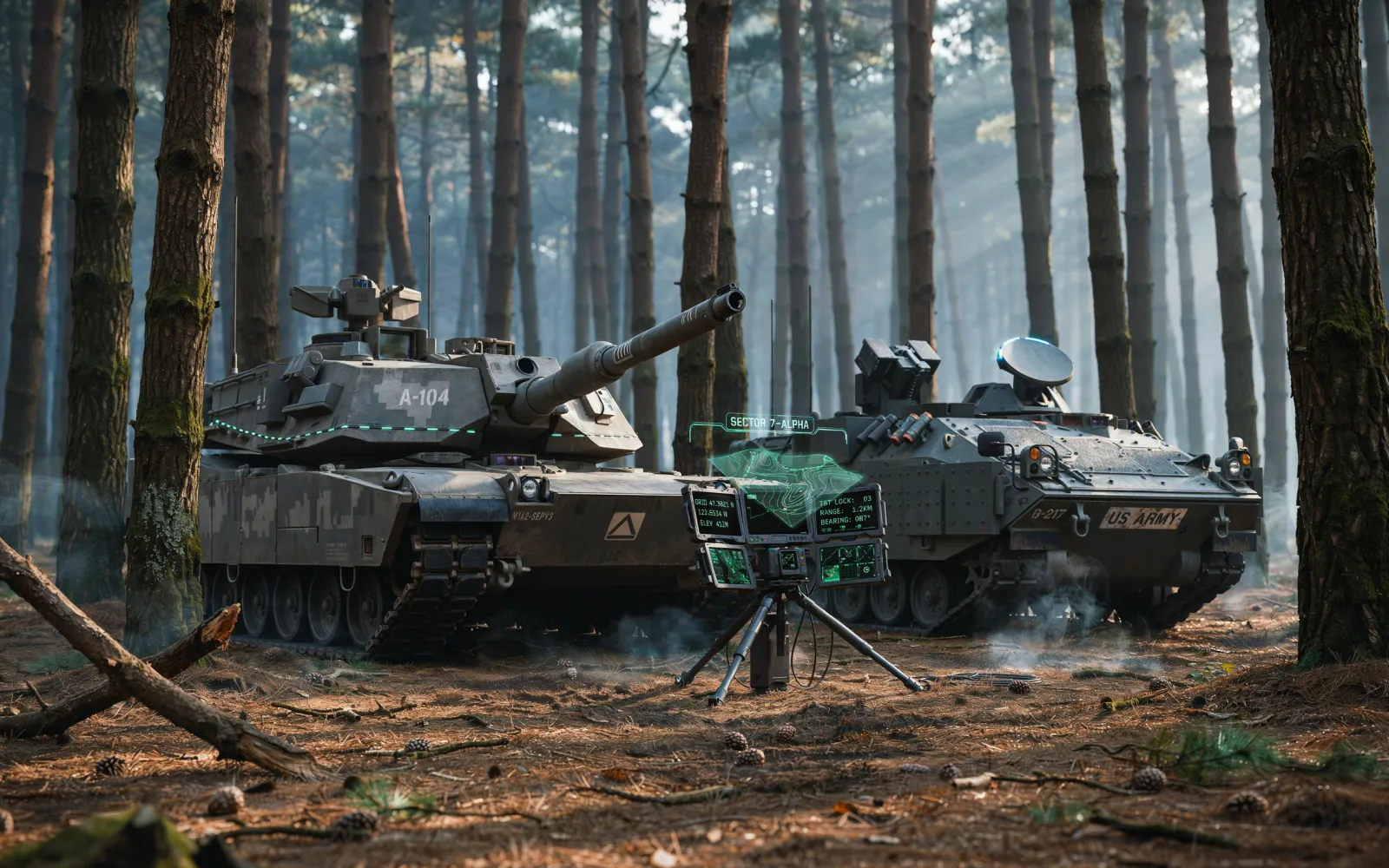
The Digital Ground Army is a network‑centric command, control, communications, computers and intelligence (C4I) platform that the IDF has used to integrate armored, infantry and artillery units. According to Elbit, the export version retains the core data‑link architecture that allows real‑time situational awareness across multiple layers of the battlefield. During the Swedish exercise, the system connected ground troops with drones and a mobile command centre, demonstrating data sharing and coordinated targeting.
Elbit’s demonstration follows a February 2026 contract in which the company was awarded $100 million to develop the next generation of the IDF’s Digital Ground Army. The order is part of a broader effort by the Israeli military to accelerate digitisation of its ground forces. The company, which employs more than 20 000 people worldwide, reported $7.94 billion in revenue for the year ended December 31 2025 and an order backlog of $28.1 billion.
Sweden’s Defence Materiel Administration (FMV) has been actively pursuing multi‑domain solutions for its armed forces. In early June, Saab received a 1.2 billion SEK order for sensors and command‑and‑control systems for a ground‑based air defence (GBAD) solution. The FMV’s procurement strategy aims to integrate air, land and cyber capabilities, and the Digital Ground Army demo aligns with that objective.
NATO has recently announced new multinational capability cooperation initiatives, including the “Sword 26” exercise that tests data‑driven warfare and artificial‑intelligence integration. The Swedish demonstration is consistent with NATO’s emphasis on interoperability and networked operations. While the demonstration was conducted by a private company, it illustrates the type of technology that NATO allies are evaluating for future procurement.
The system’s technical features include secure, low‑latency data links that can operate in contested electromagnetic environments. The integration of unmanned aerial vehicles provides forward‑looking surveillance, while the command post software aggregates sensor feeds into a single operational picture. Elbit’s public statements indicate that the export version is designed to comply with international export‑control regimes, although the company has not disclosed specific licensing arrangements.
European defense analysts note that the Digital Ground Army represents a shift toward integrated, data‑centric warfare. The system’s ability to fuse ground and air assets could enhance force multiplication for smaller armies. However, analysts also point out that the technology’s effectiveness will depend on the quality of the underlying sensors, the robustness of the data links and the training of personnel.
The demonstration was attended by representatives from the Swedish Armed Forces, NATO officials and industry partners. While no formal procurement decision was announced, the event is expected to influence future tender processes for networked C4I solutions across Europe.
Elbit has stated that the demonstration was a key milestone in validating the export version’s interoperability with non‑Israeli platforms. The company has not yet announced a commercial launch date for the system, but it has indicated that it will seek to partner with European defense contractors for broader distribution.
In the coming months, Elbit is expected to present the system at the Saha 2026 International Defence & Aerospace Exhibition in Berlin. The company’s order backlog, which surpassed $30 billion in early 2026, suggests that further contracts are likely. Meanwhile, NATO’s ongoing modernization programs and the Swedish FMV’s procurement of GBAD sensors indicate a growing demand for integrated, multi‑domain defense solutions.
The current situation remains that Elbit’s Digital Ground Army has successfully completed a live field demonstration in Sweden. The next steps include potential procurement negotiations, further testing in varied operational environments, and compliance with export‑control regulations. The system’s deployment could signal a new phase of networked ground warfare for European armies, but its ultimate impact will depend on future procurement decisions and the evolution of the broader defense market.
The Digital Ground Army is a network‑centric command, control, communications, computers and intelligence (C4I) platform that the IDF has used to integrate armored, infantry and artillery units. According to Elbit, the export version retains the core data‑link architecture that allows real‑time situational awareness across multiple layers of the battlefield. During the Swedish exercise, the system connected ground troops with drones and a mobile command centre, demonstrating data sharing and coordinated targeting.
Elbit’s demonstration follows a February 2026 contract in which the company was awarded $100 million to develop the next generation of the IDF’s Digital Ground Army. The order is part of a broader effort by the Israeli military to accelerate digitisation of its ground forces. The company, which employs more than 20 000 people worldwide, reported $7.94 billion in revenue for the year ended December 31 2025 and an order backlog of $28.1 billion.
Sweden’s Defence Materiel Administration (FMV) has been actively pursuing multi‑domain solutions for its armed forces. In early June, Saab received a 1.2 billion SEK order for sensors and command‑and‑control systems for a ground‑based air defence (GBAD) solution. The FMV’s procurement strategy aims to integrate air, land and cyber capabilities, and the Digital Ground Army demo aligns with that objective.
NATO has recently announced new multinational capability cooperation initiatives, including the “Sword 26” exercise that tests data‑driven warfare and artificial‑intelligence integration. The Swedish demonstration is consistent with NATO’s emphasis on interoperability and networked operations. While the demonstration was conducted by a private company, it illustrates the type of technology that NATO allies are evaluating for future procurement.
The system’s technical features include secure, low‑latency data links that can operate in contested electromagnetic environments. The integration of unmanned aerial vehicles provides forward‑looking surveillance, while the command post software aggregates sensor feeds into a single operational picture. Elbit’s public statements indicate that the export version is designed to comply with international export‑control regimes, although the company has not disclosed specific licensing arrangements.
European defense analysts note that the Digital Ground Army represents a shift toward integrated, data‑centric warfare. The system’s ability to fuse ground and air assets could enhance force multiplication for smaller armies. However, analysts also point out that the technology’s effectiveness will depend on the quality of the underlying sensors, the robustness of the data links and the training of personnel.
The demonstration was attended by representatives from the Swedish Armed Forces, NATO officials and industry partners. While no formal procurement decision was announced, the event is expected to influence future tender processes for networked C4I solutions across Europe.
Elbit has stated that the demonstration was a key milestone in validating the export version’s interoperability with non‑Israeli platforms. The company has not yet announced a commercial launch date for the system, but it has indicated that it will seek to partner with European defense contractors for broader distribution.
In the coming months, Elbit is expected to present the system at the Saha 2026 International Defence & Aerospace Exhibition in Berlin. The company’s order backlog, which surpassed $30 billion in early 2026, suggests that further contracts are likely. Meanwhile, NATO’s ongoing modernization programs and the Swedish FMV’s procurement of GBAD sensors indicate a growing demand for integrated, multi‑domain defense solutions.
The current situation remains that Elbit’s Digital Ground Army has successfully completed a live field demonstration in Sweden. The next steps include potential procurement negotiations, further testing in varied operational environments, and compliance with export‑control regulations. The system’s deployment could signal a new phase of networked ground warfare for European armies, but its ultimate impact will depend on future procurement decisions and the evolution of the broader defense market.