Blab Tech
Rochester Named National Laser Innovation Hub Under NSF STELLAR Engine
When a beam of light becomes the cornerstone of a nation’s technological future, the world watches.
In a move that signals a new chapter for photonics in the United States, the University of Rochester (UR) has been named the lead institution for the National Science Foundation’s (NSF) STELLAR Engine—a $15 million federal program that will fund laser science and development in the Rochester‑Finger Lakes region for the next two years. Matching money from New York state will bring the total investment close to $30 million.
STELLAR—Science, Technology and Engineering for Laser and Laser Applications Research—fits into a broader set of regional innovation engines created under the CHIPS & Science Act of 2022. The legislation earmarked up to $160 million per engine over a ten‑year horizon, with each engine’s progress reviewed annually. The Rochester hub is one of several new centers that aim to concentrate talent, infrastructure, and capital in key scientific domains.
Operations will launch in downtown Rochester’s Sibley Square, with plans to expand into the Lake Avenue building that already houses the national photonics hub. Tom Brown, director of UR’s Institute of Optics and principal investigator for the STELLAR program, said the initiative will bring laser‑related research and manufacturing closer to the region.
"One of the things that's really significant, but underappreciated, is how much our lives depend on laser technology," Brown told reporters. "There's $16 trillion worth of goods and services that wouldn't happen without laser technology."
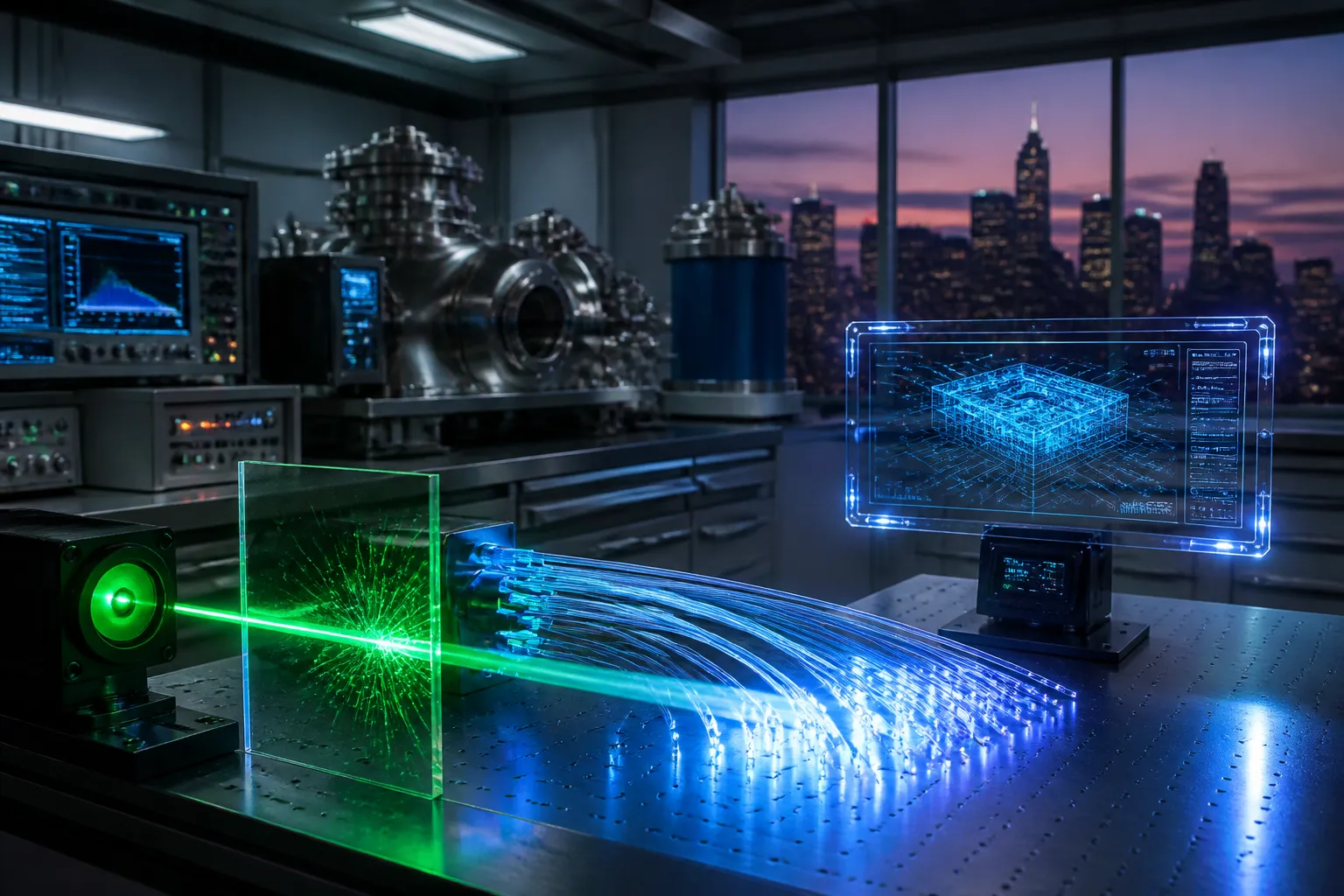
He added that lasers are already integral to the internet, semiconductor fabrication, and 3D printing, and that future applications could include fusion‑based clean energy, highly sensitive biomedical sensors for blood testing, and advanced optical communications.
The federal award was announced by U.S. Senator Chuck Schumer, a key architect of the CHIPS & Science Act. State funding for the hub will run for six years, and the program will be evaluated annually to determine eligibility for additional federal dollars.
Brown noted that the funding has remained stable despite recent changes at the NSF, including the dismissal of the entire NSF board by President Trump earlier this year. "There has been a lot of reorganization going on in the federal government," he said, "but overall funding has been doing pretty well outside the regional innovation engine."
The STELLAR Engine will involve a coalition of local partners. In addition to UR, the Rochester Institute of Technology (RIT), the National Technical Institute for the Deaf at RIT, Monroe Community College, and Next Corps will contribute expertise and facilities. The Rochester Museum & Science Center is also participating, focusing on outreach to students and the public.
Brown emphasized the program’s goal of creating local employment and educational opportunities. "Our goal on the STELLAR regional innovation engine is to make sure that there's a place, a company in the area, or an opportunity in the area for every student, every graduate that wants to stay in the area," he said.
The STELLAR Engine will also support the migration of the existing UR STELLAR program into a separate nonprofit entity over the next two years, allowing the initiative to operate independently while maintaining ties to the university.
The announcement comes as the United States seeks to strengthen domestic capabilities in photonics and laser technology—areas critical to national security, industrial competitiveness, and scientific research. By concentrating expertise and resources in Rochester, the NSF and New York state aim to accelerate the development of laser‑based solutions that can benefit a wide range of sectors.
As the program moves forward, stakeholders will monitor the allocation of federal and state funds, the establishment of research facilities, and the creation of workforce training pathways. The STELLAR Engine’s progress will be reported annually to NSF and state authorities, and its impact on local industry and education will be a key metric for future funding decisions.
In a move that signals a new chapter for photonics in the United States, the University of Rochester (UR) has been named the lead institution for the National Science Foundation’s (NSF) STELLAR Engine—a $15 million federal program that will fund laser science and development in the Rochester‑Finger Lakes region for the next two years. Matching money from New York state will bring the total investment close to $30 million.
STELLAR—Science, Technology and Engineering for Laser and Laser Applications Research—fits into a broader set of regional innovation engines created under the CHIPS & Science Act of 2022. The legislation earmarked up to $160 million per engine over a ten‑year horizon, with each engine’s progress reviewed annually. The Rochester hub is one of several new centers that aim to concentrate talent, infrastructure, and capital in key scientific domains.
Operations will launch in downtown Rochester’s Sibley Square, with plans to expand into the Lake Avenue building that already houses the national photonics hub. Tom Brown, director of UR’s Institute of Optics and principal investigator for the STELLAR program, said the initiative will bring laser‑related research and manufacturing closer to the region.
"One of the things that's really significant, but underappreciated, is how much our lives depend on laser technology," Brown told reporters. "There's $16 trillion worth of goods and services that wouldn't happen without laser technology."
He added that lasers are already integral to the internet, semiconductor fabrication, and 3D printing, and that future applications could include fusion‑based clean energy, highly sensitive biomedical sensors for blood testing, and advanced optical communications.
The federal award was announced by U.S. Senator Chuck Schumer, a key architect of the CHIPS & Science Act. State funding for the hub will run for six years, and the program will be evaluated annually to determine eligibility for additional federal dollars.
Brown noted that the funding has remained stable despite recent changes at the NSF, including the dismissal of the entire NSF board by President Trump earlier this year. "There has been a lot of reorganization going on in the federal government," he said, "but overall funding has been doing pretty well outside the regional innovation engine."
The STELLAR Engine will involve a coalition of local partners. In addition to UR, the Rochester Institute of Technology (RIT), the National Technical Institute for the Deaf at RIT, Monroe Community College, and Next Corps will contribute expertise and facilities. The Rochester Museum & Science Center is also participating, focusing on outreach to students and the public.
Brown emphasized the program’s goal of creating local employment and educational opportunities. "Our goal on the STELLAR regional innovation engine is to make sure that there's a place, a company in the area, or an opportunity in the area for every student, every graduate that wants to stay in the area," he said.
The STELLAR Engine will also support the migration of the existing UR STELLAR program into a separate nonprofit entity over the next two years, allowing the initiative to operate independently while maintaining ties to the university.
The announcement comes as the United States seeks to strengthen domestic capabilities in photonics and laser technology—areas critical to national security, industrial competitiveness, and scientific research. By concentrating expertise and resources in Rochester, the NSF and New York state aim to accelerate the development of laser‑based solutions that can benefit a wide range of sectors.
As the program moves forward, stakeholders will monitor the allocation of federal and state funds, the establishment of research facilities, and the creation of workforce training pathways. The STELLAR Engine’s progress will be reported annually to NSF and state authorities, and its impact on local industry and education will be a key metric for future funding decisions.