Blab Tech
NASAs Orion Vehicle Manager Highlights Artemis II Milestones and Future Lunar Plans
When Orion’s capsule brushed the lunar horizon on April 1, 2026, the world watched a new chapter of human spaceflight unfold. Branelle Rodriguez, the Orion vehicle manager at NASA’s Johnson Space Center, spoke on May 28 at Houston’s Ion innovation hub about how Artemis II—NASA’s first crewed lunar flyby—has set the stage for a sustained lunar presence and future journeys to Mars.
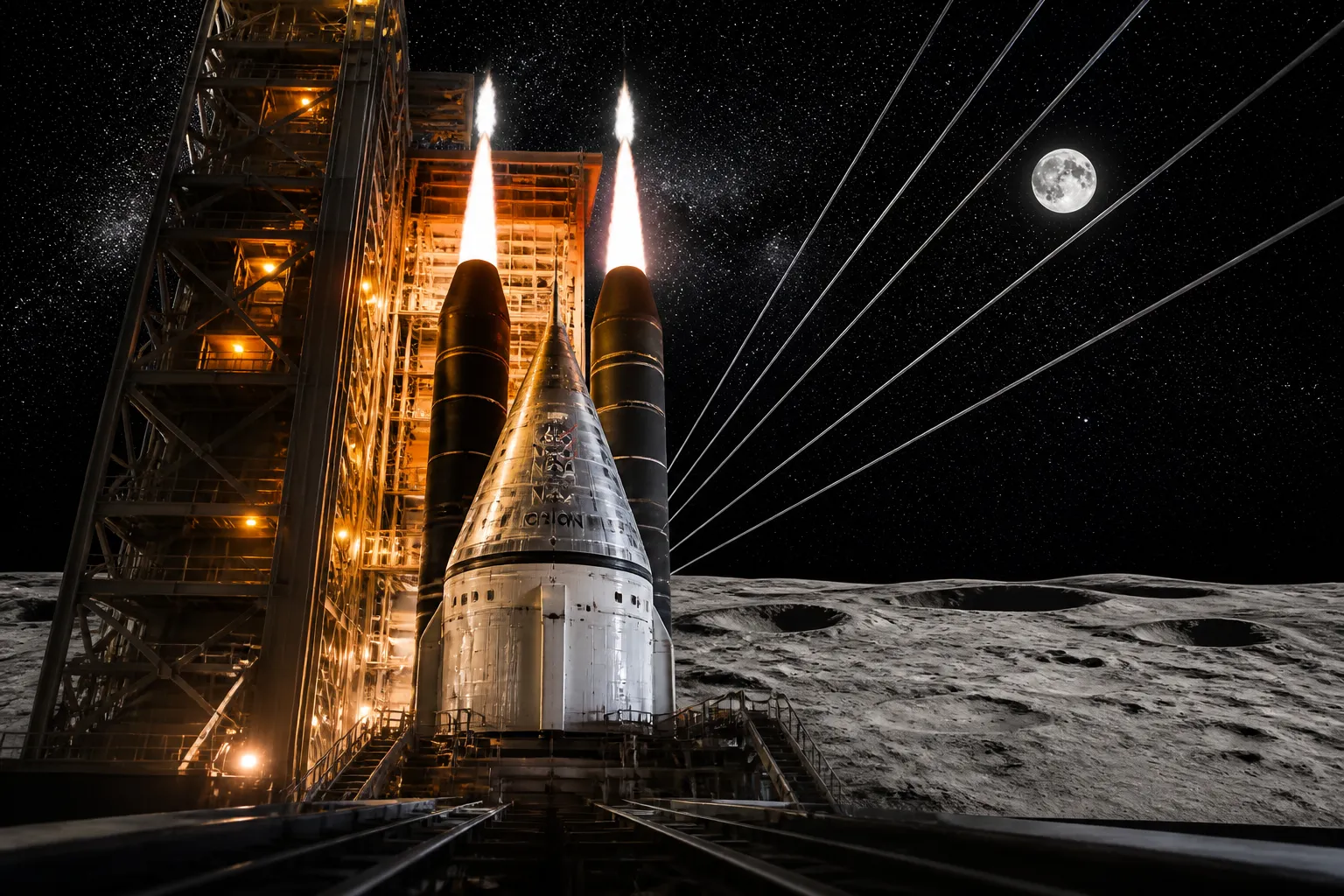
Artemis II launched from Launch Complex 39B at Kennedy Space Center aboard the Space Launch System (SLS) rocket. The four‑person crew—Reid Wiseman, Victor Glover, Christina Koch, and Canadian Space Agency astronaut Jeremy Hansen—traversed beyond low‑Earth orbit, circled the Moon, and returned to Earth after a 10‑day flight. Orion, built by Lockheed Martin, was paired with the European Service Module (ESM) supplied by the European Space Agency, which supplied power, propulsion, oxygen, water, and thermal control.
During the journey, Orion’s environmental control and life‑support systems, navigation, crew interfaces, and reentry procedures were pushed to their limits in deep‑space conditions. The crew performed a manual piloting demonstration that evaluated Orion’s handling and proximity operations—data that will shape rendezvous and docking activities for later Artemis missions. Mission imagery and video captured Earthrise, detailed views of the lunar surface, and a solar eclipse observed from deep space.
Rodriguez said, “This mission was very near and dear to my heart.” She added, “It has not sunk in what this mission and what this accomplishment all means to us and humanity.” She highlighted the global teamwork that made Orion’s success possible, noting that more than 300 people in the Orion Mission Evaluation Room at Johnson monitored the spacecraft in real time. Rodriguez also described the “Rise” plushie, a zero‑gravity indicator created by a student through an Artemis II design competition, which carried a memory card with over 5.6 million names of space fans who signed up through NASA’s “Send Your Name with Artemis” effort. “It is what the crew wanted – to bring all of us with them on this mission,” she said.
The crew’s mission patch contains a hidden detail that reads “all” when viewed from a distance, a tribute to the many people who contributed to the flight. Rodriguez noted, “It is a village that makes this possible, absolutely.”
Looking ahead, Artemis III is scheduled for late 2027. The mission will launch Orion aboard the SLS and test critical rendezvous and docking capabilities between Orion and commercial human‑landing‑system prototypes being developed by Blue Origin and SpaceX. NASA has already begun producing hardware for Artemis III at Kennedy Space Center, and the crew for Artemis III was announced on June 9 at Johnson Space Center.
Rodriguez concluded that Artemis II demonstrated what thousands of people can achieve when working toward a common goal. She said, “It’s going to take time to build this all up, but we are off and running.” The mission’s data and experience will inform the design and operations of Artemis IV, the first crewed lunar landing, and future missions that aim to establish a permanent lunar base and eventually send humans to Mars.
As of now, Orion is back at Kennedy Space Center for post‑mission analysis, and NASA is preparing for the next phase of the Artemis program. The agency continues to monitor the spacecraft’s systems, gather performance data, and refine procedures that will underpin future lunar and deep‑space missions.
Artemis II launched from Launch Complex 39B at Kennedy Space Center aboard the Space Launch System (SLS) rocket. The four‑person crew—Reid Wiseman, Victor Glover, Christina Koch, and Canadian Space Agency astronaut Jeremy Hansen—traversed beyond low‑Earth orbit, circled the Moon, and returned to Earth after a 10‑day flight. Orion, built by Lockheed Martin, was paired with the European Service Module (ESM) supplied by the European Space Agency, which supplied power, propulsion, oxygen, water, and thermal control.
During the journey, Orion’s environmental control and life‑support systems, navigation, crew interfaces, and reentry procedures were pushed to their limits in deep‑space conditions. The crew performed a manual piloting demonstration that evaluated Orion’s handling and proximity operations—data that will shape rendezvous and docking activities for later Artemis missions. Mission imagery and video captured Earthrise, detailed views of the lunar surface, and a solar eclipse observed from deep space.
Rodriguez said, “This mission was very near and dear to my heart.” She added, “It has not sunk in what this mission and what this accomplishment all means to us and humanity.” She highlighted the global teamwork that made Orion’s success possible, noting that more than 300 people in the Orion Mission Evaluation Room at Johnson monitored the spacecraft in real time. Rodriguez also described the “Rise” plushie, a zero‑gravity indicator created by a student through an Artemis II design competition, which carried a memory card with over 5.6 million names of space fans who signed up through NASA’s “Send Your Name with Artemis” effort. “It is what the crew wanted – to bring all of us with them on this mission,” she said.
The crew’s mission patch contains a hidden detail that reads “all” when viewed from a distance, a tribute to the many people who contributed to the flight. Rodriguez noted, “It is a village that makes this possible, absolutely.”
Looking ahead, Artemis III is scheduled for late 2027. The mission will launch Orion aboard the SLS and test critical rendezvous and docking capabilities between Orion and commercial human‑landing‑system prototypes being developed by Blue Origin and SpaceX. NASA has already begun producing hardware for Artemis III at Kennedy Space Center, and the crew for Artemis III was announced on June 9 at Johnson Space Center.
Rodriguez concluded that Artemis II demonstrated what thousands of people can achieve when working toward a common goal. She said, “It’s going to take time to build this all up, but we are off and running.” The mission’s data and experience will inform the design and operations of Artemis IV, the first crewed lunar landing, and future missions that aim to establish a permanent lunar base and eventually send humans to Mars.
As of now, Orion is back at Kennedy Space Center for post‑mission analysis, and NASA is preparing for the next phase of the Artemis program. The agency continues to monitor the spacecraft’s systems, gather performance data, and refine procedures that will underpin future lunar and deep‑space missions.








