Blab Tech
Mexico Military Neutralises Drone Over South Korea Training Camp Ahead of World Cup Clash
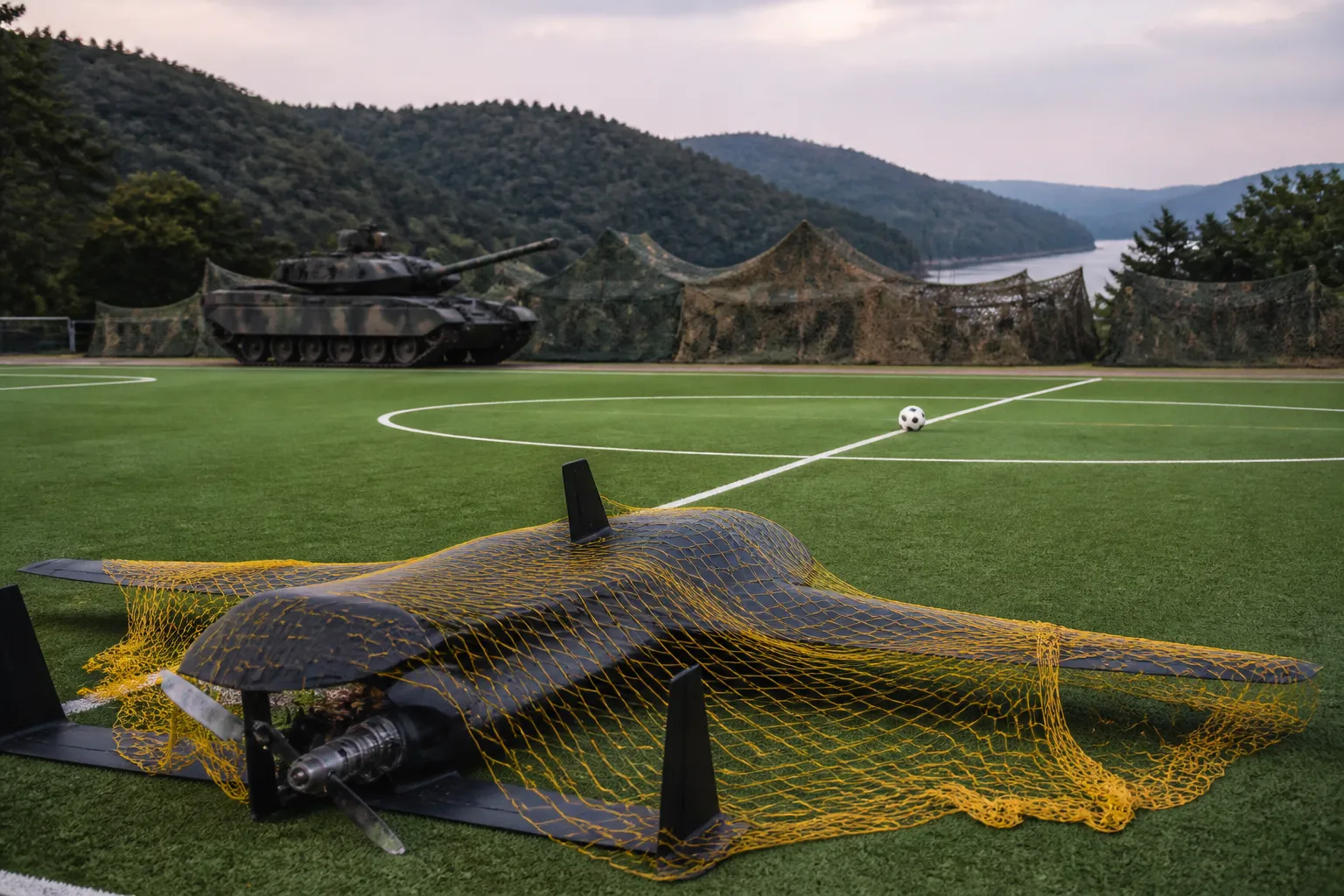
On June 18, 2026, Mexican forces intercepted an unmanned aerial vehicle that had drifted into the airspace above the South Korean national team’s training camp in Guadalajara, just hours before the Group A showdown against the host nation. BBC Sport and The Guardian reported that the Mexican military’s electronic‑warfare suite detected the drone and knocked it out of the sky mid‑flight, averting any compromise of the Korean side’s tactical plans.
The incident unfolded during a routine warm‑up session in which the South Koreans were preparing for Thursday’s match at the Guadalajara Stadium. The Guardian quoted head coach Hong Myung‑bo as calling the event “unfortunate.” He added that the neutralisation occurred before the coaching staff began demonstrating specific formations and set pieces, so the team’s playbook remained secure. No injuries or equipment damage were reported.
Mexico’s response is part of a broader security umbrella known as Plan Kukulkán, the country’s 2026 FIFA World Cup safeguard. The government says the plan mobilises roughly 100,000 personnel—federal soldiers, local police and intelligence units—to create a “heavily fortified zone” around every stadium, training pitch and hotel used by the teams. Central to the plan are early‑warning tracking systems that spot threats long before they reach the field.
Drone surveillance has become a growing concern for international sporting events. In 2024, the Canadian women’s national soccer team was embroiled in a spying scandal when a drone covertly filmed the closed‑door training sessions of New Zealand’s team during the Paris Olympics. Canada Soccer’s investigation found the incident was not isolated, citing a “deeply ingrained culture of systemic espionage.” FIFA subsequently imposed a six‑point deduction on Canada for the Olympic group stage, and head coach Bev Priestman was suspended and later terminated.
The Guadalajara incident underscores the heightened security measures now standard at major tournaments. Canada, which shares hosting duties for the 2026 World Cup, has enacted federal lockouts that make it a federal offence to fly any unauthorized drone over stadiums and key training facilities in cities such as Vancouver and Toronto. These restrictions are scheduled to remain in place through the final stages of the tournament.
The Group A match between Mexico and South Korea is the eighth game of the 2026 World Cup, which began on June 11 and will conclude on July 19. Both teams entered the match with dominant opening victories, setting up a high‑stakes clash for group control. The game is slated for Thursday at the Guadalajara Stadium, with local time 18:30, and will be broadcast worldwide to a large audience.
While the drone incident was swiftly resolved, it highlights the vulnerability of teams training in open venues and the need for robust air‑space security. The Mexican military’s rapid response demonstrated the effectiveness of Plan Kukulkán’s early‑warning systems, but the episode also raises questions about the adequacy of current protocols for protecting tactical information. As the tournament progresses, organizers and national federations will likely continue to refine security measures, balancing the need for safety with the integrity of the sport.
In the coming days, the focus will shift back to the players and the match itself. The South Korean squad will prepare to face Mexico on the field, while Mexican authorities will maintain heightened vigilance around training sites and stadiums. The incident serves as a reminder that, even in the age of advanced technology, the outcome of a football match ultimately depends on human skill and preparation rather than on the presence of drones in the sky.
The incident unfolded during a routine warm‑up session in which the South Koreans were preparing for Thursday’s match at the Guadalajara Stadium. The Guardian quoted head coach Hong Myung‑bo as calling the event “unfortunate.” He added that the neutralisation occurred before the coaching staff began demonstrating specific formations and set pieces, so the team’s playbook remained secure. No injuries or equipment damage were reported.
Mexico’s response is part of a broader security umbrella known as Plan Kukulkán, the country’s 2026 FIFA World Cup safeguard. The government says the plan mobilises roughly 100,000 personnel—federal soldiers, local police and intelligence units—to create a “heavily fortified zone” around every stadium, training pitch and hotel used by the teams. Central to the plan are early‑warning tracking systems that spot threats long before they reach the field.
Drone surveillance has become a growing concern for international sporting events. In 2024, the Canadian women’s national soccer team was embroiled in a spying scandal when a drone covertly filmed the closed‑door training sessions of New Zealand’s team during the Paris Olympics. Canada Soccer’s investigation found the incident was not isolated, citing a “deeply ingrained culture of systemic espionage.” FIFA subsequently imposed a six‑point deduction on Canada for the Olympic group stage, and head coach Bev Priestman was suspended and later terminated.
The Guadalajara incident underscores the heightened security measures now standard at major tournaments. Canada, which shares hosting duties for the 2026 World Cup, has enacted federal lockouts that make it a federal offence to fly any unauthorized drone over stadiums and key training facilities in cities such as Vancouver and Toronto. These restrictions are scheduled to remain in place through the final stages of the tournament.
The Group A match between Mexico and South Korea is the eighth game of the 2026 World Cup, which began on June 11 and will conclude on July 19. Both teams entered the match with dominant opening victories, setting up a high‑stakes clash for group control. The game is slated for Thursday at the Guadalajara Stadium, with local time 18:30, and will be broadcast worldwide to a large audience.
While the drone incident was swiftly resolved, it highlights the vulnerability of teams training in open venues and the need for robust air‑space security. The Mexican military’s rapid response demonstrated the effectiveness of Plan Kukulkán’s early‑warning systems, but the episode also raises questions about the adequacy of current protocols for protecting tactical information. As the tournament progresses, organizers and national federations will likely continue to refine security measures, balancing the need for safety with the integrity of the sport.
In the coming days, the focus will shift back to the players and the match itself. The South Korean squad will prepare to face Mexico on the field, while Mexican authorities will maintain heightened vigilance around training sites and stadiums. The incident serves as a reminder that, even in the age of advanced technology, the outcome of a football match ultimately depends on human skill and preparation rather than on the presence of drones in the sky.








