Blab Tech
Honda and QuantumScape Forge Solid-State Battery Partnership
Honda Motor Co. and QuantumScape Corp. have signed a multi‑year joint research agreement to develop and manufacture solid‑state batteries for electric vehicles and other applications. The deal follows QuantumScape’s earlier collaboration with Volkswagen and comes after Honda’s own hands‑on technical study of the company’s solid‑state platform.
During the evaluation, Honda’s Research Center of Excellence conducted competitive benchmarking against other battery technologies. Atsushi Ogawa, chief operating officer of the center, said the QuantumScape platform demonstrated “compelling and unique advantages” during the study. Ogawa added that Honda sees potential for the technology to add value across a range of applications, including automotive, motorcycles, power equipment, and energy storage.
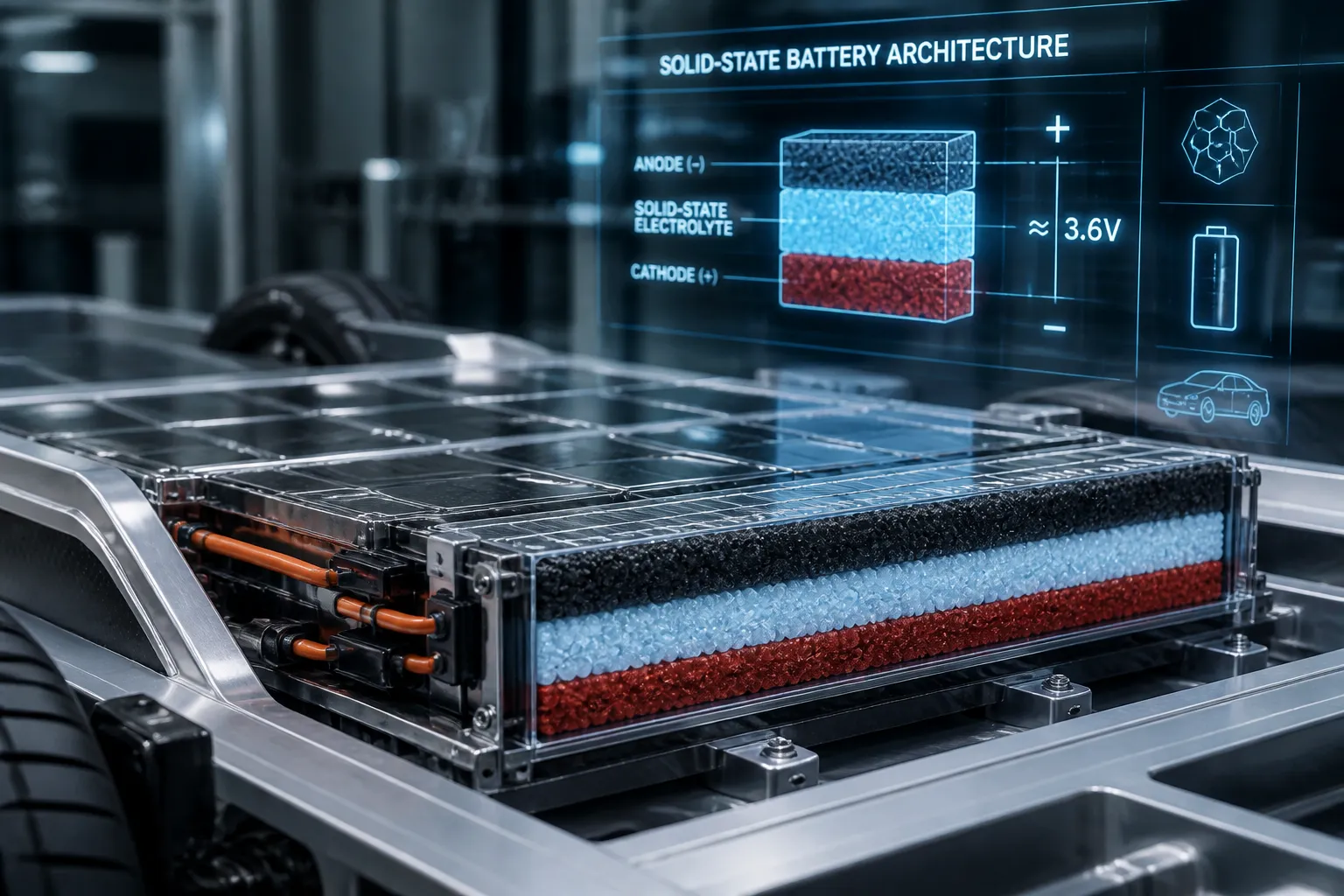
QuantumScape’s solid‑state batteries use a lithium‑metal anode and a ceramic separator—a configuration the company claims offers higher energy density, faster charging, improved safety, and a longer lifecycle than conventional lithium‑ion cells. The QSE‑5 B sample, the first commercial‑grade cell, delivers an energy density of 844 Wh L‑1 and can charge from 10 % to 80 % in 12.2 minutes. QuantumScape’s Eagle Line incorporates the Cobra fast‑separator production process, which the company says enables gigawatt‑hour‑scale manufacturing.
Honda’s pilot production line for solid‑state batteries began at its Sakura plant in Japan in January 2025. The company has described the all‑solid‑state battery as a “game changer in this EV era,” although it has since scaled back its electrification plans. Honda’s strategy now focuses on integrating the technology into a broader portfolio of products.
Volkswagen’s first test vehicle with a QuantumScape cell was a heavily modified Ducati V21L, unveiled in September. Volkswagen highlighted the QSE‑5’s advantages in energy density, fast charging, safety, and lifecycle.
The partnership is Honda’s second major OEM collaboration with QuantumScape, after Volkswagen. QuantumScape’s investors include Volkswagen Group and Bill Gates, and the company has a portfolio of patents covering cell architecture and manufacturing techniques.
Following the announcement, QuantumScape’s shares rose 12 %. The market reaction reflects investor interest in the potential commercial viability of solid‑state batteries.
Industry context shows that solid‑state batteries remain in the development stage and have not yet reached scalable commercialization. Honda’s pilot line and the joint research agreement represent a significant step toward bringing the technology to market.
Key technical considerations include the use of a solid electrolyte, which eliminates the flammable liquid found in lithium‑ion batteries, and the potential for higher energy density. However, challenges remain in material costs, durability, and large‑scale production.
Regulatory and safety standards for solid‑state batteries are still evolving. Honda and QuantumScape will need to meet automotive safety requirements, including crash tests and thermal stability, before the batteries can be deployed in production vehicles.
The collaboration also signals a broader industry trend toward solid‑state technology. Other automakers, such as Toyota, have announced plans to introduce solid‑state batteries in the next decade, and several Chinese manufacturers are exploring the technology.
In summary, Honda and QuantumScape have entered a research partnership aimed at developing and manufacturing solid‑state batteries for a range of automotive and non‑automotive applications. Honda’s pilot production line and the QSE‑5 B cell’s performance metrics provide a foundation for future commercial deployment. The partnership will focus on refining manufacturing methods and scaling production, while navigating safety, regulatory, and market challenges that remain before solid‑state batteries can enter mainstream use.
The current status is that the joint research agreement is active, Honda’s pilot line is operational, and QuantumScape’s QSE‑5 B cell has demonstrated promising performance. Upcoming milestones include further scaling of production, integration into Honda’s vehicle and equipment lines, and continued monitoring of regulatory developments. The partnership remains a key development in the pursuit of commercially viable solid‑state battery technology.
During the evaluation, Honda’s Research Center of Excellence conducted competitive benchmarking against other battery technologies. Atsushi Ogawa, chief operating officer of the center, said the QuantumScape platform demonstrated “compelling and unique advantages” during the study. Ogawa added that Honda sees potential for the technology to add value across a range of applications, including automotive, motorcycles, power equipment, and energy storage.
QuantumScape’s solid‑state batteries use a lithium‑metal anode and a ceramic separator—a configuration the company claims offers higher energy density, faster charging, improved safety, and a longer lifecycle than conventional lithium‑ion cells. The QSE‑5 B sample, the first commercial‑grade cell, delivers an energy density of 844 Wh L‑1 and can charge from 10 % to 80 % in 12.2 minutes. QuantumScape’s Eagle Line incorporates the Cobra fast‑separator production process, which the company says enables gigawatt‑hour‑scale manufacturing.
Honda’s pilot production line for solid‑state batteries began at its Sakura plant in Japan in January 2025. The company has described the all‑solid‑state battery as a “game changer in this EV era,” although it has since scaled back its electrification plans. Honda’s strategy now focuses on integrating the technology into a broader portfolio of products.
Volkswagen’s first test vehicle with a QuantumScape cell was a heavily modified Ducati V21L, unveiled in September. Volkswagen highlighted the QSE‑5’s advantages in energy density, fast charging, safety, and lifecycle.
The partnership is Honda’s second major OEM collaboration with QuantumScape, after Volkswagen. QuantumScape’s investors include Volkswagen Group and Bill Gates, and the company has a portfolio of patents covering cell architecture and manufacturing techniques.
Following the announcement, QuantumScape’s shares rose 12 %. The market reaction reflects investor interest in the potential commercial viability of solid‑state batteries.
Industry context shows that solid‑state batteries remain in the development stage and have not yet reached scalable commercialization. Honda’s pilot line and the joint research agreement represent a significant step toward bringing the technology to market.
Key technical considerations include the use of a solid electrolyte, which eliminates the flammable liquid found in lithium‑ion batteries, and the potential for higher energy density. However, challenges remain in material costs, durability, and large‑scale production.
Regulatory and safety standards for solid‑state batteries are still evolving. Honda and QuantumScape will need to meet automotive safety requirements, including crash tests and thermal stability, before the batteries can be deployed in production vehicles.
The collaboration also signals a broader industry trend toward solid‑state technology. Other automakers, such as Toyota, have announced plans to introduce solid‑state batteries in the next decade, and several Chinese manufacturers are exploring the technology.
In summary, Honda and QuantumScape have entered a research partnership aimed at developing and manufacturing solid‑state batteries for a range of automotive and non‑automotive applications. Honda’s pilot production line and the QSE‑5 B cell’s performance metrics provide a foundation for future commercial deployment. The partnership will focus on refining manufacturing methods and scaling production, while navigating safety, regulatory, and market challenges that remain before solid‑state batteries can enter mainstream use.
The current status is that the joint research agreement is active, Honda’s pilot line is operational, and QuantumScape’s QSE‑5 B cell has demonstrated promising performance. Upcoming milestones include further scaling of production, integration into Honda’s vehicle and equipment lines, and continued monitoring of regulatory developments. The partnership remains a key development in the pursuit of commercially viable solid‑state battery technology.








