Blab Tech
High-Multiple Software Stocks Slide as Inflation Surprise and Fed Outlook Shift Market Sentiment
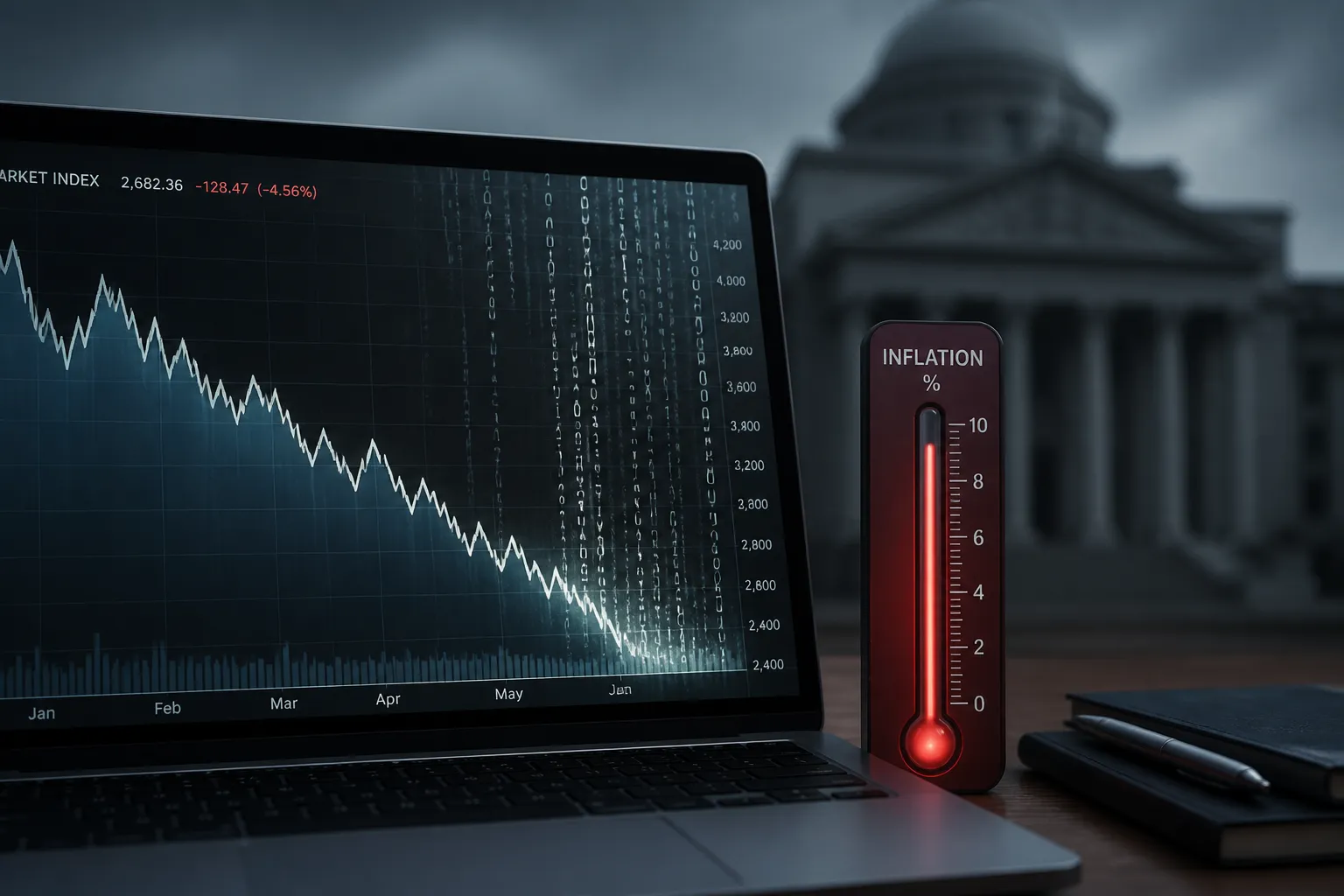
A wave of selling hit high‑multiple growth and software stocks on Tuesday afternoon, as investors rotated out of the names that had driven the recent rally. Twilio (NYSE: TWLO) fell 4.1 percent, Atlassian (NASDAQ: TEAM) dropped 4.5 percent, and SoundHound AI (NASDAQ: SOUN) declined 5 percent during the session. The moves came amid a sharp inflation surprise, a looming Federal Reserve meeting, and a broader shift toward cyclical assets.
Software companies are typically priced on earnings projected years into the future, making their valuations especially sensitive to inflation expectations and the Fed’s interest‑rate policy.
The latest import price data delivered the sharpest inflation surprise of the session. Prices rose 1.9 percent against a forecast of 1.1 percent, producing an annual gain of 6.7 percent, the largest increase since August 2022. The data complicated the view that the Iran peace deal had resolved the near‑term inflation problem facing markets.
Investors appeared to rotate into cyclical stocks on falling oil prices while positioning cautiously ahead of new Federal Reserve Chairman Kevin Warsh’s first Fed meeting later in the week. A survey of Bank of America fund managers added further structural pressure, with portfolio managers cutting allocations to tech stocks broadly and naming an AI bubble as the second‑largest tail risk, cited by 28 percent of respondents.
SpaceX’s announcement that it is acquiring AI coding platform Cursor for $60 billion also contributed to investor unease, signaling that the most valuable AI software assets are being consolidated into mega‑cap infrastructure plays rather than remaining available as standalone platforms.
SoundHound AI shares are extremely volatile and have recorded 62 moves greater than 5 percent over the last year, suggesting the market views this latest decline as meaningful but not fundamentally business‑altering. The previous major move for SoundHound came 11 days earlier, when the stock dropped 7.4 percent after a stronger‑than‑expected jobs report signaled the Federal Reserve may keep interest rates higher for longer. The U.S. economy added 172,000 nonfarm payroll jobs in May, significantly surpassing economists’ expectations of around 85,000, while the unemployment rate held steady at 4.3 percent. That robust labor‑market data eased concerns about an economic slowdown but diminished the likelihood of near‑term interest‑rate cuts, pushing investors toward a higher‑for‑longer rate scenario.
A prolonged high‑interest‑rate environment creates headwinds for growth‑oriented technology stocks, as it pressures valuations by making future earnings less valuable in present‑day terms. SoundHound AI is down 33.7 percent since the beginning of the year and, at $7.03 per share, is trading 67.2 percent below its 52‑week high of $21.40 reached in October 2025. Investors who purchased $1,000 worth of SoundHound AI shares at the IPO in April 2022 would now be holding an investment worth $936.67, underscoring the stock’s turbulent trajectory since its public debut. The decline in these stocks underscores how high‑multiple tech valuations are sensitive to macroeconomic shifts.
The current market environment reflects a combination of inflationary data, a shift in Fed policy expectations, and a consolidation trend in the AI software sector. Investors are reallocating capital toward assets that are less sensitive to future earnings projections, such as cyclical and commodity‑related stocks. The upcoming Fed meeting with Chairman Kevin Warsh will likely provide further guidance on the trajectory of interest rates, which will continue to influence the valuation of high‑growth technology companies. The Fed meeting will likely clarify the path of interest rates, which will influence future earnings projections. As of now, the market remains cautious, and the performance of individual software stocks will continue to be closely tied to macroeconomic indicators and corporate consolidation activity.
Software companies are typically priced on earnings projected years into the future, making their valuations especially sensitive to inflation expectations and the Fed’s interest‑rate policy.
The latest import price data delivered the sharpest inflation surprise of the session. Prices rose 1.9 percent against a forecast of 1.1 percent, producing an annual gain of 6.7 percent, the largest increase since August 2022. The data complicated the view that the Iran peace deal had resolved the near‑term inflation problem facing markets.
Investors appeared to rotate into cyclical stocks on falling oil prices while positioning cautiously ahead of new Federal Reserve Chairman Kevin Warsh’s first Fed meeting later in the week. A survey of Bank of America fund managers added further structural pressure, with portfolio managers cutting allocations to tech stocks broadly and naming an AI bubble as the second‑largest tail risk, cited by 28 percent of respondents.
SpaceX’s announcement that it is acquiring AI coding platform Cursor for $60 billion also contributed to investor unease, signaling that the most valuable AI software assets are being consolidated into mega‑cap infrastructure plays rather than remaining available as standalone platforms.
SoundHound AI shares are extremely volatile and have recorded 62 moves greater than 5 percent over the last year, suggesting the market views this latest decline as meaningful but not fundamentally business‑altering. The previous major move for SoundHound came 11 days earlier, when the stock dropped 7.4 percent after a stronger‑than‑expected jobs report signaled the Federal Reserve may keep interest rates higher for longer. The U.S. economy added 172,000 nonfarm payroll jobs in May, significantly surpassing economists’ expectations of around 85,000, while the unemployment rate held steady at 4.3 percent. That robust labor‑market data eased concerns about an economic slowdown but diminished the likelihood of near‑term interest‑rate cuts, pushing investors toward a higher‑for‑longer rate scenario.
A prolonged high‑interest‑rate environment creates headwinds for growth‑oriented technology stocks, as it pressures valuations by making future earnings less valuable in present‑day terms. SoundHound AI is down 33.7 percent since the beginning of the year and, at $7.03 per share, is trading 67.2 percent below its 52‑week high of $21.40 reached in October 2025. Investors who purchased $1,000 worth of SoundHound AI shares at the IPO in April 2022 would now be holding an investment worth $936.67, underscoring the stock’s turbulent trajectory since its public debut. The decline in these stocks underscores how high‑multiple tech valuations are sensitive to macroeconomic shifts.
The current market environment reflects a combination of inflationary data, a shift in Fed policy expectations, and a consolidation trend in the AI software sector. Investors are reallocating capital toward assets that are less sensitive to future earnings projections, such as cyclical and commodity‑related stocks. The upcoming Fed meeting with Chairman Kevin Warsh will likely provide further guidance on the trajectory of interest rates, which will continue to influence the valuation of high‑growth technology companies. The Fed meeting will likely clarify the path of interest rates, which will influence future earnings projections. As of now, the market remains cautious, and the performance of individual software stocks will continue to be closely tied to macroeconomic indicators and corporate consolidation activity.