Blab Tech
Chongqings Bishan District Launches AI-Powered Traditional Chinese Medicine Street
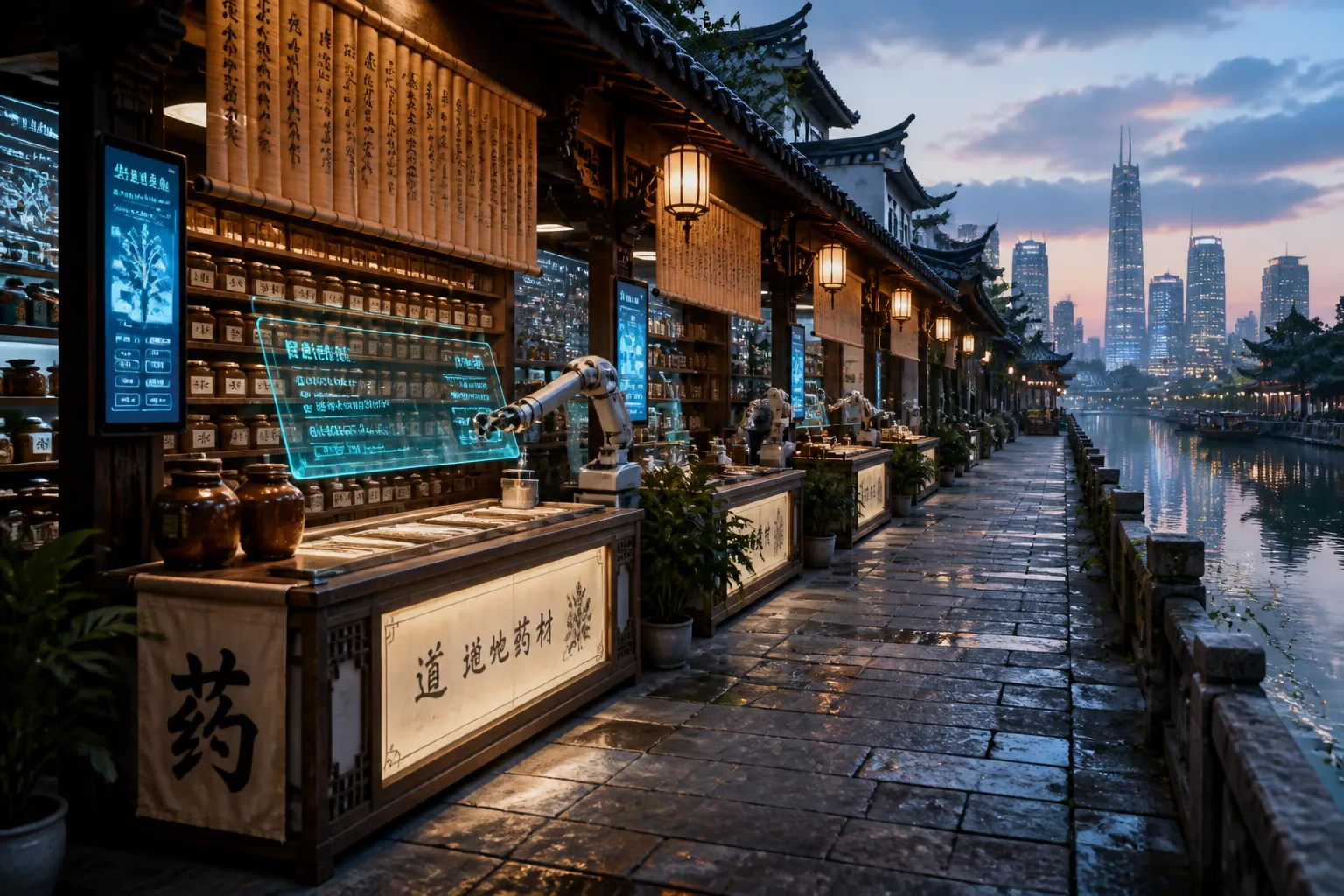
In the bustling Bishan District of Chongqing, a new “Traditional Chinese Medicine (TCM) Street” opened on 30 September 2025, blending centuries‑old diagnostic rituals with artificial‑intelligence (AI) technology. The venture is part of a national demonstration project that seeks to preserve and modernise TCM.
At the center of the initiative is a smart four‑diagnostic instrument that gathers data through inquiry, pulse‑taking, tongue, facial and olfactory examination. Within minutes the device transmits the results to a user’s mobile phone, where an AI algorithm generates a personalised health regimen. The system claims to integrate vast clinical experience with TCM theory, offering a rapid, data‑driven assessment that can be accessed on the spot.
The street hosts more than 40 merchants and has become a hub for cultural tourism and TCM services. Liu Lin, a well‑known TCM practitioner in Bishan, performs on‑site consultations and coordinates visits from nationally recognised experts and university specialists. The street also provides free delivery of decocted herbs, a service that reduces the logistical burden on patients.
A digital platform underpins the street’s operations. Online, the platform connects over 20,000 TCM experts across China, allowing patients to access professional advice from home. Offline, the street is equipped with smart devices such as meridian detectors, infrared thermal imagers and intelligent moxibustion robots. These tools combine AI algorithms with traditional diagnostic methods, creating a closed‑loop service that links data collection, analysis and treatment.
Yao Weimin, a correspondent for China Times (Netherlands), tested the system on 18 June 2026. He reported that the AI‑generated health regimen was “scientific and practical” and praised the fusion of TCM and digital technology. The experience illustrates how the street’s technology can translate complex diagnostic information into actionable advice.
Beyond diagnostics, the street offers a range of cultural and educational attractions. The TCM Fun Experience Hall runs 24 solar‑term health education programmes and interactive exhibits suitable for all ages. The Chongqing Bashu Folk TCM Museum hosts herb‑identification workshops and Baduanjin qigong sessions. The street also markets TCM‑based wellness products aimed at younger consumers, expanding the traditional practice into contemporary lifestyle markets.
The Bishan TCM Street represents a broader trend of integrating AI into traditional medicine. By digitising diagnostic techniques and linking them to a nationwide network of experts, the project seeks to make TCM more accessible while preserving its cultural heritage. The initiative also demonstrates how technology can support the delivery of complementary health services in a way that is both scalable and user‑friendly.
At present, the street’s operations are fully functional, and the smart diagnostic device is available to visitors. The national demonstration project continues to attract attention from health authorities, technology developers and cultural organisations. No regulatory changes or court proceedings have been reported, and the project remains a model for future TCM‑technology collaborations across China.
The Bishan TCM Street will continue to expand its services, adding new diagnostic tools and educational programmes. The integration of AI, cultural heritage and tourism offers a template for how traditional practices can evolve in the digital age while maintaining their core principles.
At the center of the initiative is a smart four‑diagnostic instrument that gathers data through inquiry, pulse‑taking, tongue, facial and olfactory examination. Within minutes the device transmits the results to a user’s mobile phone, where an AI algorithm generates a personalised health regimen. The system claims to integrate vast clinical experience with TCM theory, offering a rapid, data‑driven assessment that can be accessed on the spot.
The street hosts more than 40 merchants and has become a hub for cultural tourism and TCM services. Liu Lin, a well‑known TCM practitioner in Bishan, performs on‑site consultations and coordinates visits from nationally recognised experts and university specialists. The street also provides free delivery of decocted herbs, a service that reduces the logistical burden on patients.
A digital platform underpins the street’s operations. Online, the platform connects over 20,000 TCM experts across China, allowing patients to access professional advice from home. Offline, the street is equipped with smart devices such as meridian detectors, infrared thermal imagers and intelligent moxibustion robots. These tools combine AI algorithms with traditional diagnostic methods, creating a closed‑loop service that links data collection, analysis and treatment.
Yao Weimin, a correspondent for China Times (Netherlands), tested the system on 18 June 2026. He reported that the AI‑generated health regimen was “scientific and practical” and praised the fusion of TCM and digital technology. The experience illustrates how the street’s technology can translate complex diagnostic information into actionable advice.
Beyond diagnostics, the street offers a range of cultural and educational attractions. The TCM Fun Experience Hall runs 24 solar‑term health education programmes and interactive exhibits suitable for all ages. The Chongqing Bashu Folk TCM Museum hosts herb‑identification workshops and Baduanjin qigong sessions. The street also markets TCM‑based wellness products aimed at younger consumers, expanding the traditional practice into contemporary lifestyle markets.
The Bishan TCM Street represents a broader trend of integrating AI into traditional medicine. By digitising diagnostic techniques and linking them to a nationwide network of experts, the project seeks to make TCM more accessible while preserving its cultural heritage. The initiative also demonstrates how technology can support the delivery of complementary health services in a way that is both scalable and user‑friendly.
At present, the street’s operations are fully functional, and the smart diagnostic device is available to visitors. The national demonstration project continues to attract attention from health authorities, technology developers and cultural organisations. No regulatory changes or court proceedings have been reported, and the project remains a model for future TCM‑technology collaborations across China.
The Bishan TCM Street will continue to expand its services, adding new diagnostic tools and educational programmes. The integration of AI, cultural heritage and tourism offers a template for how traditional practices can evolve in the digital age while maintaining their core principles.








