Blab Tech
Smart-Home Wiring: Why Zigbee, Thread, and Matter Outperform Wi-Fi for Battery-Powered Devices
Imagine a door‑sensor that keeps working for years on a single CR or AAA battery, never needing a recharge. That’s the promise of low‑power wireless protocols like Zigbee, Thread, and the emerging Matter standard.
The choice of protocol is becoming a critical decision for homeowners who are inundated with smart‑home gadgets. A recent article explains how these technologies can slash battery drain and boost reliability compared with the ubiquitous Wi‑Fi, especially for devices that only need to send short alerts—door and window sensors, smart locks, bulbs, and motion detectors.
Most consumers buy Wi‑Fi‑enabled devices without considering the strain on their home network. Wi‑Fi operates on the 2.4 GHz and 5 GHz bands and is engineered for high‑bandwidth applications. When dozens of Wi‑Fi devices are active, the network can become congested, leading to latency and dropped connections.
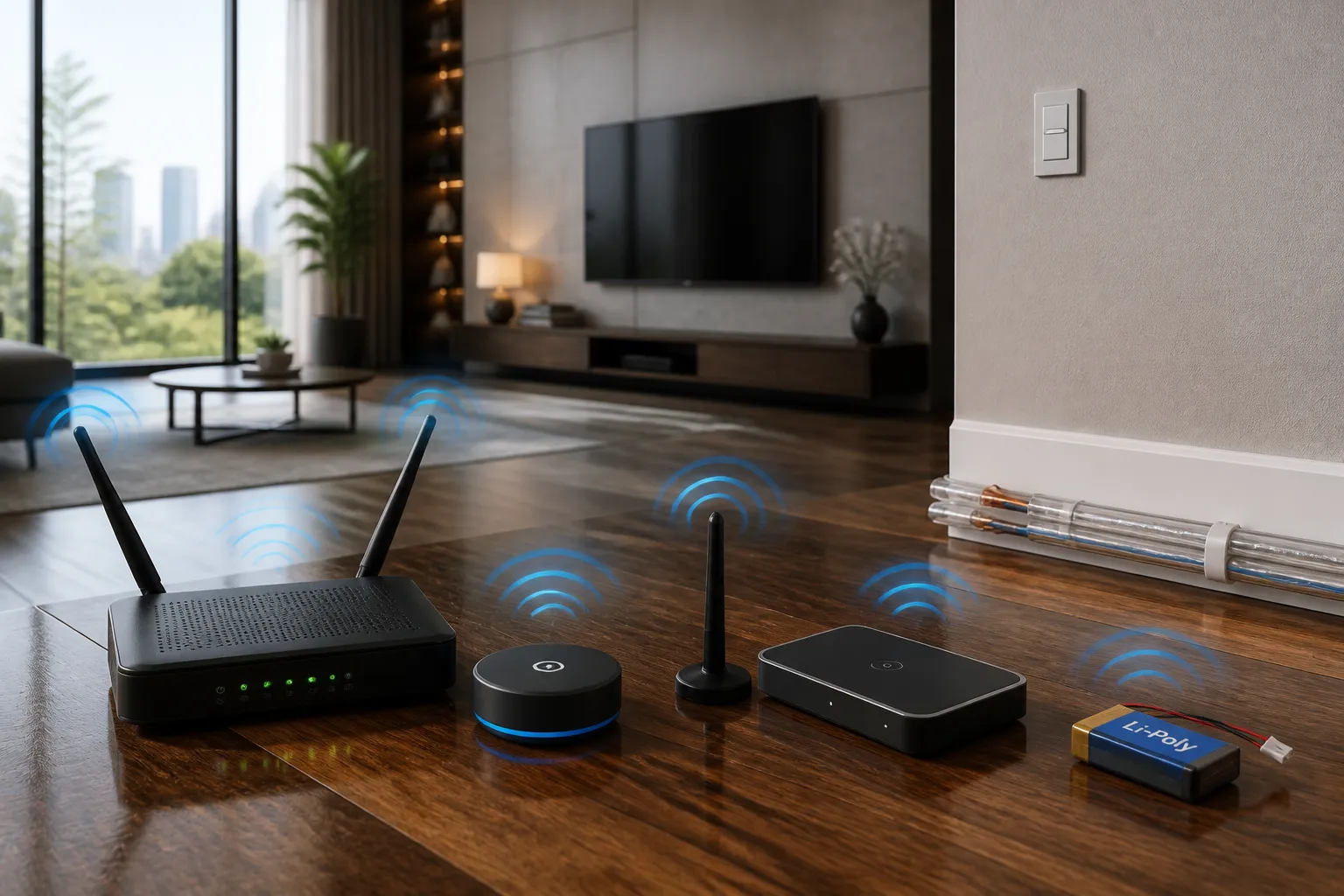
Battery‑powered sensors are particularly vulnerable. A door or window sensor usually wakes only when the door opens or closes, then transmits a signal. If that signal is sent over Wi‑Fi, the device must wake frequently to check the network, which quickly drains the battery. Zigbee and Thread, on the other hand, run on low‑power IEEE 802.15.4 radio frequencies and can form mesh networks that route data through intermediate devices. This architecture extends coverage without requiring a strong Wi‑Fi signal, preserving battery life.
Smart locks also feel the impact of protocol choice. Most Wi‑Fi locks depend on a constant internet connection to function. If power or Wi‑Fi is lost, the lock may become inoperable. Locks that use Zigbee or Thread maintain a local connection and can continue to operate even during outages, provided they have an internal battery backup. The article notes that many locks include a mechanical key as a fallback, eliminating reliance on any wireless network.
The same principle applies to smart bulbs. The author recounts personal experience with Wi‑Fi bulbs placed far from the router, resulting in frequent disconnections and a frustrating setup process. Zigbee or Thread bulbs, by contrast, use mesh networking to propagate signals throughout the house, ensuring consistent performance even in rooms with weak Wi‑Fi coverage.
Motion sensors—often used to trigger automations such as turning on lights—also benefit from low‑power protocols. Wi‑Fi‑based motion sensors can suffer from delayed notifications when the network is congested. Zigbee and Thread sensors transmit small data packets quickly and reliably, making them suitable for time‑sensitive security functions.
Choosing the right protocol is not a matter of brand loyalty. While major manufacturers like Google, Amazon, and Samsung offer ecosystems that support multiple standards, consumers can mix and match devices. Zigbee devices are generally more affordable and widely available, whereas Thread devices tend to be pricier but offer tighter integration with the emerging Matter standard.
Matter, the new open‑source connectivity standard, is designed to work over Thread but can also operate through a Zigbee bridge. Matter aims to simplify device interoperability across ecosystems, but it does not replace the underlying radio protocol.
From a technical standpoint, Zigbee and Thread provide 128‑bit encryption and low data rates (up to 250 kbit/s for Zigbee), which are adequate for sensor data but insufficient for high‑bandwidth tasks like streaming video. Wi‑Fi remains the preferred choice for devices that require constant, high‑speed internet access.
In summary, the article advises homeowners to plan their smart‑home setup carefully. Selecting Zigbee or Thread for battery‑powered devices can preserve battery life, reduce network congestion, and maintain functionality during power outages. Wi‑Fi should be reserved for devices that truly need high bandwidth.
No major regulatory actions or new product launches were announced in the article. The discussion remains focused on consumer guidance rather than industry mandates.
The choice of protocol is becoming a critical decision for homeowners who are inundated with smart‑home gadgets. A recent article explains how these technologies can slash battery drain and boost reliability compared with the ubiquitous Wi‑Fi, especially for devices that only need to send short alerts—door and window sensors, smart locks, bulbs, and motion detectors.
Most consumers buy Wi‑Fi‑enabled devices without considering the strain on their home network. Wi‑Fi operates on the 2.4 GHz and 5 GHz bands and is engineered for high‑bandwidth applications. When dozens of Wi‑Fi devices are active, the network can become congested, leading to latency and dropped connections.
Battery‑powered sensors are particularly vulnerable. A door or window sensor usually wakes only when the door opens or closes, then transmits a signal. If that signal is sent over Wi‑Fi, the device must wake frequently to check the network, which quickly drains the battery. Zigbee and Thread, on the other hand, run on low‑power IEEE 802.15.4 radio frequencies and can form mesh networks that route data through intermediate devices. This architecture extends coverage without requiring a strong Wi‑Fi signal, preserving battery life.
Smart locks also feel the impact of protocol choice. Most Wi‑Fi locks depend on a constant internet connection to function. If power or Wi‑Fi is lost, the lock may become inoperable. Locks that use Zigbee or Thread maintain a local connection and can continue to operate even during outages, provided they have an internal battery backup. The article notes that many locks include a mechanical key as a fallback, eliminating reliance on any wireless network.
The same principle applies to smart bulbs. The author recounts personal experience with Wi‑Fi bulbs placed far from the router, resulting in frequent disconnections and a frustrating setup process. Zigbee or Thread bulbs, by contrast, use mesh networking to propagate signals throughout the house, ensuring consistent performance even in rooms with weak Wi‑Fi coverage.
Motion sensors—often used to trigger automations such as turning on lights—also benefit from low‑power protocols. Wi‑Fi‑based motion sensors can suffer from delayed notifications when the network is congested. Zigbee and Thread sensors transmit small data packets quickly and reliably, making them suitable for time‑sensitive security functions.
Choosing the right protocol is not a matter of brand loyalty. While major manufacturers like Google, Amazon, and Samsung offer ecosystems that support multiple standards, consumers can mix and match devices. Zigbee devices are generally more affordable and widely available, whereas Thread devices tend to be pricier but offer tighter integration with the emerging Matter standard.
Matter, the new open‑source connectivity standard, is designed to work over Thread but can also operate through a Zigbee bridge. Matter aims to simplify device interoperability across ecosystems, but it does not replace the underlying radio protocol.
From a technical standpoint, Zigbee and Thread provide 128‑bit encryption and low data rates (up to 250 kbit/s for Zigbee), which are adequate for sensor data but insufficient for high‑bandwidth tasks like streaming video. Wi‑Fi remains the preferred choice for devices that require constant, high‑speed internet access.
In summary, the article advises homeowners to plan their smart‑home setup carefully. Selecting Zigbee or Thread for battery‑powered devices can preserve battery life, reduce network congestion, and maintain functionality during power outages. Wi‑Fi should be reserved for devices that truly need high bandwidth.
No major regulatory actions or new product launches were announced in the article. The discussion remains focused on consumer guidance rather than industry mandates.