Blab Tech
Visa Integrates Payment Network with ChatGPT, Enabling Fully Autonomous AI Shopping
Visa has just turned ChatGPT into a fully‑autonomous shopping assistant. On November 6 2026, the payment giant announced that its infrastructure can now be embedded directly into OpenAI’s large‑language‑model chatbot, letting the LLM recommend products and complete purchases without any human touch.
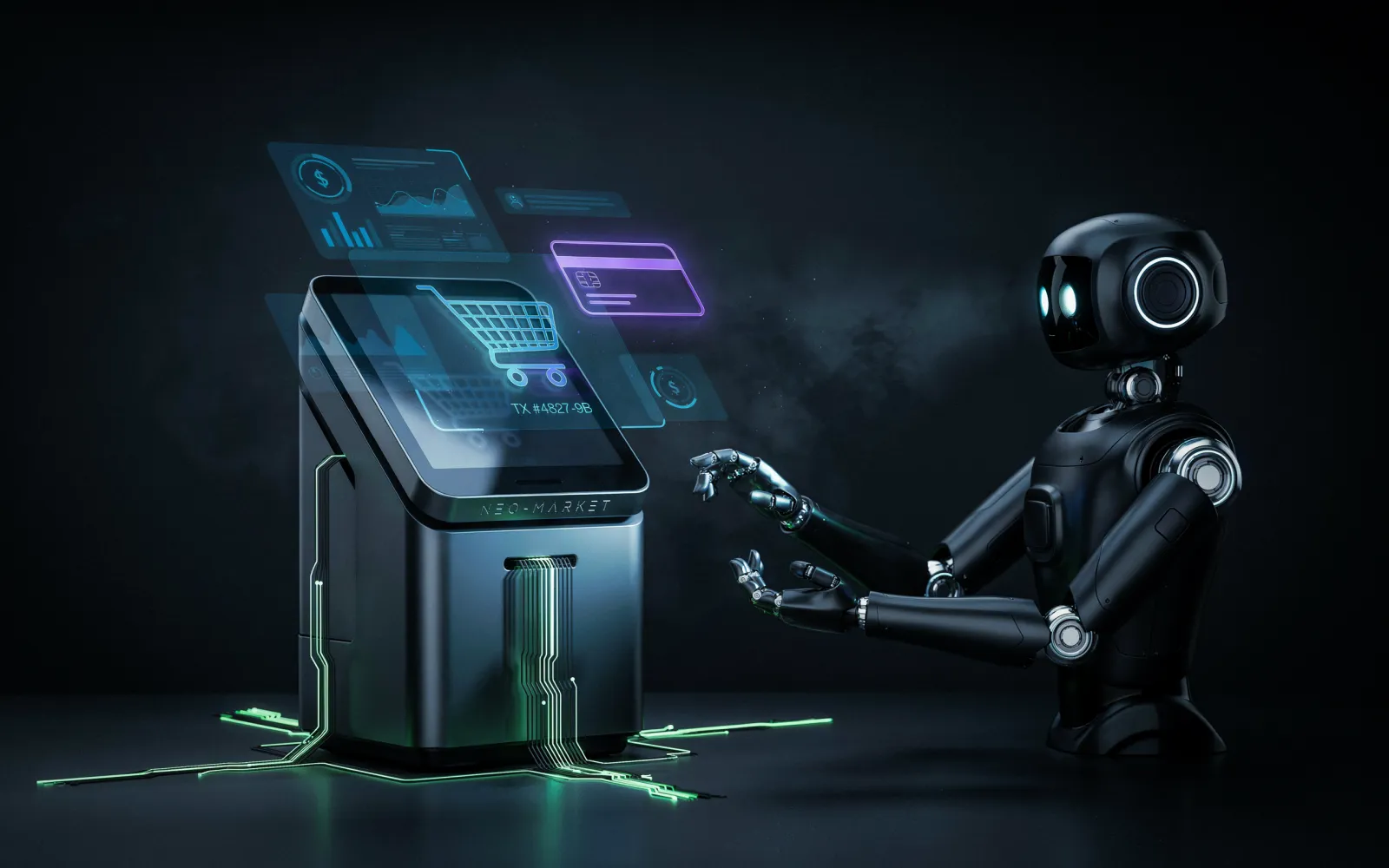
The new partnership lets users attach a Visa‑branded card to ChatGPT. When a prompt asks for a specific item, the LLM scans merchant catalogues, weighs options, and submits a single‑use payment token through Visa’s network to any Visa‑accepting retailer. The transaction is processed exactly like a standard digital‑wallet payment, bypassing the merchant’s website or app entirely.
Until now, AI‑powered shopping was confined to single‑vendor ecosystems. Retailers built proprietary chatbots that could only buy from their own inventory, creating closed loops. Visa’s integration breaks that barrier, connecting the LLM’s open‑web reasoning directly to a universal transaction network.
For merchants, the shift means the final stages of the retail funnel—product selection, checkout, and settlement—can be handled by an autonomous agent. The agent parses user prompts, aggregates sentiment scores, pricing data, and technical specifications, and then selects a product that matches the consumer’s criteria. Display ads, visual merchandising, and cookie‑based tracking play no role in the decision.
To appear in the agent’s search, merchants must expose machine‑readable inventory data. Structured feeds, clear API documentation, and explicitly formatted product attributes are required; otherwise, their products risk being invisible to the autonomous shopper.
Personalisation happens on the user’s device or within a secure LLM profile. The agent retains past preferences, sizing needs, budget limits, and brand loyalties, arriving at the digital storefront with a highly specific procurement mandate.
Security is handled through Visa’s programmatic tokenisation. Users pre‑authorise the ChatGPT environment with specific spending limits. When the LLM decides on a purchase, it generates a single‑use payment token via the Visa network and transmits it through an API to the merchant’s backend, eliminating manual data entry, CAPTCHA checks, or two‑factor authentication.
Merchants that already use headless commerce architectures—where the front‑end presentation layer is decoupled from back‑end operations—have a clear advantage. Their APIs can process the agent’s payload, confirm stock levels, and execute the payment token in milliseconds. Traditional storefronts that require multi‑page navigation or mandatory account creation introduce failure points for the agent.
Retailers will need new telemetry to measure agent interactions. Tracking the frequency of API queries from known LLM IP addresses replaces the traditional metrics of unique human visitors. Understanding why an agent chose a competitor’s product will require analysing structural differences in product data feeds rather than running A/B tests on website layouts.
Customer‑retention strategies must also adapt. Loyalty programmes need to be engineered into the payment token or the user’s LLM profile. If the AI cannot automatically apply a loyalty discount during its background calculation, the merchant loses the pricing advantage intended to secure repeat purchases.
Visa’s network also serves as a final validation layer against potential prompt‑injection attacks. Fraud‑detection models evaluate incoming token requests before settlement. Merchants must prepare for automated returns and customer‑service queries initiated by the AI. If a delivered product does not meet the original prompt parameters, the user can instruct the agent to reverse the transaction. The agent will navigate the merchant’s return policy, initiate the refund request, and generate shipping labels, requiring merchants to deploy automated systems capable of negotiating directly with the consumer’s agent.
The partnership marks a transition from human‑operated interfaces to autonomous digital proxies. The customer is no longer necessarily a human navigating a web browser but an algorithm executing a script.
Visa has not yet disclosed how many merchants or users have enabled the feature. The integration is available in the United States and select European markets, with plans to expand globally. Visa emphasises that the technology is designed to enhance convenience while maintaining the security and reliability of its payment network.
The move raises questions about regulatory oversight, consumer protection, and the future of e‑commerce. Industry analysts note that retailers will need to invest in structured data, headless architectures, and AI‑ready payment flows to remain competitive.
Merchants’ next steps include updating APIs, implementing token‑based payment flows, and re‑engineering loyalty programmes. For consumers, the integration offers a streamlined shopping experience but also introduces new privacy and security considerations.
The development is part of a broader trend toward agentic commerce, where autonomous AI agents act on behalf of consumers across multiple channels. Visa’s partnership with ChatGPT represents the first large‑scale deployment of this model in mainstream retail.
Visa expects to roll out the integration to additional merchants over the next six months, monitoring transaction volumes and fraud‑risk metrics closely.
The new partnership lets users attach a Visa‑branded card to ChatGPT. When a prompt asks for a specific item, the LLM scans merchant catalogues, weighs options, and submits a single‑use payment token through Visa’s network to any Visa‑accepting retailer. The transaction is processed exactly like a standard digital‑wallet payment, bypassing the merchant’s website or app entirely.
Until now, AI‑powered shopping was confined to single‑vendor ecosystems. Retailers built proprietary chatbots that could only buy from their own inventory, creating closed loops. Visa’s integration breaks that barrier, connecting the LLM’s open‑web reasoning directly to a universal transaction network.
For merchants, the shift means the final stages of the retail funnel—product selection, checkout, and settlement—can be handled by an autonomous agent. The agent parses user prompts, aggregates sentiment scores, pricing data, and technical specifications, and then selects a product that matches the consumer’s criteria. Display ads, visual merchandising, and cookie‑based tracking play no role in the decision.
To appear in the agent’s search, merchants must expose machine‑readable inventory data. Structured feeds, clear API documentation, and explicitly formatted product attributes are required; otherwise, their products risk being invisible to the autonomous shopper.
Personalisation happens on the user’s device or within a secure LLM profile. The agent retains past preferences, sizing needs, budget limits, and brand loyalties, arriving at the digital storefront with a highly specific procurement mandate.
Security is handled through Visa’s programmatic tokenisation. Users pre‑authorise the ChatGPT environment with specific spending limits. When the LLM decides on a purchase, it generates a single‑use payment token via the Visa network and transmits it through an API to the merchant’s backend, eliminating manual data entry, CAPTCHA checks, or two‑factor authentication.
Merchants that already use headless commerce architectures—where the front‑end presentation layer is decoupled from back‑end operations—have a clear advantage. Their APIs can process the agent’s payload, confirm stock levels, and execute the payment token in milliseconds. Traditional storefronts that require multi‑page navigation or mandatory account creation introduce failure points for the agent.
Retailers will need new telemetry to measure agent interactions. Tracking the frequency of API queries from known LLM IP addresses replaces the traditional metrics of unique human visitors. Understanding why an agent chose a competitor’s product will require analysing structural differences in product data feeds rather than running A/B tests on website layouts.
Customer‑retention strategies must also adapt. Loyalty programmes need to be engineered into the payment token or the user’s LLM profile. If the AI cannot automatically apply a loyalty discount during its background calculation, the merchant loses the pricing advantage intended to secure repeat purchases.
Visa’s network also serves as a final validation layer against potential prompt‑injection attacks. Fraud‑detection models evaluate incoming token requests before settlement. Merchants must prepare for automated returns and customer‑service queries initiated by the AI. If a delivered product does not meet the original prompt parameters, the user can instruct the agent to reverse the transaction. The agent will navigate the merchant’s return policy, initiate the refund request, and generate shipping labels, requiring merchants to deploy automated systems capable of negotiating directly with the consumer’s agent.
The partnership marks a transition from human‑operated interfaces to autonomous digital proxies. The customer is no longer necessarily a human navigating a web browser but an algorithm executing a script.
Visa has not yet disclosed how many merchants or users have enabled the feature. The integration is available in the United States and select European markets, with plans to expand globally. Visa emphasises that the technology is designed to enhance convenience while maintaining the security and reliability of its payment network.
The move raises questions about regulatory oversight, consumer protection, and the future of e‑commerce. Industry analysts note that retailers will need to invest in structured data, headless architectures, and AI‑ready payment flows to remain competitive.
Merchants’ next steps include updating APIs, implementing token‑based payment flows, and re‑engineering loyalty programmes. For consumers, the integration offers a streamlined shopping experience but also introduces new privacy and security considerations.
The development is part of a broader trend toward agentic commerce, where autonomous AI agents act on behalf of consumers across multiple channels. Visa’s partnership with ChatGPT represents the first large‑scale deployment of this model in mainstream retail.
Visa expects to roll out the integration to additional merchants over the next six months, monitoring transaction volumes and fraud‑risk metrics closely.








