Blab Tech
French Startup Alta Ares Secures 50 Million to Scale AI-Powered Drone Interceptors
In a bid to outpace the swarm of hostile drones, Paris‑based Alta Ares announced on Tuesday that it has closed a €50 million funding round to accelerate the production and deployment of its AI‑guided interceptor drones. The round was led by Air Street Capital, a venture fund focused on artificial‑intelligence companies, with participation from Cherry Ventures, OTB Ventures, Harpoon Ventures and existing investors who renewed their commitments.
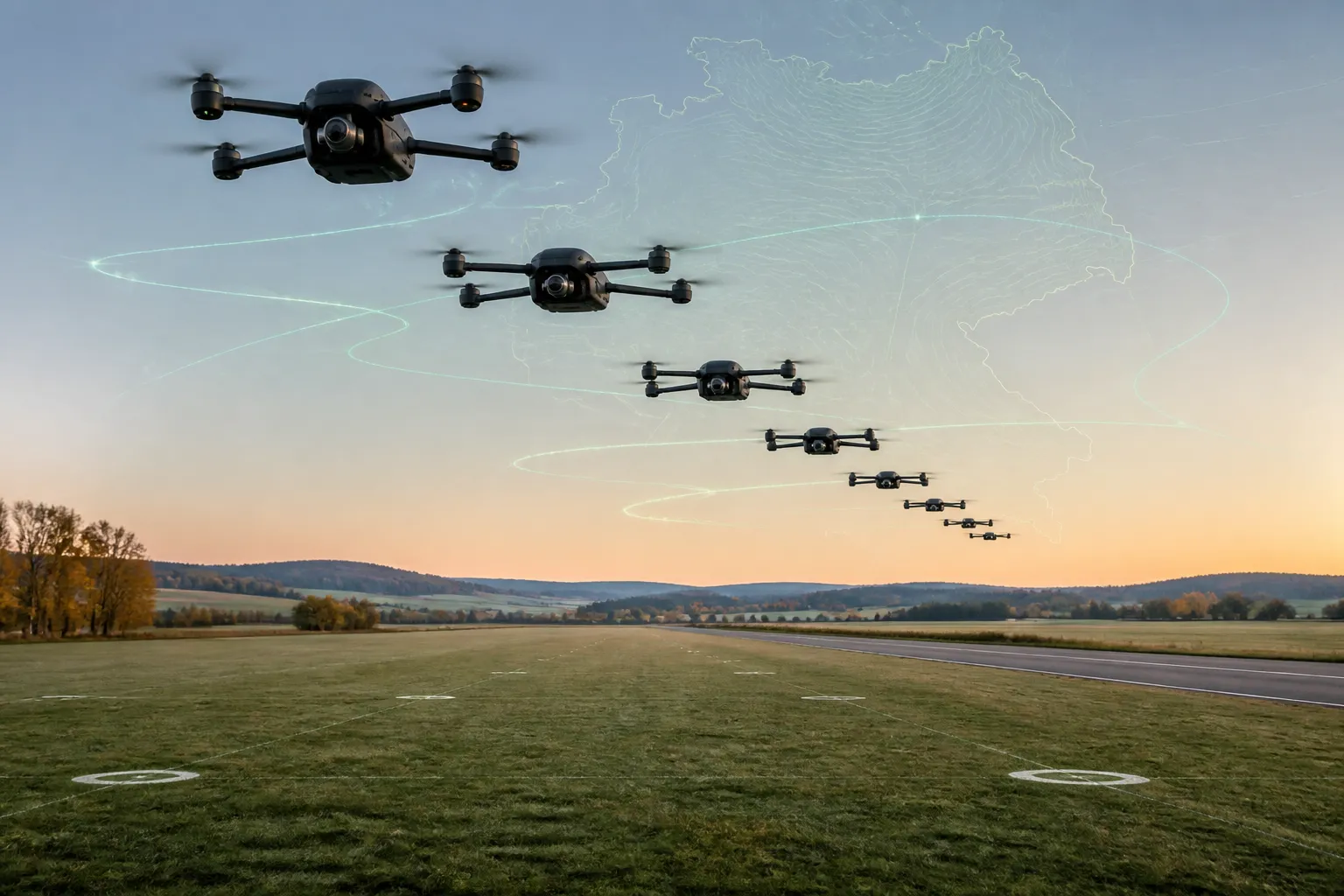
Founded in 2024, Alta Ares claims its interceptors can detect, track and destroy a range of low‑flying threats—including unmanned aerial vehicles, cruise missiles and glide bombs. The company says its systems are already operating in three conflict zones: Europe, the Middle East and Asia, and aims to offer a cost‑effective alternative to traditional surface‑to‑air missiles that can cost a million euros or more per unit.
The business model hinges on the reality that modern warfare increasingly relies on inexpensive, mass‑produced autonomous weapons. According to Alta Ares, NATO forces are now facing coordinated attacks that can involve more than 600 drones and dozens of missiles in a single night. The company argues that cheap, adaptable interceptors can match the tempo of these attacks.
"Modern warfare is defined by speed, mass, and continuous adaptation," said Hadrien Canter, chief executive and co‑founder. "This round provides us with the resources to accelerate our industrialisation, product development, and international expansion."
Alta Ares offers two interceptor models. X‑Lock is a short‑range system with a 15‑kilometre engagement envelope, designed primarily for Shahed‑136‑type drones. Black Bird is a turbojet‑powered interceptor with a 30‑kilometre reach, aimed at harder targets such as KH‑101 cruise missiles and FAB‑500 glide bombs. Both platforms are engineered to operate in arctic and desert environments. The company claims that its interceptors have been combat‑tested against Russian drones over Ukraine, and that battlefield feedback is used to refine the AI.
The startup has received institutional recognition. NATO awarded Alta Ares an innovation prize in March 2025, and the company’s advisory board includes Philippe Lavigne, a former chief of staff of the French Air and Space Force and former NATO Supreme Allied Commander Transformation.
The new capital will be used to scale production, hire additional staff by year‑end, and open offices in the Middle East and Asia. Production facilities will be established in Toulouse, France, and Kyiv, Ukraine.
Air Street Capital, led by Nathan Benaich, described the investment as a step toward a sovereign European defence capability. "Alta Ares embodies a new generation of European defence players: companies capable of rapidly developing sovereign, combat‑proven systems that integrate cutting‑edge AI," Benaich said.
The funding comes amid a broader surge in European defence‑tech investment. In early 2025, Germany accounted for roughly 90 % of the continent’s defence‑tech funding, while France has been seeking to increase its share. Alta Ares is one of several French startups that have emerged from the Ukrainian conflict, where battlefield experience has accelerated the development of counter‑drone technology.
The company’s claims of combat‑proven performance and contract wins are based on its own statements. Because Alta Ares is only two years old, its track record is limited, and the broader sector faces questions about the governance of AI systems that autonomously identify and engage targets.
In summary, Alta Ares has raised €50 million to expand the production of two AI‑guided interceptor drones that it says can counter large‑scale drone and missile attacks at a lower cost than traditional missiles. The company’s strategy is to provide a scalable, adaptable defence solution that can be deployed quickly in multiple theatres.
The company’s next steps include scaling manufacturing, expanding its workforce, and establishing a presence in the Middle East and Asia. No further funding rounds or product launches have been announced beyond the current investment.
Founded in 2024, Alta Ares claims its interceptors can detect, track and destroy a range of low‑flying threats—including unmanned aerial vehicles, cruise missiles and glide bombs. The company says its systems are already operating in three conflict zones: Europe, the Middle East and Asia, and aims to offer a cost‑effective alternative to traditional surface‑to‑air missiles that can cost a million euros or more per unit.
The business model hinges on the reality that modern warfare increasingly relies on inexpensive, mass‑produced autonomous weapons. According to Alta Ares, NATO forces are now facing coordinated attacks that can involve more than 600 drones and dozens of missiles in a single night. The company argues that cheap, adaptable interceptors can match the tempo of these attacks.
"Modern warfare is defined by speed, mass, and continuous adaptation," said Hadrien Canter, chief executive and co‑founder. "This round provides us with the resources to accelerate our industrialisation, product development, and international expansion."
Alta Ares offers two interceptor models. X‑Lock is a short‑range system with a 15‑kilometre engagement envelope, designed primarily for Shahed‑136‑type drones. Black Bird is a turbojet‑powered interceptor with a 30‑kilometre reach, aimed at harder targets such as KH‑101 cruise missiles and FAB‑500 glide bombs. Both platforms are engineered to operate in arctic and desert environments. The company claims that its interceptors have been combat‑tested against Russian drones over Ukraine, and that battlefield feedback is used to refine the AI.
The startup has received institutional recognition. NATO awarded Alta Ares an innovation prize in March 2025, and the company’s advisory board includes Philippe Lavigne, a former chief of staff of the French Air and Space Force and former NATO Supreme Allied Commander Transformation.
The new capital will be used to scale production, hire additional staff by year‑end, and open offices in the Middle East and Asia. Production facilities will be established in Toulouse, France, and Kyiv, Ukraine.
Air Street Capital, led by Nathan Benaich, described the investment as a step toward a sovereign European defence capability. "Alta Ares embodies a new generation of European defence players: companies capable of rapidly developing sovereign, combat‑proven systems that integrate cutting‑edge AI," Benaich said.
The funding comes amid a broader surge in European defence‑tech investment. In early 2025, Germany accounted for roughly 90 % of the continent’s defence‑tech funding, while France has been seeking to increase its share. Alta Ares is one of several French startups that have emerged from the Ukrainian conflict, where battlefield experience has accelerated the development of counter‑drone technology.
The company’s claims of combat‑proven performance and contract wins are based on its own statements. Because Alta Ares is only two years old, its track record is limited, and the broader sector faces questions about the governance of AI systems that autonomously identify and engage targets.
In summary, Alta Ares has raised €50 million to expand the production of two AI‑guided interceptor drones that it says can counter large‑scale drone and missile attacks at a lower cost than traditional missiles. The company’s strategy is to provide a scalable, adaptable defence solution that can be deployed quickly in multiple theatres.
The company’s next steps include scaling manufacturing, expanding its workforce, and establishing a presence in the Middle East and Asia. No further funding rounds or product launches have been announced beyond the current investment.